Insurers make millions while homeowners wait for claim checks, analysis finds
Home insurers collectively earn an estimated $8.8 million in investment income for every additional day claim payments remain in their hands

Homeowners waiting for an insurance payment after a fire, storm or other disaster may be paying a hidden price for the delay.
A new analysis from the Consumer Federation of America and Weiss Ratings estimates that homeowners insurance companies collectively earn another $8.8 million in interest and investment income for every additional day they retain money that would otherwise be paid to policyholders.
Stretch the delay to one week, and the estimated additional income rises to $61.6 million.
“Insurance companies cancel us if we are late on a premium payment, but when they are late on a claim payment, they make money,” said Douglas Heller, the federation’s director of insurance.
The consumer group is calling for insurers to pay interest directly to policyholders when accepted claims are not paid within required deadlines.
 James R. Hood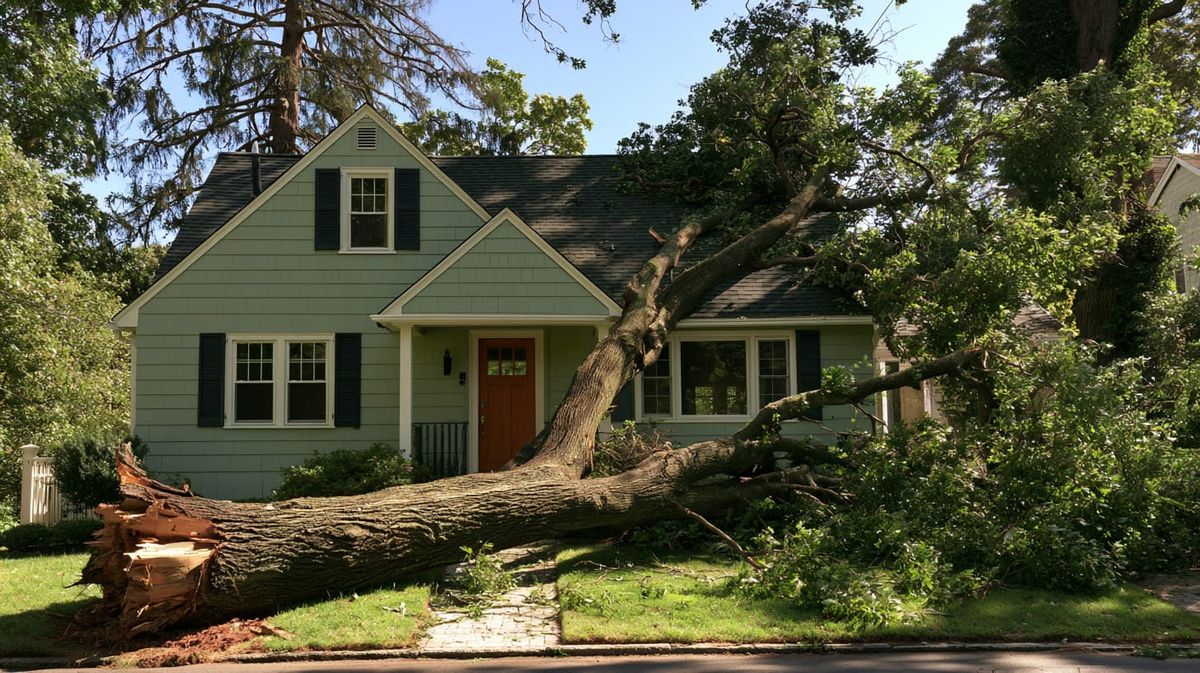
How insurers profit from the wait
Insurers generally collect premiums before they must pay claims. In the meantime, they invest much of that money in bonds and other assets.
The industry calls the money it temporarily holds “float.” The longer an insurer keeps the money before paying a claim, the longer it can earn investment income from it.
Property and casualty insurers — including companies selling home, auto and commercial coverage — earned an average of about $241 million in investment income each day during 2024, according to financial data supplied by Weiss Ratings.
About $24.7 million of that daily income was attributed to money associated with homeowners insurance premiums and company surplus.
Weiss estimated that delaying all homeowners claim payments by one additional day would produce about $8.8 million in extra investment income. Across all property and casualty insurance lines, the estimated benefit from an additional day’s delay was $52.3 million.
The estimate does not mean that every delayed claim is intentionally held back to produce investment income. Claims can take longer because of disputes over coverage, difficulty documenting losses, contractor estimates, fraud investigations or a surge of claims following a major disaster.
But the analysis highlights a potential conflict: insurers may financially benefit from delays while policyholders bear the cost.
Homeowners may have to pay for temporary housing, repairs, debris removal and replacement belongings while waiting for reimbursement.
Delayed payments lead insurance complaints
Claim-payment delays were the largest single category of complaints recorded in the National Association of Insurance Commissioners’ database in 2025, according to the Consumer Federation.
They accounted for 22% of roughly 65,000 complaints submitted to state insurance regulators, the analysis said.
Recent investigations have also documented alleged claims-handling problems after major catastrophes.
The California Department of Insurance said its examination of a sample of State Farm claims from the 2025 Los Angeles wildfires found instances in which the company failed to investigate, decide or pay claims within state deadlines.
Regulators said State Farm sometimes failed to pay accepted claims — or provide the required notice that additional time was needed — within 30 days. The department also cited low settlement offers, repeated changes of adjusters and inadequate communication with policyholders.
Proposal would shift interest to homeowners
Legislation pending in California would require insurers to pay interest to policyholders under certain circumstances when claims remain unpaid.
Senate Bill 878 would establish deadlines for written insurer responses and impose interest when payment is not made within 30 days after certain milestones, such as an insurer accepting all or part of a claim or determining that a property is a total loss.
The Consumer Federation argues that similar protections should be adopted more broadly.
“The customer waiting for their claim to be paid, not the company causing the delay, should earn the interest that accumulates,” Heller said.
Such a requirement could do more than compensate homeowners. It could also remove some of the financial incentive to retain claim money longer than necessary.
Disaster claims are taking longer
A separate Weiss Ratings analysis found that insurers in 15 disaster-prone states took 60 days or longer to pay 28.1% of homeowners claims in 2024.
That was up from 25.6% in 2018, according to the Consumer Federation.
The organization said delayed payments are part of a larger pattern that includes more claims being closed without payment, reduced settlement offers and restrictions on homeowners’ ability to challenge insurers in court.
Insurance companies may dispute some of those characterizations. A closed claim, for example, does not necessarily indicate misconduct. Claims may be below the deductible, excluded from coverage, withdrawn by the homeowner or closed because no covered damage was found.
Still, the rising share of lengthy claims underscores the importance of documenting every step and challenging unexplained delays.
What homeowners can do when a claim stalls
Keep a written timeline showing when the claim was filed, when documents were submitted and every conversation with the insurer or adjuster.
Ask the company in writing whether the claim has been accepted or denied, what additional information is needed and which provision of state law or the policy permits additional time.
Request partial or advance payments for undisputed losses. A disagreement over one part of a claim should not always prevent payment of amounts the insurer agrees it owes.
Save receipts for temporary housing, emergency repairs, meals and other expenses that may be covered under additional living expense provisions.
Escalate the matter to a claims supervisor or the insurer’s consumer affairs office when the adjuster does not respond.
Homeowners who cannot resolve the problem can submit a formal complaint to their state insurance department. The department can ask the insurer to explain its handling of the claim and determine whether state claims-practice rules were followed. The NAIC provides a directory connecting consumers with the appropriate state regulator.
For a large or complicated loss, homeowners may also consider consulting a licensed public adjuster or an attorney experienced in insurance claims. Fees and licensing rules vary by state, so credentials and contracts should be checked carefully before hiring anyone.
The bottom line
Insurance companies legitimately earn investment income by holding and investing premium dollars before claims become due.
The consumer issue arises when a company continues earning money after a claim should reasonably have been paid.
The new analysis does not establish that insurers are deliberately delaying every slow claim. But it puts a dollar figure on an imbalance familiar to many disaster survivors: the homeowner loses money and time while waiting, while the insurer may continue earning income from the unpaid funds.
Requiring interest on overdue claims would reverse that equation — and give insurers a stronger reason to send homeowners their money promptly.