FTC to car dealers: The advertised price has to be the real price
If a dealer advertises a car for $29,995, an ordinary customer should actually be able to buy it for $29,995, plus legitimate government charges.
The Federal Trade Commission is spelling out what car dealers can — and can't — do when advertising vehicle prices, as it steps up enforcement against hidden fees and conditional discounts.
- A dealer generally can't advertise a low price and then require consumers to pay mandatory dealer fees, buy add-ons or use dealer financing to get that price.
- The FTC recommends getting the out-the-door price in writing before going to the dealership, making it much easier to compare competing offers and spot last-minute charges.
Buying a car may be one of the few consumer transactions where shoppers routinely arrive expecting to discover that the advertised price isn't really the price.
The Federal Trade Commission wants to change that. The agency has published new guidance spelling out how federal truth-in-advertising law applies to auto-dealer pricing, reinforcing an enforcement campaign aimed at dealers that advertise attractive prices online and then tell consumers they must pay considerably more when they arrive at the showroom.
The basic principle is straightforward:
The price a dealer advertises should be a price an ordinary consumer can actually pay.
Mandatory dealer fees can't simply appear later. Discounts shouldn't be included in the advertised price if most consumers don't qualify for them. And dealers can't advertise one price while quietly requiring buyers to finance through the dealership, make an additional down payment or purchase unwanted products to obtain it.
The guidance follows warning letters the FTC sent to 97 dealership groups nationwide in March telling them to review their advertising and pricing practices. The agency said then that it would continue monitoring dealers and take additional enforcement action when warranted.
The $25,000 car that isn't really $25,000
The problem is familiar to anyone who has shopped for a vehicle online. A dealer advertises a car at what looks like an unusually attractive price.
The consumer drives to the dealership — sometimes traveling considerable distance — only to discover that the advertised figure assumed discounts the buyer doesn't qualify for or excluded mandatory dealer charges.
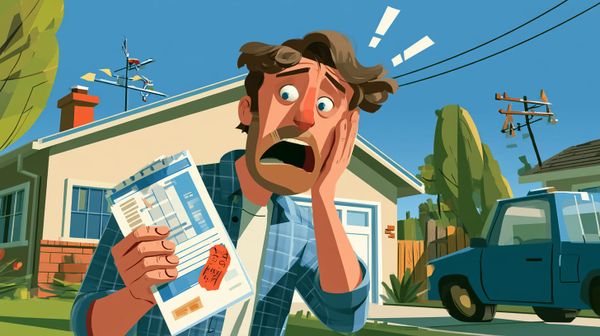
The $25,000 car becomes a $28,000 car.
At that point, the dealer has an enormous advantage. The customer has already invested time traveling to the dealership, may have brought a trade-in and may have emotionally committed to buying the vehicle.
Economists sometimes call that a drip-pricing strategy: attract consumers with a low initial price and reveal additional costs later in the transaction.
The FTC says deceptive pricing doesn't merely hurt individual buyers. It also makes legitimate comparison shopping impossible and disadvantages dealers that advertise their actual prices honestly.
Mandatory dealer fees belong in the advertised price
One of the most common areas of confusion involves dealer fees.
Taxes and other charges imposed by government can generally be added to the advertised vehicle price. A fee invented and imposed by the dealership is another matter.
The FTC has warned that advertising a vehicle at a price that excludes mandatory dealer charges can be deceptive.
The distinction matters because dealerships use a bewildering assortment of names for additional charges:
- documentation fees;
- processing fees;
- preparation fees;
- reconditioning fees;
- inspection fees;
- electronic-filing fees; and
- dealer service fees.
What the fee is called matters less than whether the buyer is required to pay it.
If every buyer has to pay a dealer-imposed charge to purchase the advertised vehicle, leaving it out can make the advertised price misleading.
A discount isn't a discount if almost nobody qualifies
Another common tactic is advertising a price that combines multiple rebates and discounts.
Perhaps one discount is available to military members. Another goes to recent college graduates. Another requires owning a particular competing vehicle. Still another applies only to customers financing through a specific lender. Individually, each discount may be legitimate.
The problem arises when a dealer subtracts all of them from the advertised price even though an ordinary customer could never qualify for all of them simultaneously.
The FTC's March warning letters specifically identified advertising prices that include rebates or discounts unavailable to all consumers as a potentially illegal practice.
For shoppers, that means an unusually low advertised price deserves a second look at the qualifications buried underneath it.
"You have to finance with us"
Dealer financing is another major profit center.
A dealership may earn money from the financing arrangement in addition to the profit it makes selling the vehicle. That creates an incentive to steer buyers toward dealer-arranged financing.
There's nothing inherently improper about that.
But the FTC says dealers can run into trouble when they advertise a vehicle at a particular price and reveal only later that the buyer must finance through the dealership to obtain it.
That can be particularly costly because the interest rate and loan terms may matter far more than a relatively small discount on the vehicle itself.
A consumer who saves $1,000 on the purchase price but accepts a significantly higher interest rate can ultimately pay thousands of dollars more over the life of the loan.
Mandatory add-ons are part of the price too
Dealers also commonly sell products and services such as:
- extended service contracts;
- GAP coverage;
- paint or fabric protection;
- theft-protection products;
- nitrogen-filled tires;
- wheel and tire coverage; and
- VIN etching.
These products may be perfectly legitimate when consumers knowingly choose to buy them. But optional means optional.
FTC consumer guidance specifically tells buyers that add-ons are products they can decline.
The agency has repeatedly brought cases alleging dealers charged consumers for add-ons they didn't agree to buy or falsely told customers that certain products were required.
Its pending case against Asbury Automotive, for example, alleges dealerships used "payment packing" — persuading consumers to accept monthly payments higher than necessary for the agreed vehicle price and then filling the difference with unwanted add-ons.
In August, the FTC and Connecticut obtained a $4 million settlement with Manchester City Nissan over allegations involving deceptive pricing, certification charges and unauthorized add-ons.
And earlier this year, the FTC and Maryland reached a settlement requiring refunds and penalties from Lindsay Automotive Group over alleged deceptive pricing and unwanted products.
The pattern explains why today's guidance matters more than another piece of regulatory fine print.
Get the out-the-door price before leaving home
The FTC's most useful advice for consumers is also remarkably simple:
Ask for the out-the-door price in writing before going to the dealership.
That number should include the vehicle and all charges and fees the dealer intends to collect.
The FTC says getting that figure beforehand can save hours at the dealership, allow consumers to compare offers on an apples-to-apples basis and make last-minute charges much easier to spot. (Consumer Advice)
It also changes the negotiating dynamics.
A consumer sitting in the finance office after spending three hours buying a car is in a very different bargaining position from someone sitting at home comparing written offers from three dealerships.
The FTC explicitly notes that a consumer's bargaining power is greatest before arriving at the lot. (Consumer Advice)
A simple email can save thousands
Before visiting a dealership, consumers can ask for written confirmation of several things:
- Is the advertised vehicle actually on the lot?
- What is the exact out-the-door price?
- Which taxes and government charges will be added?
- Are any dealer fees included?
- Does the advertised price assume rebates or discounts?
- What qualifications are required for those discounts?
- Must the buyer finance through the dealership?
- Is a particular down payment required?
- Are any accessories or add-ons mandatory?
A dealer unwilling to answer those questions in writing is providing useful information of another kind.
Consumers can simply shop somewhere else.
Don't negotiate by monthly payment alone
Another recurring trap is focusing exclusively on the monthly payment.
A salesperson can reduce a payment by stretching the loan over more years while substantially increasing the amount the consumer ultimately pays.
A low payment can also obscure unwanted add-ons rolled into the financing.
The FTC recommends looking at the APR, loan length and total amount paid rather than concentrating solely on the monthly number. (Consumer Advice)
Consumers who arrange a bank or credit-union preapproval before visiting the dealership also gain a useful benchmark against which to compare dealer financing.
What this means for consumers
The FTC isn't setting car prices or telling dealerships how much profit they can make.
It's saying something considerably simpler:
Advertise the price honestly.
A dealer can charge a documentation fee.
It can sell GAP coverage.
It can offer financing.
It can provide special rebates to military members or recent graduates.
But those practices shouldn't be used to create an advertised price that ordinary consumers can't actually obtain.
That distinction is especially important now that so much car shopping begins online.
Consumers increasingly sort listings by price and may travel significant distances because one dealership appears to offer a better deal than another.
If the numbers aren't comparable, the online marketplace doesn't really work.
And that's why deceptive pricing hurts honest dealers as well as consumers: a dealership advertising the real $28,000 price appears more expensive than a competitor advertising $25,000 and revealing the extra $3,000 only after the customer arrives.
The FTC's message is that the second dealer shouldn't win that competition simply because it hid the ball.
Car-buying checklist: Before you go to the dealership
1. Ask for the out-the-door price in writing.
Don't settle for the advertised price or monthly payment.
2. Confirm the vehicle is actually there.
Get the VIN or stock number in writing.
3. Ask which discounts are included.
Make sure you qualify for them.
4. Ask whether dealer financing is required.
Compare the dealer's APR with a bank or credit-union preapproval.
5. Identify every dealer fee.
Ask which charges are government-required and which are imposed by the dealership.
6. Say no to unwanted add-ons.
Service contracts, GAP products and protection packages generally aren't automatically required simply because the finance office offers them.
7. Compare the paperwork with the written quote.
Before signing, make sure the numbers haven't changed.
8. Be prepared to walk away.
If the dealer won't honor its written price, the FTC recommends leaving and reporting the problem.
The FTC's detailed consumer guidance is available in its Car Dealer Ads and Promotions: Know Before You Go guide.