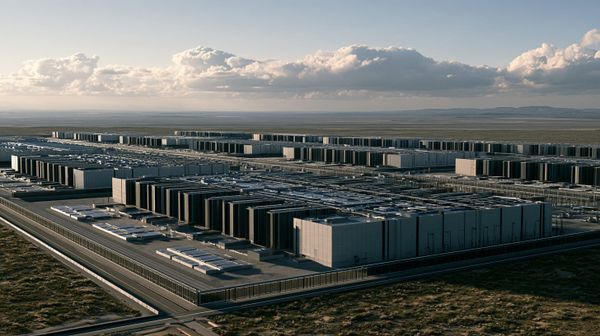
AI data centers could ignite a new fight over natural gas — and consumers may pay the bill
AI is coming for your electricity and, now, your natural gas too.
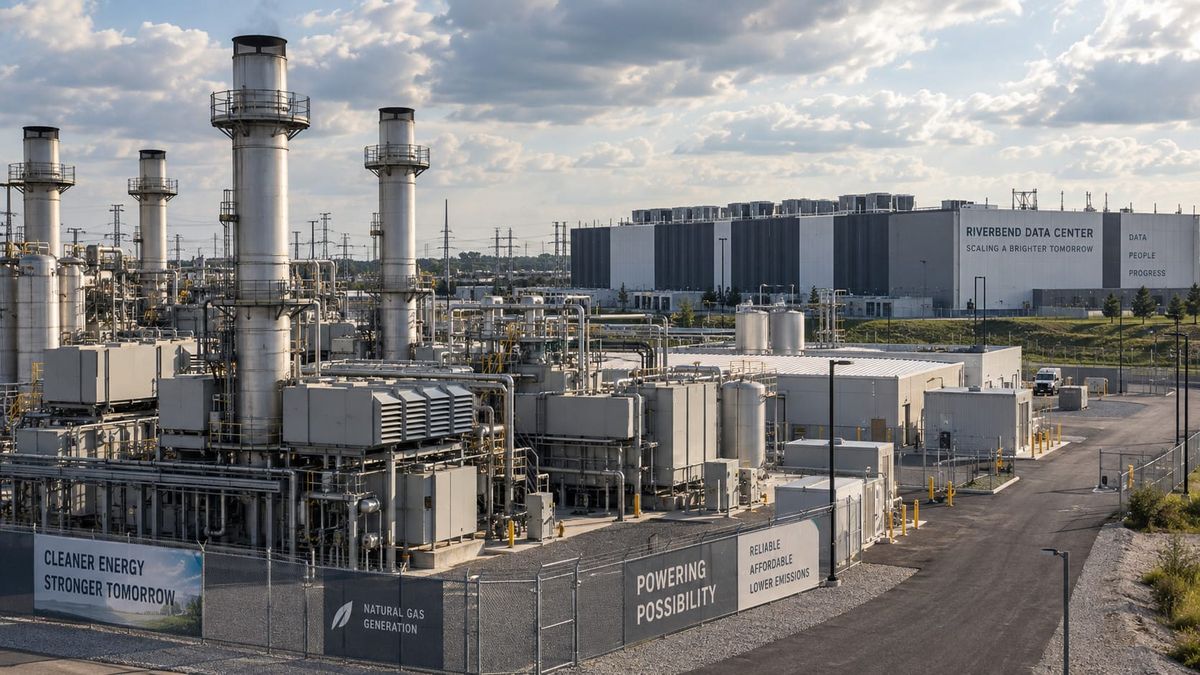
- U.S. data centers could require an additional 15 billion cubic feet of natural gas every day by 2035.
- That is more gas than nearly every country in the world currently consumes.
- The AI construction boom could put new upward pressure on electricity and natural-gas prices — adding another potential cost for households already worried about data centers pushing up utility bills.
America’s rapidly expanding network of artificial-intelligence data centers is developing another very large appetite — this time for natural gas.
A new BloombergNEF forecast says natural gas burned to generate electricity for U.S. data centers could increase by 15 billion cubic feet per day by 2035, more than twice the 6.9 billion cubic feet per day the research firm forecast only last December.
To put that number in perspective, 15 billion cubic feet a day is more natural gas than every country except the United States, China, Russia and Iran currently consumes in total, according to U.S. Energy Information Administration data.
The forecast provides another indication that the AI boom may have consequences far beyond Silicon Valley.
Consumers could encounter them in their electric bills, natural-gas bills and possibly even the cost of goods and services as utilities and technology companies race to secure enormous amounts of reliable power.
Why natural gas?
Data centers operate around the clock and require extremely reliable electricity.
Renewable power such as wind and solar is playing an increasing role in the electric grid, but natural-gas plants have an advantage particularly attractive to data-center developers: They can generate electricity whenever it is needed and can increase or decrease output relatively quickly.
BloombergNEF expects natural gas to provide about 69% of the electricity required by new grid-connected data centers covered by its forecast.
The result could be a remarkable collision between two enormous sources of new gas demand.
Data centers need fuel to generate electricity. At the same time, newly constructed liquefied-natural-gas terminals along the Gulf Coast are preparing to export much larger quantities of American gas overseas.
BloombergNEF estimates power-sector gas use could increase by about 18 billion cubic feet per day by 2035, while LNG export demand could rise by roughly 21 billion cubic feet per day.
That puts households and other traditional gas customers into an increasingly crowded market.
 The Editors
The era of cheap gas may be under pressure
The United States has benefited for years from abundant shale-gas production, helping keep natural-gas prices relatively low. But some analysts increasingly question whether that era can continue indefinitely.
Wood Mackenzie said earlier this year that what it called the “decade of cheap Henry Hub gas” may be ending. Its forecast for growth in gas consumption by electric utilities is remarkably similar to BloombergNEF's.
Not everyone agrees that consumers face a price squeeze. Some energy investors argue that American producers still have enough undeveloped gas resources to meet sharply rising demand, pointing to the industry's history of increasing production when prices and demand rise.
And forecasts of data-center growth remain unusually uncertain. AI technology could become more energy efficient, planned data centers could be canceled, or utilities could turn more aggressively toward nuclear power, renewable energy and storage.
BloombergNEF itself acknowledges that the range of possible outcomes is wide. But the direction of travel is increasingly difficult to ignore.
Consumers are already feeling the data-center debate
Data centers have quickly become one of the most contentious issues facing utility regulators.
Communities around the country are asking who should pay for the new power plants, substations, transmission lines and other infrastructure required to connect enormous computing campuses to the electric grid.
The concern has reached Congress. House lawmakers are preparing to consider a bipartisan Ratepayer Protection Act intended to prevent the costs created by data-center expansion from simply being passed along to residential customers.
Meanwhile, the Energy Information Administration expects U.S. electricity consumption to reach new records in both 2026 and 2027, driven partly by AI data centers.
Commercial electricity consumption is now growing so rapidly that the EIA expects commercial customers to consume more electricity than residential customers in 2026.
The second bill consumers may have to worry about
Until now, most attention has centered on electricity rates.
The BloombergNEF forecast raises another possibility: data centers could eventually influence the price of natural gas itself.
That matters because millions of households use natural gas directly for heating, cooking and hot water.
Higher gas prices can therefore hit consumers twice — once through their gas bill and again through electricity prices in regions where gas-fired power plants determine the cost of electricity.
There are indirect costs as well. Manufacturers, fertilizer plants and other industries consume enormous quantities of natural gas and could pass higher energy costs along through the prices of their products.
That makes the data-center boom increasingly more than a technology story.
It is becoming an energy story, an infrastructure story — and potentially a household-budget story.
What this means
The central question is no longer simply whether the United States has enough electricity to support the AI boom.
The question is increasingly who will pay to produce that electricity.
Technology companies may build the data centers, utilities may build the power plants and pipelines, and gas producers may drill additional wells. But unless regulators require those companies to absorb the costs created by their enormous new demand, part of the bill may eventually land in consumers' mailboxes.
--
ChatGPT provided research for this article.