From Ma Bell to the $2,000 iPhone: How the telephone went from regulated utility to luxury product
$1,999 and up for the iPhone Duo? How did telephones get this expensive?
- For much of the 20th century, U.S. policy deliberately pushed telephone service toward universality and affordability.
- Competition and technology eventually made calling much cheaper — but shifted much of the cost from the network to the device in consumers’ hands.
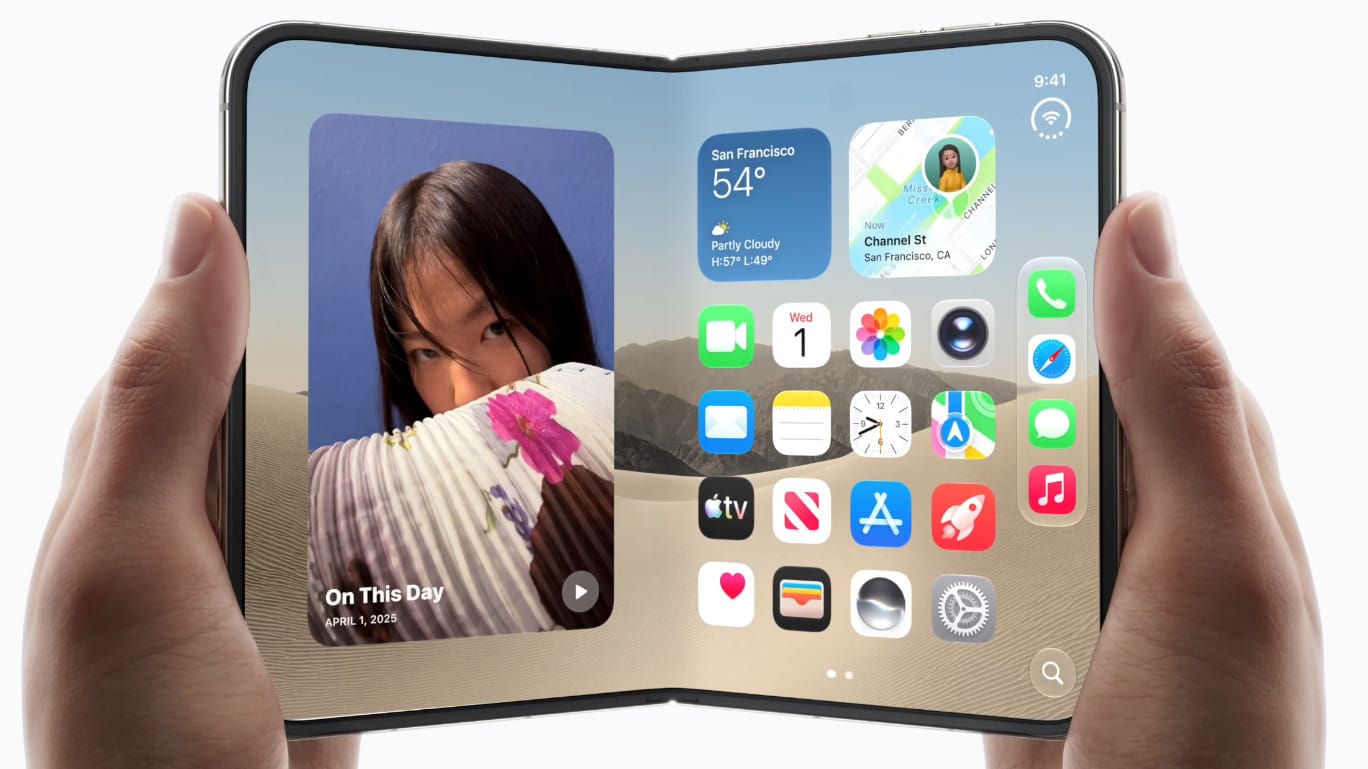
- Apple’s new $1,999 foldable iPhone Duo illustrates how thoroughly the telephone has evolved from basic infrastructure into a premium consumer product.
Apple’s new foldable iPhone may be a technological marvel. It is also a useful reminder of just how radically the economics of the telephone have changed.
The iPhone Duo, unveiled Wednesday, starts at $1,999. Higher-capacity versions run as high as $3,199. Apple helpfully translates the base price into $83.29 a month for 24 months.
That would have been a strange way to talk about telephones for most of the last century.
For decades, the telephone was not primarily regarded as an expensive gadget consumers repeatedly purchased. It was the endpoint of a regulated communications network whose overriding public-policy goal was to connect virtually everybody at a price ordinary households could afford.
It worked.
In 1940, only 36.9% of U.S. housing units had telephone service. By 1960, the figure had reached 78.3%. It passed 90% in 1970 and stood at 97.6% in 2000. The history raises an interesting question as phones costing $1,000, $2,000 and now $3,000 become commonplace:
Did we lose something when the telephone stopped being treated primarily as a utility and became a consumer electronics product?
The original goal: Put a telephone within everyone's reach
Congress made the objective explicit in the Communications Act of 1934.
The law called for a nationwide communications system available to all Americans with adequate facilities at “reasonable charges.” It also required regulated communications charges and practices to be “just and reasonable.”
That philosophy became known as universal service.
It did not mean telephone service was free. Nor was the Bell System some consumer paradise. Customers had little choice of provider, regulators could be slow-moving and long-distance calling could be remarkably expensive.
But the structure was unmistakable.
Telephone service was treated much like electricity or natural gas: essential infrastructure that should eventually reach nearly everyone.
Prices reflected that goal.
Historical data cited by federal regulators show average monthly residential telephone service costing about $4.29 in 1950, $5.55 in 1960 and $8.61 in 1980. Adjusted for inflation using contemporaneous estimates, the real cost actually declined substantially over that period.
The system accomplished something remarkable.
In 1960, roughly one American household in five still lacked access to a telephone. By 1980 only about 7% did. By 2000, just 2.4% of homes lacked telephone access.

You didn't really buy the telephone
One reason the economics looked so different was that consumers generally weren't shopping every few years for ever more sophisticated telephones.
During much of the Bell System era, the telephone itself was normally supplied by the phone company.
Consumers paid for telephone service.
The company owned and maintained the network — and often the instrument sitting on the customer's desk or hanging on the kitchen wall.
The familiar black rotary phone wasn't obsolete six months after it arrived. It might remain in service for decades.
The costly technology was mostly hidden from view: central offices, switching equipment, poles, cables and eventually enormous long-distance networks.
Today that relationship has almost been reversed.
The network has become largely invisible while a remarkable amount of technology — and cost — has migrated into the consumer's pocket.
Then came competition
The Bell System breakup in 1984 began changing the economics dramatically.
Competition in long distance flourished. MCI, Sprint and others challenged AT&T, and prices that once made families postpone calls until cheaper evening hours started falling.
The change was enormous.
One historical FCC analysis put the average price of a local residential line at $15.18 a month in 1984 and $24.52 in 2004.
But during those same two decades, average interstate and international calling charges fell from roughly 32 cents a minute to 8 cents.
Consumers paid somewhat more for access to the network while paying dramatically less to actually use it.
Wireless service accelerated that change.
Telephone numbers stopped belonging primarily to houses and began belonging to people.
Then smartphones arrived and the telephone itself ceased to be primarily a telephone.
 James R. Hood
A $2,000 phone — but much more than a phone
The first iPhone sold in 2007 for hundreds of dollars rather than thousands.
Apple's new foldable Duo starts at $1,999 and reaches $3,199 with maximum storage. Apple's new conventional iPhone 18 Pro and Pro Max, meanwhile, begin at $1,199 and $1,299, according to AP News.
Those prices would have been unimaginable in the era of the Princess phone. But the comparison is also somewhat unfair.
Today's smartphone replaces a remarkable collection of products that once had to be purchased separately:
- a telephone,
- camera,
- camcorder,
- road atlas,
- calculator,
- alarm clock,
- answering machine,
- music player,
- television,
- newspaper,
- flashlight,
- calendar,
- address book and
- increasingly, a computer.
It also connects users to banking, healthcare, transportation, employment, government services and emergency information.
So it would be misleading to argue that today's consumers simply pay vastly more for telephone service.
In some important respects they pay less.
The Bureau of Labor Statistics treats wireless telephone service separately from the cost of devices and tracks plan charges, data and related service costs in its Consumer Price Index.
Long-distance charges have largely disappeared from ordinary household budgets. Unlimited nationwide calling is commonplace. International communication that once cost dollars per minute can now be virtually free through internet applications.
The network became dramatically cheaper to use. The expensive part moved into the consumer's hand.
From monthly phone bill to monthly everything
There was another important transformation.
The old telephone bill was relatively understandable.
Today's consumer may confront:
- device financing,
- trade-in credits,
- promotional credits spread over 24 or 36 months,
- premium data plans,
- activation charges,
- insurance,
- early-upgrade programs,
- cloud storage and
- subscription services.
The industry's favorite unit of measurement has consequently become the monthly payment. Apple itself advertises the $1,999 Duo as costing $83.29 per month for 24 months. (Apple)
That's the same psychological trick long familiar to automobile buyers.
A $2,000 telephone sounds extravagant. Eighty-three dollars a month sounds manageable.
Add the wireless plan, insurance, storage and various subscriptions and the actual household communications bill can become considerably harder to calculate.
Regulation didn't disappear. Its target changed.
Universal service still exists.
After the Bell breakup removed some of the old system's internal subsidies, federal programs increasingly supported telephone service explicitly, particularly for low-income consumers and expensive rural areas.
Congress reinforced that principle in the Telecommunications Act of 1996, directing regulators to ensure access to an evolving level of telecommunications service at affordable and reasonably comparable rates.
But policymakers now face a question their predecessors could scarcely have imagined.
What constitutes meaningful universal telephone service when a telephone is actually a handheld computer?
Having access to voice calling alone increasingly isn't enough.
Modern life may require a smartphone capable of running applications, accessing broadband, receiving authentication codes, photographing documents, conducting video calls and navigating increasingly digital government and commercial services.
The traditional universal-service problem was getting a telephone line into every American home.
The emerging problem may be making sure people can afford the equipment necessary to participate fully in a digital society.
The old system wasn't perfect
Nostalgia can distort this history.
The Bell monopoly restricted consumer choice. Customers sometimes waited for installation. Long-distance calls were expensive. Innovation proceeded at a pace that would seem glacial today.
Competition and deregulation brought enormous benefits.
Consumers can switch providers, carry their telephone numbers with them and make virtually unlimited calls across the country. A cheap smartphone today has capabilities unavailable to the world's richest people a generation ago.
The technological progress is undeniable.
The consumer-policy question is different.
For decades, telephone policy began with an assumption:
Communication was sufficiently important that government and industry had an obligation to make basic access widely affordable.
Today's industry begins increasingly with another assumption:
Consumers will decide what they are willing to spend.
Apple's $1,999 foldable Duo — or its $3,199 fully loaded sibling — may be the purest expression yet of how far the telephone has traveled.
We spent much of the 20th century turning the telephone into an affordable universal utility.
In the 21st, we've turned it into one of the most sophisticated — and expensive — consumer products most Americans own.