Can you sue an insurance agent for consumer fraud? It depends on your state
Even where a consumer-fraud claim is unavailable, an agent may still be sued for negligence, misrepresentation or failure to obtain requested coverage.
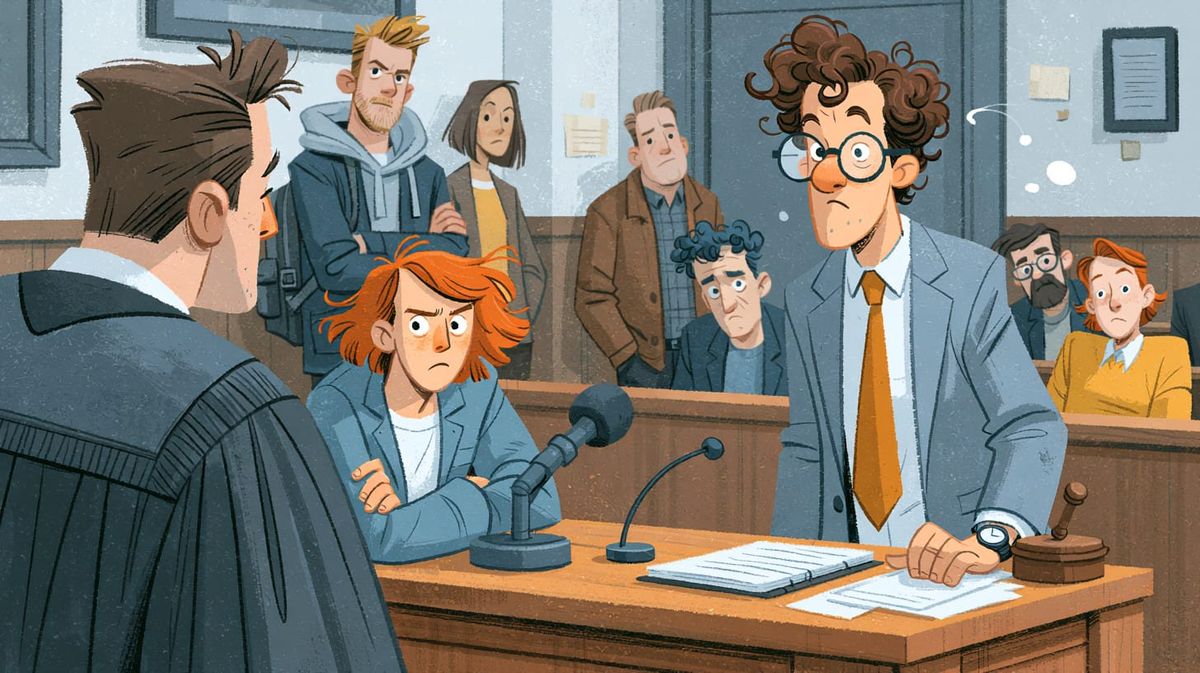
Consumers depend on insurance agents to recommend adequate coverage, explain exclusions and translate policies that can run for dozens or even hundreds of pages. But when that advice turns out to be wrong, consumers may discover that their legal rights depend heavily on where they live.
The New Jersey Supreme Court has unanimously ruled that insurance brokers, producers and agents are not entitled to a court-created professional exemption from the state Consumer Fraud Act, Insurance Journal reported.
The ruling revives a consumer-fraud claim filed by a neurosurgeon who alleged that his agents failed to obtain sufficient disability insurance and did not warn him that his outside business interests could reduce the benefits he would receive if he became disabled.
The decision does not mean that the agents committed fraud. That question remains to be litigated.
It does mean they cannot escape the New Jersey Consumer Fraud Act simply by arguing that their licenses make them “semi-professionals” entitled to the same treatment traditionally given to doctors, lawyers and certain other learned professionals.
“Extending the learned professional exception to insurance brokers would unduly narrow the scope of the CFA and undermine the Legislature’s intent for it to serve as one of the nation’s strongest consumer protection laws,” the New Jersey court concluded.
A career-ending disability — and reduced benefits
The case was brought by Dr. James Lowe, a neurosurgeon who developed a vision condition that prevented him from continuing to perform neurosurgery.
Lowe alleged that insurance agents Bernard Audet and Richard Laver of Creative Financial Group told him that his disability policies would provide maximum benefits if he became unable to practice.
After he became disabled, however, the insurers paid only partial benefits because Lowe had other business interests unrelated to his medical practice.
Lowe alleged that the agents had not explained how those outside interests could affect his benefits. His lawsuit included negligence and other claims, as well as an allegation that the agents violated New Jersey’s Consumer Fraud Act.
The agents argued that they were exempt because insurance producers had previously been classified by some New Jersey courts as “semi-professionals.”
A lower appellate court agreed and dismissed the Consumer Fraud Act claims. The state Supreme Court reversed that decision and returned the case to the lower court for further proceedings.
Why the consumer-fraud claim matters
Consumers are not limited to consumer-protection statutes when an insurance agent makes a serious mistake.
Depending on the facts and state law, they may be able to sue for negligence, professional malpractice, breach of contract, negligent misrepresentation or failure to procure requested coverage.
Consumer-fraud statutes can nevertheless provide remedies that are much more powerful than an ordinary negligence claim.
Under New Jersey law, a successful private plaintiff may be eligible for three times the actual damages, along with attorney fees and court costs. Those provisions can make it financially possible to bring a case that might otherwise cost more to litigate than the consumer could recover.
New Jersey’s law prohibits unconscionable commercial practices, deception, false promises, misrepresentations and the knowing concealment of material facts in connection with the sale of merchandise or real estate.
The Supreme Court said the law was intended to be applied broadly and that exemptions from it must be construed narrowly.
Insurance agents are skilled - but are they “learned professionals?”
The court said it did not question whether insurance agents and brokers are skilled in their field.
But it rejected the argument that an insurance license alone places an agent in the narrow class of historically recognized learned professionals.
The court noted that New Jersey requires a 20-hour approved course for each insurance license category but does not require an applicant to hold a high school diploma or its equivalent.
That is not comparable, the court reasoned, to the extensive academic and professional training traditionally required of doctors, lawyers and similar professionals.
More fundamentally, the court found no “semi-professional” exemption in the language of the Consumer Fraud Act itself.
The justices also invited the state Legislature to clarify whether any professionals should be exempt, suggesting that even the broader court-created learned-professional exception may deserve another look.
Other states expressly protect insurance businesses
New Jersey’s ruling does not establish a national rule. State consumer-protection laws contain widely differing definitions, exclusions and remedies.
In Maryland, the Consumer Protection Act expressly states that it does not apply to the professional services of an authorized insurance company or a state-licensed insurance producer. The same section lists accountants, lawyers, physicians, real estate brokers and several other licensed occupations, according to Westlaw Government.
Alabama uses an even broader regulated-industry exemption. Its Deceptive Trade Practices Act does not apply to any person or activity subject to the Alabama Insurance Code.
That language can prevent a consumer from using the general deceptive-practices law against conduct already regulated under the state’s insurance laws. The person claiming the exemption bears the burden of establishing it, per Justia.
Ohio’s Consumer Sales Practices Act also excludes certain transactions between insurance companies and their customers. Courts have said, however, that the exemption is not necessarily a shield for every activity performed by an insurance-related business. The precise transaction and the role played by the defendant can matter, the Supreme Court of Ohio has held.
Massachusetts illustrates the opposite approach. Its Chapter 93A broadly prohibits unfair or deceptive business practices and allows qualifying consumers to seek damages, attorney fees and, in some circumstances, double or triple damages. Massachusetts also separately regulates unfair practices in the insurance business under Chapter 176D.
The result is a legal patchwork. Some states expressly exempt insurance companies or producers from their principal consumer-protection statute. Others permit consumer claims but impose special requirements. Still others distinguish between selling a policy, giving professional advice and handling a claim.
A complete answer may therefore depend not only on the state, but also on who made the representation, what kind of policy was involved and whether the dispute concerns the original sale or a later claim.
Regulation is not always the same as compensation
States generally license insurance producers and prohibit practices such as misrepresentation, twisting policies, deceptive advertising and mishandling premiums.
Consumers can file complaints with their state insurance department, and regulators may investigate an agent, impose a fine or suspend or revoke a license.
But regulatory enforcement is not necessarily a substitute for a private lawsuit.
An insurance commissioner’s action may punish misconduct without fully reimbursing a consumer for lost benefits, uncovered property damage, business losses or the cost of correcting an agent’s mistake.
In states that exempt insurance professionals from general consumer laws, consumers may have to rely on narrower common-law claims that can be more difficult or expensive to pursue.
What consumers should do
Insurance buyers can reduce the risk of a later dispute by creating a written record of what they asked for and what the agent recommended.
Before purchasing or renewing coverage:
- Describe the property, income, business operations or other risks you need insured in writing.
- Ask the agent to identify important exclusions, benefit limits and conditions that could reduce a payment.
- Request written confirmation that the recommended policy meets the needs you described.
- Keep applications, emails, policy illustrations, renewal notices and coverage summaries.
- Read the policy when it arrives and immediately question anything that differs from what the agent promised.
- Check the agent’s license and disciplinary history through the state insurance department.
- After a disputed claim, preserve all communications and consider speaking with an attorney familiar with insurance law in your state.
Consumers should also remember that an insurance agent ordinarily does not guarantee that every loss will be covered. Policies contain exclusions, deductibles and conditions, and courts generally expect policyholders to review their contracts.
But an agent who recommends coverage, makes specific assurances or agrees to obtain a particular policy may assume legal duties that go beyond simply submitting an application.
The New Jersey ruling reinforces a basic principle: selling insurance is a commercial activity as well as a licensed occupation.
Whether consumers elsewhere receive the same protection remains largely a matter of state law.
The state comparison is intentionally presented as illustrative rather than a definitive 50-state survey; several states’ exemptions turn on judicial interpretations as well as statutory wording.