AI teddy bears are coming for children. Consumer advocates say the safety rules aren’t ready
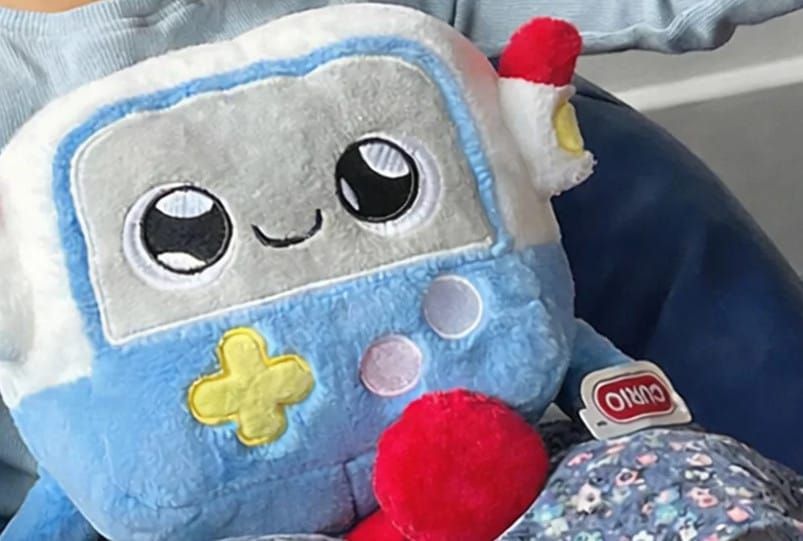
- AI chatbots are increasingly being built into dolls, stuffed animals and robots marketed as children’s companions
- Consumer advocates warn the toys can collect intimate data, give inappropriate answers and encourage children to form emotional attachments
- Existing toy-safety rules largely address physical hazards, while privacy law covers only part of what conversational AI can do
The talking teddy bear has come a long way.
A new generation of toys doesn’t simply play prerecorded phrases when a child squeezes its paw. It listens, carries on conversations, remembers information and can respond almost endlessly using the same type of generative artificial intelligence behind popular chatbots.
That may make the toys more entertaining. It also means parents may effectively be putting an always-available chatbot into a child’s bedroom.
Public Citizen and two other advocacy groups are urging states to prohibit AI chatbot toys, arguing that regulators have not caught up with technology that can collect children's voices and other information while simulating friendship and emotional relationships.
“AI is not a toy,” the groups warn. Their concerns go well beyond screen time.
Public Citizen cited testing that has found AI toys willing to engage in sexually explicit discussions and provide information about accessing potentially dangerous household objects. The groups also warn that some toys collect audio or video, may retain information children reveal during conversations and can be vulnerable to hacking.
Perhaps the most unusual concern is that the toy isn't merely collecting information — it's talking back.
A toy that acts like a friend
Children have always formed attachments to dolls and stuffed animals. The difference is that those toys traditionally depended on the child's imagination.
An AI toy can actively participate in the relationship.
It may ask questions, remember previous conversations, praise the child or respond when the child says he or she is lonely, frightened or angry.
Public Citizen warns this can produce a one-sided or “parasocial” relationship in which children perceive the machine as a companion. Some conversational systems are also designed to be agreeable — a characteristic commonly called sycophancy — potentially reinforcing what a child says rather than challenging it.
Researchers at the University of Cambridge have separately raised similar concerns.
In what the university describes as the first systematic study of generative-AI toys and very young children, researchers observed children interacting with a conversational stuffed toy.
The results were decidedly mixed.
Researchers said the technology potentially could help with language and communication, but the toy also misunderstood children, performed poorly during pretend and group play and sometimes responded strangely to emotional statements. (University of Cambridge)
When one 3-year-old told the toy she was sad, for example, it apparently misheard her and cheerfully tried to continue playing.
Researchers recommended stronger safety standards, clearer privacy policies and labeling that would help parents determine whether an AI toy had actually been tested for use by young children.
The privacy problem is already real
Concerns about connected toys aren't theoretical.
Last year, the Federal Trade Commission took action against robot-toy manufacturer Apitor Technology, alleging that software incorporated into its children's app allowed a third party to collect precise geolocation information without the parental consent required by the Children's Online Privacy Protection Act.
COPPA generally requires companies operating child-directed online services to tell parents what information they collect and obtain consent before collecting personal information from children under 13. Voice recordings themselves can qualify as personal information under the rule.
But privacy law doesn't resolve the larger question posed by AI toys: What should an electronic companion be allowed to say to a child?
Traditional toy regulations are built largely around hazards such as choking, sharp edges, flammability and toxic materials. AI introduces hazards that may occur entirely through conversation.
A teddy bear doesn't have to break physically to cause trouble.
Smart toys have been raising alarms for years
Even before generative AI arrived, consumer groups warned that internet-connected toys could collect surprisingly detailed information about children.
U.S. PIRG has documented smart toys equipped with microphones, cameras, Bluetooth and internet connections that can transmit children's voices and other information to outside servers. A breach involving such systems can expose information that is far more personal than a parent's credit-card number.
Conversational AI dramatically expands that risk because children may volunteer information naturally.
A child may tell a toy about school, friends, parents, fears, illnesses, where the family is going tomorrow or what happens inside the household — without understanding that the conversation may ultimately involve servers operated by one or several companies.
Children “may disclose a lot of information to a toy they consider a friend,” PIRG has warned.
Public Citizen wants states to step in
Public Citizen has prepared model legislation that would prohibit AI chatbot toys and is encouraging state lawmakers to act rather than wait for a federal regulatory system to develop.
Whether an outright ban gains political traction remains to be seen.
There is also a legitimate argument that carefully designed AI toys could eventually have educational uses. Cambridge researchers found professionals could envision benefits, particularly in language development and communication. Their conclusion wasn't that the technology could never be useful, but that products are arriving before researchers and regulators fully understand their effects.
That leaves parents confronting a familiar problem in the AI era: companies can bring a product to market much faster than independent researchers can determine what prolonged use does to children.
And unlike a conventional chatbot on a computer, the newest versions may look like something parents have been conditioned for generations to regard as harmless: a teddy bear.
What parents should check before buying an AI toy
An AI toy should probably be treated more like an internet-connected device than an ordinary stuffed animal.
Before buying one, parents should determine whether it contains a microphone or camera; whether conversations are transmitted to company servers; whether recordings or transcripts are stored; whether children's information is used to improve or train AI systems; whether data is shared with third parties; and whether the toy continues to function if data collection is disabled.
It is also worth asking a simpler question that won't appear in the privacy policy:
Would you be comfortable allowing your child to have this same conversation with an unknown chatbot when no adult is present?
If the answer is no, sewing the chatbot inside a teddy bear probably doesn't change the equation.