Will a drone be able to deliver to your home?
Drone delivery may sound as simple as ordering takeout, but whether a flying courier can reach your home will depend on where you live, what you order and whether the aircraft can find a safe place to lower the package.
DoorDash is the latest to enter the drone home delivery race but before you dash for your smartphone to place an order, you'll need to consider whether your home is suitable for just any old drone to drop by.
Drone delivery may sound as simple as ordering takeout, but whether a flying courier can reach your home will depend on where you live, what you order and whether the aircraft can find a safe place to lower the package.
DoorDash already offers limited drone delivery through Wing, Flytrex and Manna in selected markets. Its help center says smaller orders are more likely to qualify because drones have strict weight and package-size limits.
 James R. Hood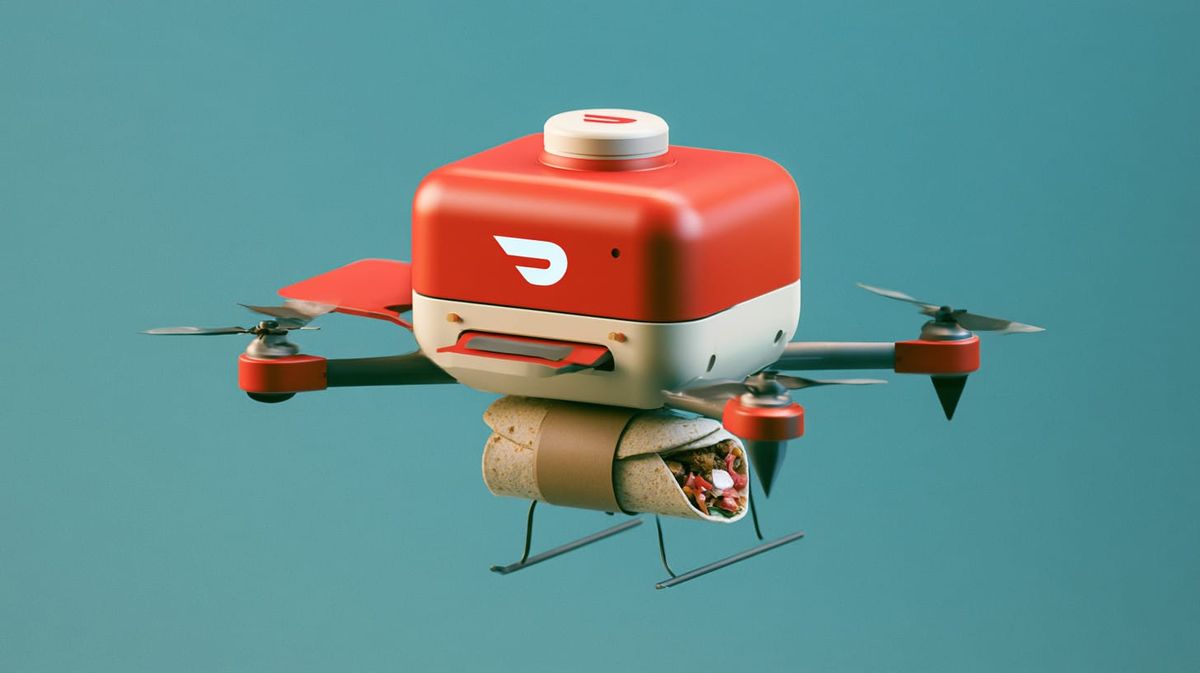
Here are the main questions that will determine whether your order can fly:
Are you inside the delivery zone?
Drone delivery is offered only within tightly defined service areas near participating restaurants, stores or launch facilities.
Even consumers in a city advertised as a drone-delivery market may find that their address is outside the operating radius. The app should tell customers whether their address and order are eligible before checkout.
Is there a safe place to leave the order?
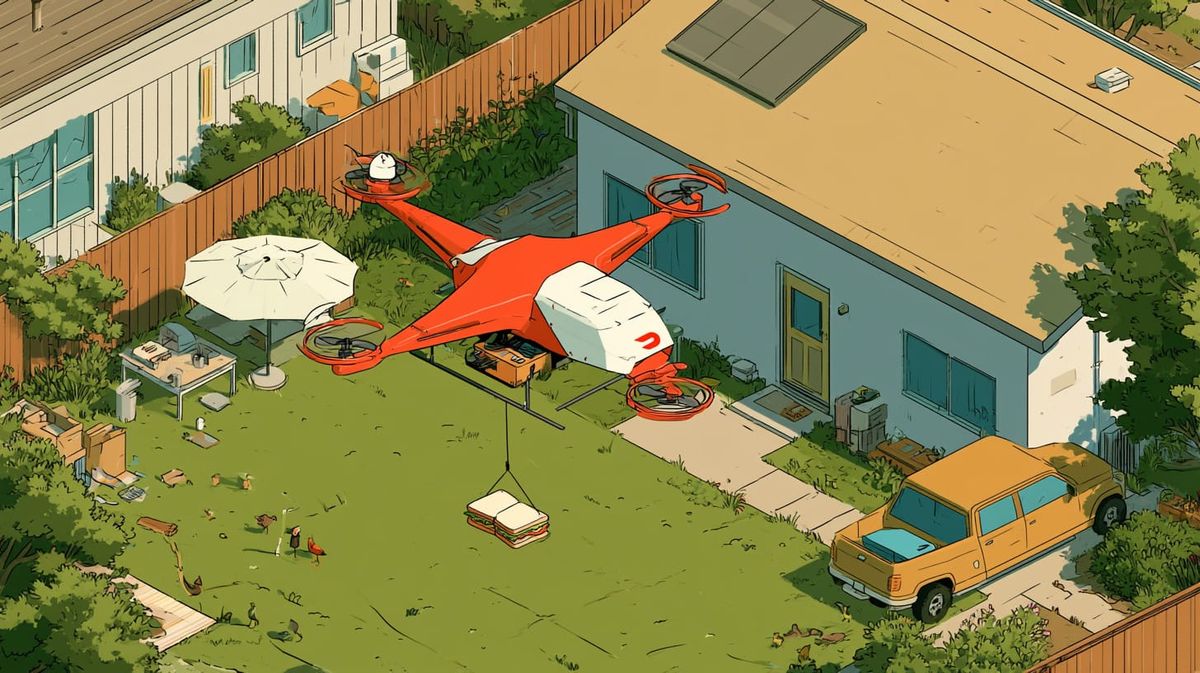
Most delivery drones do not land in the customer’s yard. Instead, they hover overhead and lower the package on a cable.
The drop-off area generally must be:
- Open and visible from above
- Free of people, pets, vehicles and patio furniture
- Away from trees, power lines and other obstacles
- Accessible without the drone flying beneath a roof, balcony or overhang
Wing says it maps potential delivery locations and selects open, accessible places where packages can be safely lowered. Customers do not need to touch or detach anything from the aircraft; they retrieve the package after the drone departs, according to Google Support.
What about apartments and condos?
Apartments may be more difficult, particularly in dense urban areas.
A drone generally cannot fly through a lobby, leave food outside an individual apartment door or lower a package onto a narrow balcony surrounded by obstacles. Some apartment residents may be able to use a designated lawn, courtyard, parking area or communal delivery zone.
Eligibility will depend on the property’s layout and the operator’s mapping system. Some Wing enrollment pages accept apartment numbers, suggesting that at least certain multifamily properties can qualify when a suitable outdoor delivery point is available.
Is the order small enough?
Drones are best suited to small restaurant orders, medications, convenience items and lightweight retail purchases.
A family-size restaurant order, several bags of groceries, cases of beverages or bulky household products will probably still require a driver. DoorDash says smaller orders are more likely to qualify under the limits of its existing drone partners.
A single order may also be divided, with part arriving by drone and the rest delivered conventionally.
Is the weather cooperating?
Drone delivery may be unavailable during:
- High winds
- Thunderstorms or lightning
- Heavy rain or snow
- Poor visibility
- Extreme temperatures
Operating limits vary by aircraft. An order initially assigned to a drone could be transferred to a driver if conditions change.
Do you live near restricted airspace?
Homes near airports, military installations, government facilities and other restricted areas may not qualify.
Commercial drone operators need more than a general air-carrier certificate. The FAA says they must also receive approval for their aircraft, operating procedures and flights beyond the operator’s visual line of sight.
Local geography, tall buildings and heavy air traffic can also limit where deliveries are permitted.
Will you have to pay extra?
That remains unclear.
Drone delivery could eventually cost less because it does not require a driver to make a separate trip. But companies may initially charge a premium for speed, impose minimum-order requirements or include the service only with paid memberships.
Consumers should check the complete checkout total, including:
- Delivery charges
- Service fees
- Small-order fees
- Membership requirements
- Suggested tips
A drone does not expect a tip, but an order may still involve restaurant workers or a human courier handling part of the trip.
What happens if something goes wrong?
Consumers should report a package dropped in the wrong place, damaged food or a drone that lands unexpectedly through the delivery app.
Do not approach, move or attempt to repair an aircraft. Wing advises customers to keep their distance and contact the company if a drone remains at the delivery location.
The bottom line
Suburban homes with open yards are likely to be the easiest locations for drone delivery. Apartments, heavily wooded properties and dense city neighborhoods will be more challenging.
For the foreseeable future, the app — not the consumer — will decide whether each order travels by drone, robot or human driver.