DoorDash is building its own delivery drones as the race to replace drivers accelerates
DoorDash has received federal approval to operate a commercial drone-delivery service and says it plans to begin deliveries this fall.
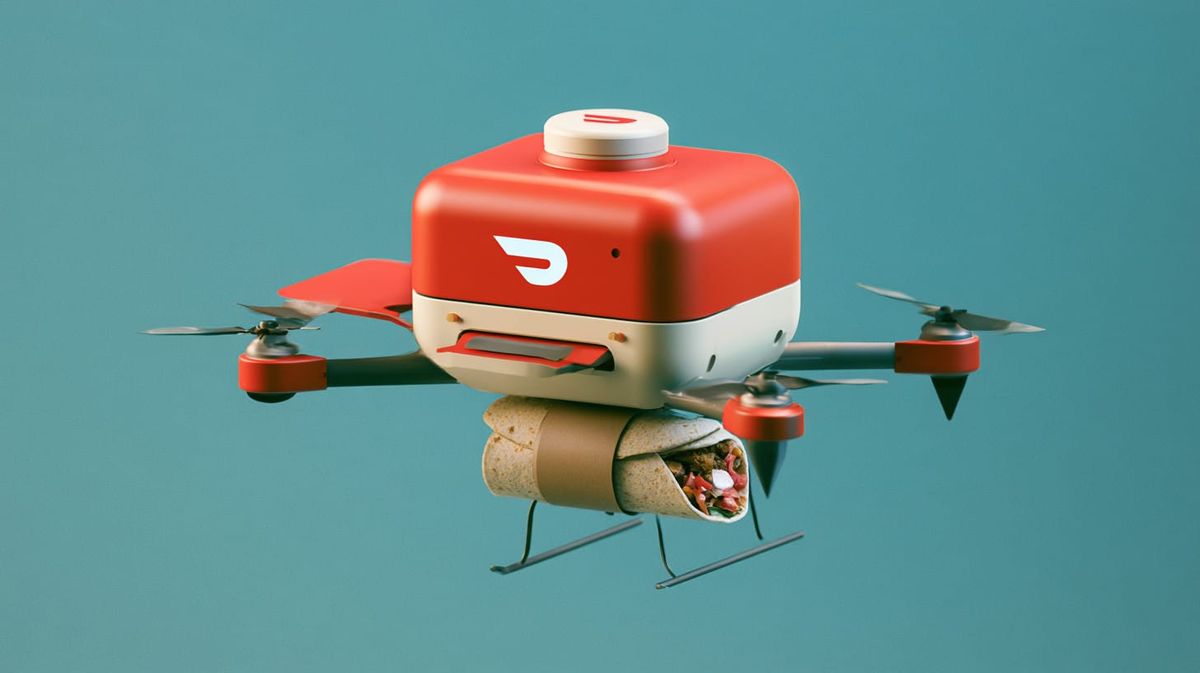
DoorDash is preparing to launch its own fleet of delivery drones, moving beyond partnerships with outside operators as food-delivery companies look for cheaper and faster ways to bring small orders to consumers.
The company said Wednesday that DoorDash Labs has received a Part 135 air-carrier certificate from the Federal Aviation Administration, allowing it to operate a commercial package-delivery service under the name DoorDash Air.
DoorDash said the service is expected to begin operating this fall, although it has not yet disclosed the first cities, participating restaurants, delivery fees or other important details. More information is expected at the company’s annual product event in September.
The certification represents a significant step beyond simply testing drones. Part 135 is the regulatory route used by companies that carry packages for compensation on flights conducted beyond the operator’s direct line of sight.
The FAA says DoorDash is only the eighth drone operator to receive that certification. Other approved operators include Wing, Amazon Prime Air, Zipline, DroneUp and Causey Aviation Unmanned, which operates Flytrex aircraft.
 James R. Hood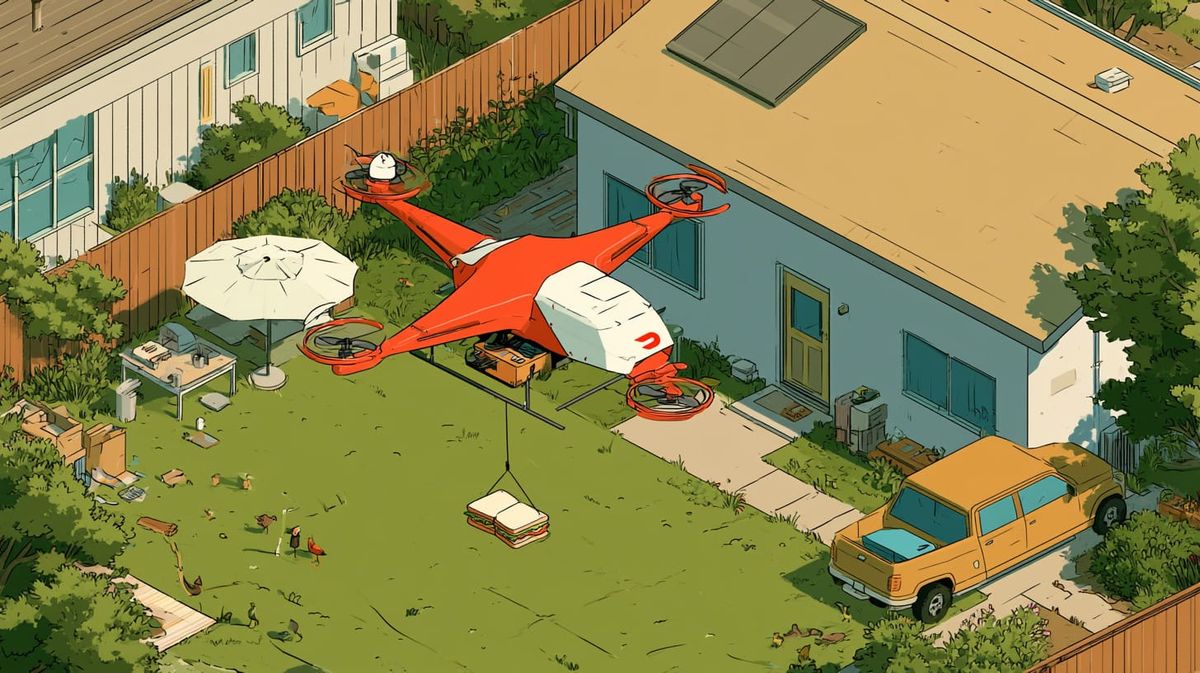
Why DoorDash wants drones
DoorDash says more than 20% of its orders in 2025 traveled between three and five miles. Those orders took nearly 25% longer to complete than shorter deliveries, largely because it can take longer to find a driver willing or able to make the trip.
The company said drone deliveries completed through its existing partners averaged about 25 minutes in 2025. DoorDash has already completed tens of thousands of drone deliveries through partnerships with Wing and Flytrex.
Building its own drones could eventually give DoorDash more control over costs, routing and the customer experience.
Delivery workers are one of the largest variable expenses in app-based delivery. A drone does not need mileage reimbursement, tips or compensation for waiting at a restaurant, although operating a commercial drone system requires technicians, maintenance staff, remote supervisors, launch facilities and regulatory compliance.
DoorDash said its advantage may be less about the aircraft than about integrating drones into restaurant operations. That includes deciding which orders are suitable for flight, confirming inventory, routing orders to launch sites and arranging handoffs from restaurant kitchens and drive-through windows, according to Insurance Journal.
Walmart and Wing are moving fastest
DoorDash is entering a market in which Walmart and Alphabet-owned Wing currently have the most aggressive publicly announced U.S. expansion plans.
Wing and Walmart said in January that they planned to add drone delivery at another 150 Walmart stores, creating a network of more than 270 locations by 2027 and potentially reaching more than 40 million Americans.
The companies later named seven additional metropolitan areas: Memphis, New Orleans, Philadelphia, Phoenix, San Diego, the San Francisco Bay Area and Salt Lake City. Those markets are expected to join existing or previously announced operations in areas including Dallas-Fort Worth, Atlanta, Houston, Orlando, Tampa, Charlotte, Los Angeles, Miami, Cincinnati and St. Louis.
Walmart customers can order groceries, household goods and other lightweight merchandise. Wing says some deliveries can arrive within minutes, depending on distance, product availability and operating conditions.
Wing, which became the first FAA-certified drone air carrier in 2019, says it has completed more than 1 million commercial deliveries worldwide.
DoorDash is not abandoning Wing. It says its own aircraft will supplement, rather than replace, drones and robots supplied by outside partners.
Amazon is pursuing its own system
Amazon has also designed and built its own delivery aircraft through its Prime Air program.
The company currently uses its MK30 drone to deliver eligible packages weighing up to five pounds in less than an hour in parts of the Phoenix metropolitan area. Amazon has said the aircraft can fly in light rain, travel twice as far as its previous model and use onboard technology to detect and avoid obstacles, Amazon News said.
Amazon has set a long-term goal of delivering 500 million packages by drone annually by the end of the decade, although Prime Air’s real-world rollout has proceeded much more slowly than the company’s early predictions.
Amazon is attempting to integrate drone launches into its existing same-day fulfillment facilities rather than operate entirely separate drone depots. That could increase the number of eligible products while reducing the additional handling required for each flight.
The company has also been pursuing approvals for drone delivery in Britain and other international markets.
Uber Eats is working with Flytrex
Uber has taken a partnership approach rather than building its own aircraft.
Uber announced in September 2025 that it was investing in Flytrex and planned to introduce drone delivery in selected Uber Eats markets. Flytrex said at the time that it had completed more than 200,000 U.S. deliveries, primarily in suburban communities.
Flytrex drones typically lower food or merchandise into a customer’s yard using a tether rather than landing. The company operates through Causey Aviation Unmanned, which holds the necessary FAA air-carrier certification, the Federal Aviation Administration said.
Uber has said drones will become one part of a broader automated-delivery network that also includes sidewalk robots and self-driving vehicles.
That puts Uber and DoorDash in direct competition not only for restaurant customers and delivery workers but also for access to the same autonomous-delivery technology providers.
What consumers should expect
Drone delivery will initially be limited to a relatively narrow range of orders.
Aircraft have weight and size limits, and customers generally need an open outdoor delivery area. Drones may not be practical for many apartment buildings, dense urban neighborhoods, heavily wooded properties or locations near restricted airspace.
Weather can also interrupt service. High winds, thunderstorms and other conditions may send an order back to a conventional delivery driver.
DoorDash acknowledged that people will continue to handle the “vast majority” of its deliveries. Human workers will still be needed for large restaurant orders, alcohol deliveries requiring identification, complicated building access and orders that cannot safely be carried by air.
Consumers will also need to compare the cost. Companies promote drones as an efficient delivery method, but they have not established a standard nationwide pricing model. A fast drone delivery could carry a separate fee, a minimum purchase requirement or geographic restrictions.
Safety, noise and privacy questions remain
Part 135 certification does not mean a company may immediately fly anywhere it chooses.
Operators still need approved aircraft, operating specifications and authorization for particular service areas and flight conditions. The FAA also reviews the potential environmental effects of commercial drone networks, including noise and the placement of launch facilities.
The agency’s current environmental review assumes that delivery hubs could be installed in parking lots, on rooftops or at other commercial locations. Operations could theoretically occur around the clock, although the FAA expects most flights would take place between 7 a.m. and 10 p.m.
Neighborhood acceptance may become as important as technical reliability. A single drone may be less intrusive than a delivery car, but residents could react differently if dozens or hundreds of aircraft repeatedly pass over their homes.
There are also privacy concerns. Delivery drones rely on cameras, sensors, location data and detailed mapping to navigate safely. Companies say those systems are designed for navigation and obstacle avoidance, but consumers and local officials are likely to demand clear rules governing what information is collected, how long it is retained and whether it can be used for other purposes.
The bottom line
DoorDash’s announcement does not mean fleets of delivery drivers are about to vanish.
It does show that drones are moving from isolated experiments toward a permanent place in retail and restaurant logistics.
Walmart and Wing are pursuing the largest near-term expansion. Amazon is building a vertically integrated package-delivery system. Uber is backing Flytrex. DoorDash now intends to operate both its own aircraft and those supplied by partners.
The likely result is a mixed delivery network in which software chooses among a driver, bicycle courier, sidewalk robot, autonomous vehicle or drone based on the order, distance, weather and destination.
For consumers, the important questions will not be whether the technology looks futuristic. They will be whether it is dependable, reasonably priced, quiet, safe and genuinely more convenient than having a person bring the order to the door.