Tornado Alley is moving east — and homeowners may pay the price
It's not in Kansas anymore.
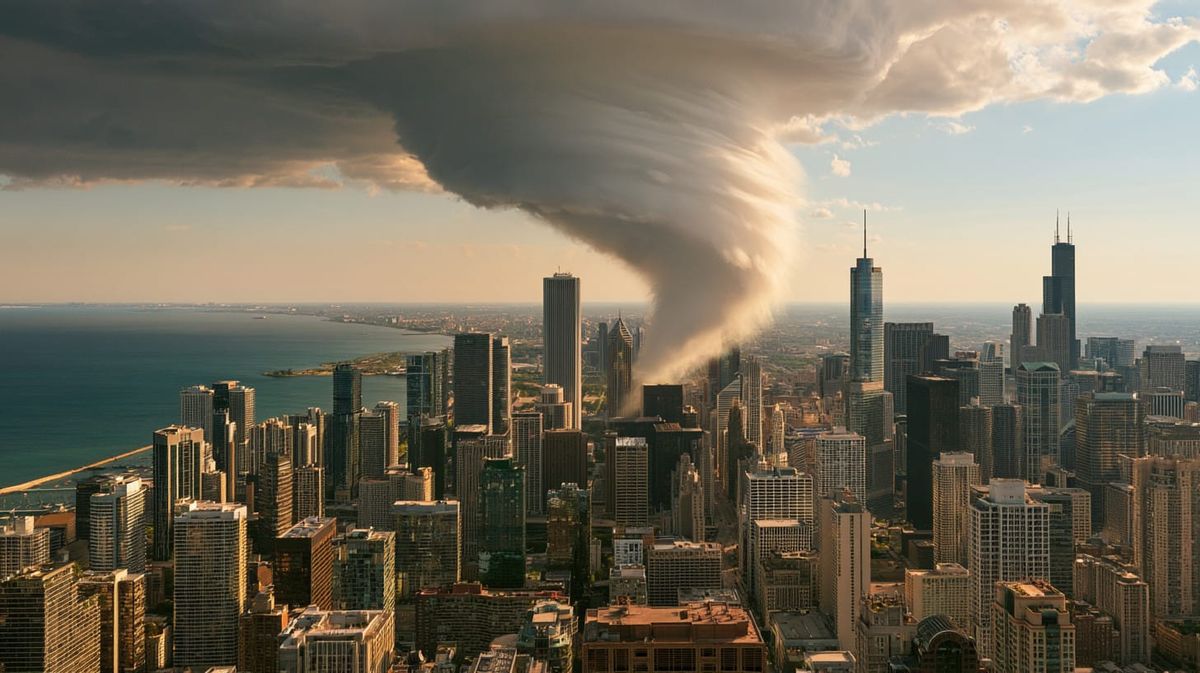
- The traditional Tornado Alley centered on Texas, Oklahoma and Kansas is shifting toward the Midwest and Southeast, researchers say.
- Illinois has recorded 220 confirmed tornadoes through July, while Indiana has already broken its annual record.
- The bigger consumer threat may be financial: tornadoes, hail and severe thunderstorms are striking more densely populated areas where homes are increasingly expensive to repair or replace.
Americans who still picture tornado country as a narrow strip running through Oklahoma, Kansas and Texas may need to redraw the map.
A growing body of evidence shows tornado activity shifting eastward toward the Midwest and Southeast — putting more homes, businesses and people in the path of severe storms and potentially adding another source of pressure to homeowners insurance rates.
The change has been especially visible in 2026.
Illinois recorded 220 confirmed tornadoes through the end of July, according to catastrophe-modeling firm Verisk. Indiana has already recorded 79 tornadoes this year, breaking its previous annual record of 72 set in 2011, according to the National Weather Service.
June alone produced 58 Indiana tornadoes — more than the state recorded during most entire years since records began in 1950. NOAA reported that June brought historic tornado activity across much of the Midwest, with Illinois, Indiana and Missouri all setting June records, the National Weather Service said.
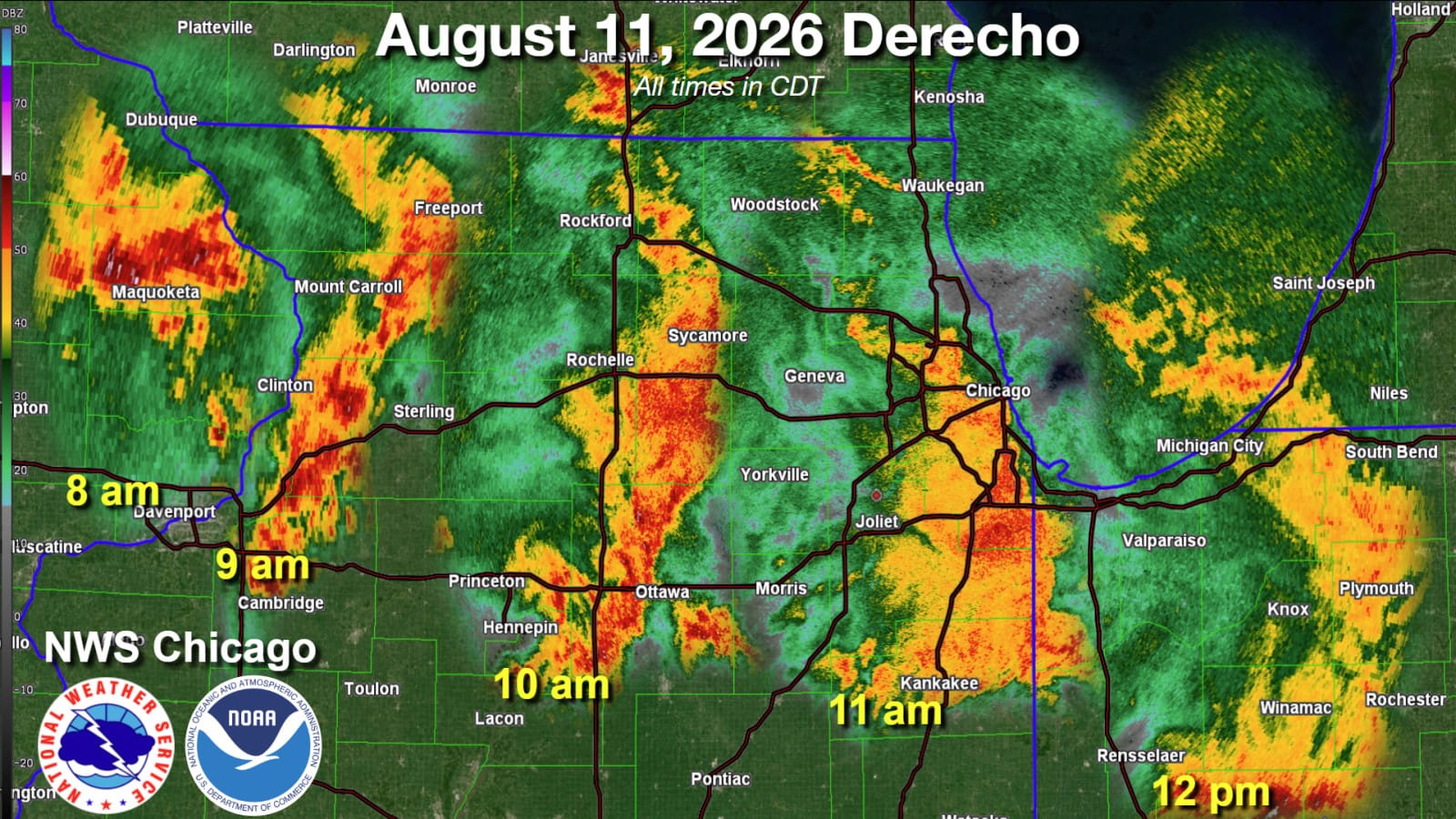
And the season hasn't quietly ended. An Aug. 11 derecho blasted eastern Illinois and northwestern Indiana with winds of 70 to nearly 100 mph and produced at least five confirmed tornadoes, NWS said.
It isn't just one strange year
Individual outbreaks vary enormously from year to year, so a busy season by itself doesn't prove Tornado Alley has moved.
Long-term research does.
A NOAA-hosted study published in the Journal of Applied Meteorology and Climatology examined tornado activity during 1951-1985 and 1986-2020. Researchers found a genuine geographical shift away from the Great Plains and toward the Midwest and Southeast.
By several measures — including tornado formation, tornado days and tornado path length — the greatest threat now extends substantially farther east than the traditional Tornado Alley familiar from weather maps and popular culture, according to the NOAA Institutional Repository.
Researchers are still studying exactly why the change is occurring. A warming atmosphere that can transport warm, humid air farther north and east may be contributing, but natural variations in large-scale weather patterns may also play a role.
What is much clearer is the financial consequence.
 The Editors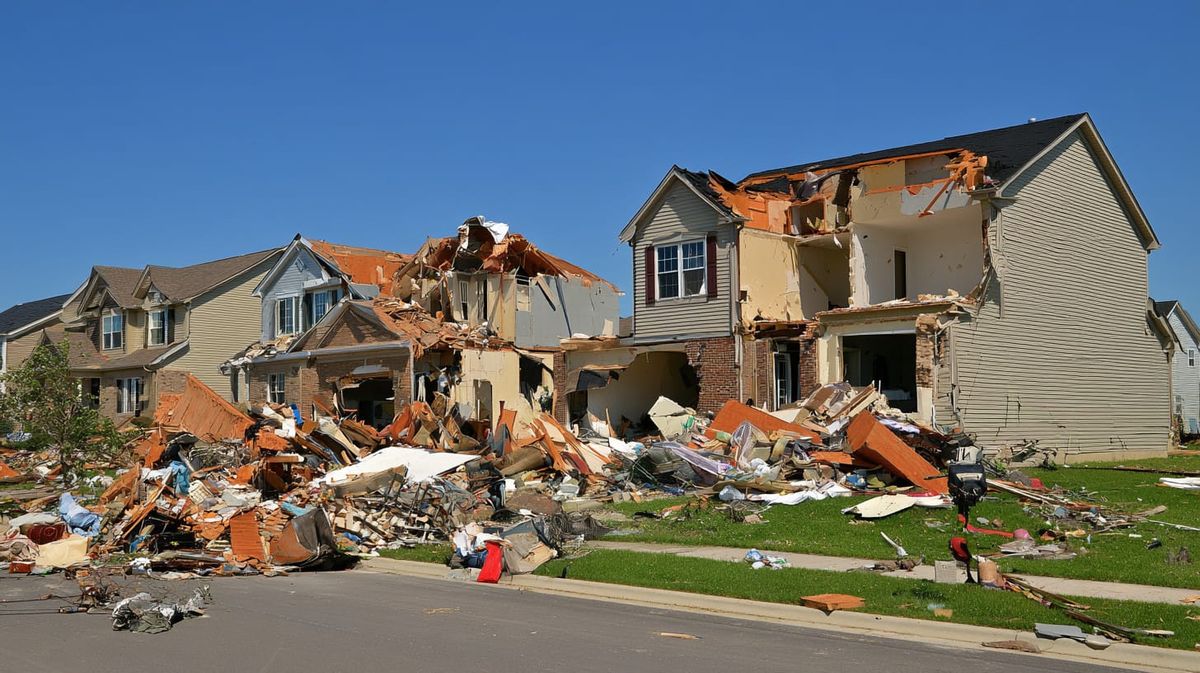
More expensive things are getting hit
Moving a tornado 200 miles east can change the economics dramatically.
Many eastern and Midwestern areas contain denser populations and more developed property than sections of the Great Plains. That means even if the total number of U.S. tornadoes doesn't increase, the amount of property in their path can.
"The Tornado Alley's kind of expanding or shifting a bit eastward," Tory Farney, vice president of Verisk Weather Solutions, told Insurance Journal. One of insurers' biggest concerns, he said, is that population exposure increases farther east, according to an Insurance Journal report.
That is already showing up in claims.
National tornado claim volume has declined from its 2023 peak, according to Verisk, but the average estimated reconstruction value has climbed every year and is now 72% higher than in 2022.
In Illinois, tornado severity has risen sharply as well. Verisk said average severity is roughly four times its 2022 level. In Kankakee County, average estimated losses reached about $104,000.
In other words, insurers don't necessarily need more tornadoes to sustain larger losses. They need tornadoes to hit more expensive buildings.
Tornadoes aren't the only problem
For homeowners, the larger story may be the entire family of severe thunderstorms accompanying the eastward shift.
Hail, damaging straight-line winds, flash flooding and tornadoes often arrive from the same storm systems. Verisk says similar geographic movement is appearing in several of those hazards as well.
Severe thunderstorms have consequently become one of the insurance industry's largest catastrophe-loss categories.
Verisk found a 59% increase in severe-thunderstorm events producing more than $1 billion in insured losses during 2020-2024 compared with 2015-2019. Severe thunderstorms, wildfires, winter storms and inland flooding collectively account for an estimated $98 billion of the industry's $152 billion in modeled annual catastrophe losses, Insurance Journal said.
That matters because these relatively frequent disasters can put steady upward pressure on insurance costs even when there isn't a headline-making hurricane or wildfire.
What homeowners should watch
The changing risk map doesn't mean homeowners across the Midwest and Southeast should expect their insurance premiums to jump immediately after a tornado outbreak.
Insurance pricing usually changes more slowly as carriers accumulate claims data, update catastrophe models and seek regulatory approval for new rates.
But homeowners in areas historically considered outside the highest-risk tornado zones could increasingly encounter familiar symptoms of today's troubled property-insurance market: higher premiums, larger wind or hail deductibles, tighter underwriting requirements or reduced coverage.
It also makes reviewing an existing policy increasingly important.
Consumers should check whether their homeowners policy covers wind and tornado damage at full replacement cost, whether the roof is subject to separate depreciation rules and whether there is a special wind or hail deductible.
A percentage deductible can be particularly expensive. A 2% wind deductible on a home insured for $500,000 means the homeowner could be responsible for the first $10,000 of covered storm damage.
And homeowners shouldn't assume the hazards stop at the traditional edge of Tornado Alley.
The weather map has already changed. The insurance map may be next.