Millions of cars can catch fire while parked — leaving owners with few good options
More than 3 million vehicles are under unusually urgent “park outside” recalls because they can catch fire even when turned off.
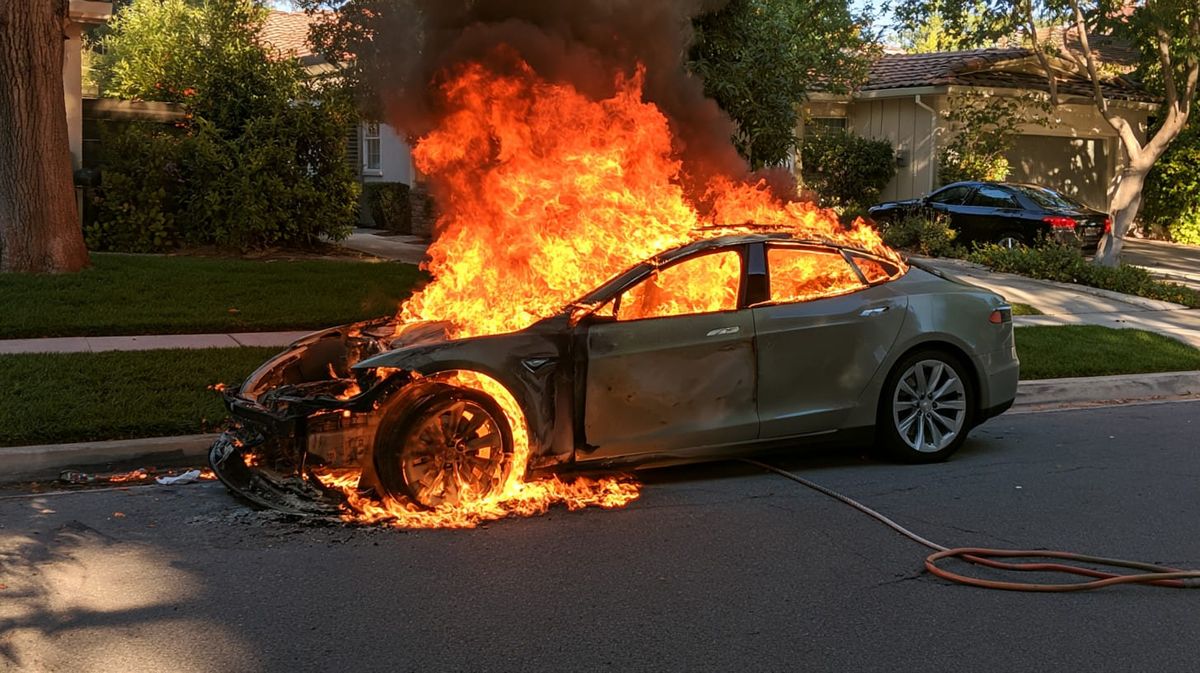
Most auto recalls warn about something that can go wrong while you're driving.
An increasingly common category carries a more unsettling warning: Don't even park the vehicle in your garage.
Millions of Americans have been told to park recalled cars and SUVs outdoors and away from homes, garages and other vehicles because an electrical component or battery can ignite even when the vehicle is switched off.
The Washington Post reports that these so-called “park outside” recalls have surged, with 17 campaigns covering roughly 1.7 million vehicles announced during the first seven months of 2026 alone. An estimated 3.2 million vehicles currently have an outstanding park-outside recall, according to Carfax.
The warning isn't theoretical.
Late last year, a 2022 Jeep Wrangler plug-in hybrid belonging to a Minnesota family caught fire just days after its owner learned that the vehicle had been recalled because its high-voltage battery could ignite. No one was injured, but the Jeep was destroyed, according to a lawsuit described by The Post.
The underlying Jeep recall covered more than 320,000 Wrangler and Grand Cherokee plug-in hybrids. NHTSA warned owners to park the vehicles outside and not charge them until repairs were completed because damaged battery cells could cause a fire while the vehicle was parked or being driven.
It's not just electric cars
Battery fires in electric vehicles attract plenty of attention, but the growing park-outside problem extends well beyond EVs. In fact, gas-powered cars have been bursting into flames for years, often when fluids drip onto hot engine parts and ignite.
A decade or two ago, there were frequent reports of Ford trucks catching fire while parked. There were even a couple of cases of firefighters' personal trucks erupting into flames and burning down the fire station.
In June, Stellantis recalled 1,076,999 Jeep Wrangler and Gladiator vehicles because an electrical connection in the power-steering pump wiring could overheat and start a fire. NHTSA said it was aware of 51 fires and one injury potentially associated with the problem.
Then in July, Kia issued another park-outside recall covering 462,869 model-year 2020 through 2024 Tellurides because a power-seat motor could overheat. Those vehicles had previously been recalled in 2024 for the same issue.
BMW, Hyundai, Kia and other manufacturers have issued similar warnings in recent years.
Why turning off the car doesn't necessarily make it safe
The phenomenon is sometimes called a “key-off fire.”
Unlike older cars in which shutting off the ignition disabled most electrical systems, today's vehicles have circuits that remain energized to operate alarms, computers, battery-management systems, remote-entry systems and other electronics.
The Post cites auto-safety experts who say newer vehicles also contain more components packed into tighter spaces, while some systems remain hot after the engine is shut down.
That means an electrical short or overheating component doesn't necessarily stop being dangerous when the driver removes the key or walks away. A vehicle parked quietly in an attached garage could therefore begin burning hours later — potentially threatening the house before anyone notices.
NHTSA says that heightened risk is why it created the formal “park outside” designation in 2015 and later made the warning more prominent in its online recall listings.
The awkward question: Where are owners supposed to park?
The warnings sound straightforward: Park outdoors, away from structures and other vehicles.
For millions of Americans, that may be much easier said than done.
A homeowner with a driveway may be able to move the vehicle away from an attached garage. Someone living in an apartment or condominium with shared or underground parking may have no obvious alternative.
Street parking can create another dilemma. Moving a vehicle away from the house may reduce the fire risk to the building but increase exposure to theft, vandalism or weather damage.
And some warnings remain in effect for weeks or months while manufacturers develop replacement parts, train dealers or produce enough components to repair every affected vehicle.
As auto-safety researcher Sean Kane put it to The Post: “Where are you going to park it?”
That's increasingly becoming one of the uncomfortable gaps in the recall system: Manufacturers can warn owners about a serious hazard before they necessarily have a repair ready.
What consumers should do
Owners shouldn't ignore a park-outside notice simply because the vehicle appears to be operating normally. The entire reason for the warning is that a fire may occur without the usual signs of a mechanical breakdown.
NHTSA recommends checking recalls by entering a vehicle's license plate or 17-character VIN at its recall website. Recall repairs performed by an authorized dealer are free.
If your vehicle has a park-outside recall:
Follow the parking instructions literally. Keep the vehicle outdoors and as far as practical from homes, garages and other vehicles until the repair is completed.
Pay attention to additional warnings. Some plug-in vehicle recalls also instruct owners not to charge the battery.
Contact a dealer immediately. Even when parts aren't available yet, ask to be placed on the repair list and document the conversation.
Ask the manufacturer about transportation assistance. Depending on the recall and automaker, loaner cars, rentals or other accommodations may sometimes be available, although they are not automatically guaranteed.
Don't assume a previous recall repair settled the issue forever. Kia's latest Telluride campaign, for example, includes vehicles previously recalled over the same fire hazard.
And don't rely solely on a recall letter arriving in the mail. Used-car purchases, address changes and delays in manufacturer records can mean notifications don't always reach the current owner promptly.
A VIN check takes only a minute.
A recall category worth taking especially seriously
Most recalled vehicles never experience the defect that triggered the recall.
But park-outside recalls deserve unusual attention because the danger isn't confined to the road — or even to the time when someone is using the car.
A defective vehicle sitting quietly in a garage can potentially threaten the vehicle next to it, the house above it and the people sleeping inside.
That's why “park outside” isn't simply bureaucratic recall language.
It's a fire warning.