Meta’s ‘spy glasses’ are being shown the door over privacy fears
Restaurants, pubs and theaters are beginning to ban Meta’s camera-equipped smart glasses

Meta’s effort to make camera-equipped artificial intelligence glasses an ordinary part of daily life is running into a basic obstacle: Many people do not want to be recorded by someone who appears to be wearing an ordinary pair of glasses.
Restaurants, pubs and theaters in Britain are banning or restricting Meta’s Ray-Ban smart glasses amid concerns that customers and employees could be filmed without their knowledge, according to The Guardian.
The venues reportedly include the Wetherspoons pub chain, ATG Entertainment theaters and several upscale restaurants. The establishments said their priority was protecting customers’ privacy and preventing unauthorized filming.
The glasses allow wearers to take photographs and record video through a camera built into the frame. They can also use Meta’s AI system to answer questions about what the wearer is seeing.
 James R. Hood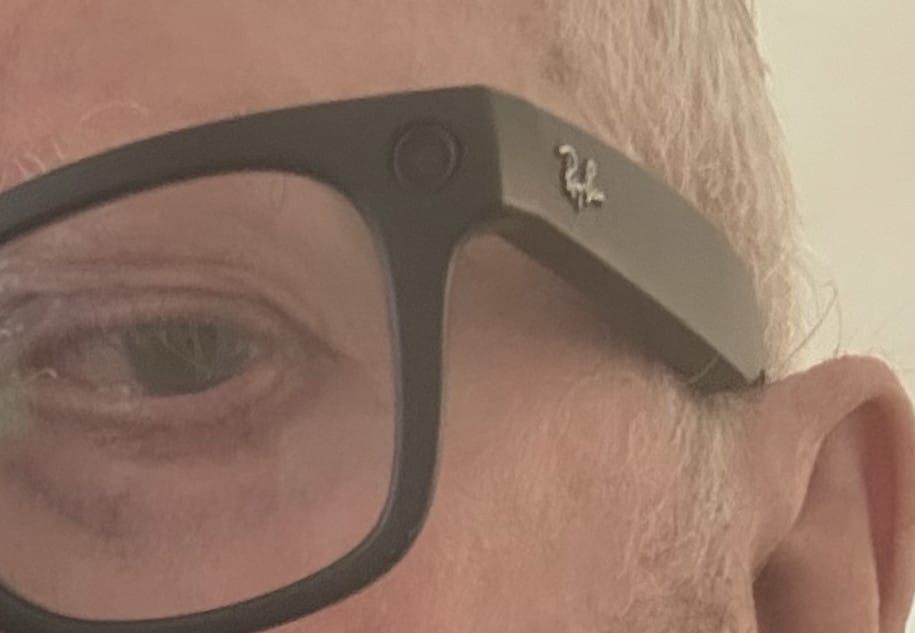
Meta says a flashing white light alerts people when the glasses are recording. The company also recently updated the devices so that covering or disabling the indicator light automatically disables the camera.
But the growing number of bans suggests many businesses do not consider that safeguard sufficient.
A small light may be difficult to notice in a crowded restaurant, dark theater or brightly lit outdoor setting. Bystanders may also have no idea what the light means — and cannot readily determine whether the glasses are merely being worn or actively collecting information.
From online tracking to real-world surveillance
The controversy represents a new phase in the long-running privacy debate surrounding Meta.
Facebook and Instagram traditionally collected enormous amounts of information about what people viewed, clicked, liked and purchased online. Smart glasses extend that data-gathering capability into homes, workplaces, restaurants, schools and public spaces.
The privacy problem is also different from an ordinary smartphone camera.
A person holding up a phone generally provides a visible indication that recording may be taking place. Meta’s cameras are built into frames designed to resemble conventional eyewear, making filming far less obvious.
That has led critics to describe them as “spy glasses” or “pervert glasses,” particularly after social-media users began posting videos apparently recorded without the subjects’ consent.
Instagram has reportedly removed some videos that appeared to harass or exploit people filmed with the glasses.
The glasses also create a consent problem for people who never purchased or agreed to use a Meta product. A restaurant patron, employee, child or passerby may become part of Meta’s data stream simply by standing in front of someone wearing the device.
Questions about where recordings go
Privacy concerns intensified earlier this year following reports that some images or video submitted to Meta AI could be reviewed by human contractors.
A class-action lawsuit filed in California alleges that Meta and eyewear company Luxottica failed to adequately disclose that recordings sent to Meta AI could be transmitted for human review and used to improve the company’s systems.
Meta has said information shared with Meta AI may be reviewed to improve the service and that the practice is addressed in its terms and privacy disclosures. The allegations have not been proven in court.
The distinction is important. Photos and videos saved privately to a user’s gallery may be treated differently from material actively submitted to an AI service for identification, translation or analysis.
Consumers may not fully understand when the glasses are simply recording and when visual or audio data is being uploaded, processed or reviewed.
Facial recognition raises the stakes
Privacy organizations have also objected to reports that Meta has considered adding real-time facial recognition capabilities to its glasses.
Such a feature could potentially allow a wearer to identify people encountered in public, connecting a face to a name or online profile.
The Electronic Privacy Information Center has asked the Federal Trade Commission and state attorneys general to investigate, warning that facial recognition in discreet wearable cameras could facilitate stalking, harassment and doxxing.
A coalition of more than 60 civil-rights and consumer organizations has also urged Meta and Ray-Ban parent EssilorLuxottica to abandon the idea.
Meta has not made facial identification a generally available feature of the glasses. But the possibility illustrates why businesses may prefer to establish restrictions now rather than wait for the technology to become more powerful.
Meta faces pressure on several fronts
The glasses controversy arrives as Meta is already defending its safety and privacy practices in courtrooms around the country.
A New Mexico jury ruled earlier this year that Meta violated state consumer-protection law and harmed children’s mental health and safety, imposing $375 million in penalties. Meta has denied wrongdoing and said it would appeal, AP News reported.
In a separate California case, a jury found Meta and YouTube partly responsible for harm suffered by a young woman who said she became addicted to social media as a child. Meta has appealed the $6 million verdict.
The company also faces lawsuits from states and families alleging that Facebook and Instagram were deliberately designed to keep children engaged despite known risks. Four families filed another lawsuit in late July following the deaths of teenagers who had used major social-media platforms. The companies dispute claims that their products caused the harms alleged, AP News said.
Meta disclosed $2.4 billion in legal expenses during the second quarter of 2026, costs that contributed to a decline in quarterly profit, according to the Associated Press.
The individual cases involve different products and legal questions, but the underlying dispute is similar: whether Meta builds safety and privacy protections into its products before problems emerge or responds only after consumers, regulators and courts push back.
Businesses are writing their own rules
Smart glasses are still new enough that laws and social customs have not caught up with them.
Photography may be legal in many public or semi-public places, but restaurants, theaters and other privately owned establishments can generally establish rules governing customer conduct on their premises.
That makes businesses an early line of defense for consumers who do not want to be recorded while eating, drinking, watching a performance or using a restroom or changing area.
Venues may require customers to remove the glasses, keep them inside a case or leave the premises if they refuse to comply.
Workplaces, schools, medical offices and fitness centers are likely to confront similar questions, particularly where confidential conversations, children, health information or undressed individuals may be present.
What consumers can do
People who believe they are being recorded can ask the wearer whether the camera is active and request that recording stop. In a business, they can also alert a manager or member of staff.
Before wearing smart glasses into a restaurant, theater, workplace or private event, owners should check the establishment’s rules and ask permission before recording anyone.
Users should also review Meta’s privacy settings and understand the difference between material stored on their phone and information sent to Meta AI for processing.
Parents may want to tell children that glasses can contain cameras even when they look like ordinary eyewear.
The larger issue is unlikely to disappear. Meta and other technology companies see AI glasses as a possible successor to the smartphone. Their success, however, will depend not only on what the devices can do but also on whether everyone standing in front of them is willing to participate.