Judge questions whether 69,000 J&J talc plaintiffs can prove powder caused their cancer
A federal magistrate judge has ordered thousands of ovarian-cancer plaintiffs to explain how they can prove that Johnson & Johnson talc caused each woman’s illness.
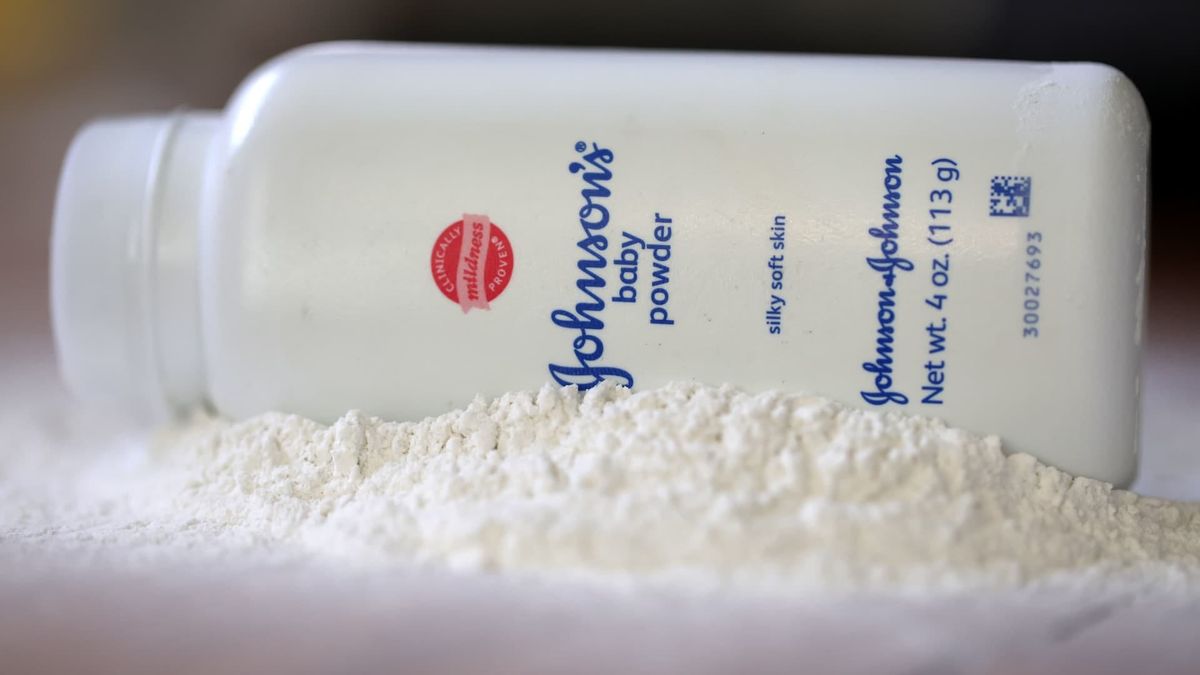
A federal judge has raised a potentially case-ending question for approximately 69,000 women who say Johnson & Johnson’s talc products caused their ovarian cancer: Can they prove that the powder caused the cancer of each individual plaintiff?
U.S. Magistrate Judge Rukhsanah Singh, who is helping oversee the massive federal talc litigation in New Jersey, said testimony from two of the plaintiffs’ medical experts created serious doubts about whether the women can offer legally admissible evidence connecting their individual cancers to talc exposure.
The judge ordered the plaintiffs to respond by Nov. 19 and explain why their cases should not be dismissed.
 James R. Hood
The order does not immediately throw out the lawsuits. But it puts the plaintiffs under pressure to show that their experts can do more than testify that talc might increase the general risk of ovarian cancer. They must also offer a scientifically reliable basis for concluding that talc probably caused a particular woman’s cancer.
That is often one of the most difficult hurdles in toxic-exposure litigation.
“This is not an instant dismissal,” Singh wrote, according to a report in Insurance Journal. But she questioned how any plaintiff could meet her burden of proof if the experts could not rule out other possible causes of the disease.
 The Editors
Why the distinction matters
Product-liability cases frequently require plaintiffs to prove two different propositions.
The first is general causation: whether a product is capable of causing a particular disease.
The second is specific causation: whether the product more likely than not caused the disease suffered by the individual bringing the lawsuit.
A scientific study may show that a group exposed to a substance had a somewhat higher incidence of cancer. That does not necessarily establish that the substance caused one particular person’s cancer, especially when the disease has several known or possible risk factors.
The J&J plaintiffs’ experts, Judith Wolf and Daniel Clarke-Pearson, reportedly acknowledged during testimony that they could not completely exclude other potential causes of the six women’s cancers selected for the first federal test trials. Those cases are intended to serve as “bellwethers,” helping the parties and the court assess the strengths, weaknesses and possible settlement value of the remaining claims.
If the plaintiffs cannot satisfy the court’s evidentiary standard, the result could be dismissal of many — and possibly most — of the federal ovarian-cancer cases before juries hear them.
The ruling does not settle the scientific debate
Johnson & Johnson said the order moves the litigation closer to what it called the “complete dismissal” of the talc claims. The company has long maintained that its talc products were safe and did not contain asbestos.
But the judge’s causation questions do not amount to a finding that talc can never contribute to ovarian cancer.
Scientific authorities continue to describe the evidence as concerning but not conclusive.
The American Cancer Society says studies of personal talcum-powder use have produced mixed results, although some suggest a possible increase in ovarian-cancer risk. It also notes that asbestos-containing talc is carcinogenic.
In 2024, the International Agency for Research on Cancer, part of the World Health Organization, classified talc as “probably carcinogenic to humans.” The classification was based on limited evidence involving ovarian cancer in humans, sufficient evidence in experimental animals and strong evidence concerning biological mechanisms associated with cancer.
An IARC classification identifies the strength of evidence that an agent can cause cancer. It does not measure the size of the risk from a particular level or type of exposure.
The FDA says pure talc is generally considered safe but can sometimes be contaminated with asbestos because the two minerals can occur near each other underground. Asbestos is a known carcinogen, and the FDA has conducted periodic testing of talc-containing cosmetics.
A litigation fight years in the making
The federal cases are part of multidistrict litigation known as MDL 2738, which consolidates similar lawsuits for pretrial proceedings in the U.S. District Court for New Jersey.
The litigation was effectively frozen for more than three years while J&J repeatedly tried to resolve the claims through bankruptcy.
The company transferred talc liabilities into specially created subsidiaries and sought Chapter 11 protection — a maneuver critics described as the “Texas Two-Step.” Courts rejected three bankruptcy attempts.
The most recent proposal would have committed roughly $10 billion to resolve current and future ovarian-cancer claims. A bankruptcy judge rejected the plan in March 2025 after finding serious defects in the claimant-voting and solicitation process. J&J then said it would return to the regular civil-court system and fight the claims individually.
The federal litigation resumed in March 2025.
J&J stopped selling talc-based baby powder in the United States in 2020 and ended worldwide sales in 2023, replacing talc with cornstarch.
State cases could produce different results
The New Jersey order applies to the consolidated federal ovarian-cancer cases. It does not automatically dispose of talc lawsuits pending in state courts, mesothelioma cases or claims based on different evidence.
J&J has won some talc trials and obtained reversals of some large verdicts. Plaintiffs have also won substantial jury awards.
In one recent case, a Minnesota jury awarded $65.5 million to a woman who alleged that asbestos-contaminated J&J talc contributed to her mesothelioma. J&J said it would appeal and continued to deny that its product contained asbestos, according to AP News.
The differing outcomes illustrate why a single ruling should not be read as a final answer to every talc claim. Each case may involve different products, diseases, exposure histories, medical evidence, experts and state laws.
What consumers should do
Check products for talc
Talc may appear on an ingredient list as “talc,” “talcum,” “cosmetic talc” or “magnesium silicate.”
Consumers who prefer to avoid it can choose powders made with cornstarch, arrowroot starch, rice starch or other talc-free ingredients. Avoid assuming that a product is talc-free merely because it is marketed as “natural.”
Avoid creating airborne powder
Loose powders can be inhaled when shaken or applied. Do not create a cloud of powder around babies or children, and keep cosmetic powders away from the nose and mouth.
Using a cream, lotion, pressed powder or talc-free product can reduce airborne dust.
Do not panic over past use
A history of talcum-powder use does not mean a person will develop cancer. Even studies finding an association generally describe an increase in risk, not a certainty that disease will occur.
There is no standard medical test that can determine whether past talc use will cause ovarian cancer in someone who has no symptoms.
Take persistent symptoms seriously
Possible ovarian-cancer symptoms can include abdominal or pelvic pain, bloating, difficulty eating, feeling full quickly and urinary urgency or frequency.
These symptoms are common and are often caused by conditions other than cancer. But a consumer should contact a healthcare professional when symptoms are new, persistent, worsening or occurring frequently.
Preserve evidence if cancer has been diagnosed
A person diagnosed with ovarian cancer or mesothelioma who had substantial talc exposure may want to gather:
- Medical, pathology and treatment records;
- The approximate years and frequency of powder use;
- Product names and photographs of old containers;
- Receipts, loyalty-account records or online purchase histories;
- Statements from relatives who remember the product being used; and
- Information about possible occupational asbestos or talc exposure.
Do not throw away an old container that may be relevant to a legal claim. Place it in a sealed bag, avoid disturbing the contents and ask an attorney how it should be stored or tested.
Contact the existing lawyer
Anyone already represented in the federal talc litigation should contact her law firm and verify that the firm has current medical records, exposure information and contact details.
The Nov. 19 deadline is directed at the plaintiffs and their lawyers, but individual claimants should not assume that no action is required. They should ask whether additional records, questionnaires or expert evaluations are needed.
Be cautious about lawsuit solicitations
Mass-tort advertising often increases after a major court ruling.
Consumers should verify a law firm’s identity, location and state-bar standing before signing an agreement. Ask whether the firm will handle the case itself or refer it to another firm, what expenses may be deducted and how fees will be calculated.
No legitimate lawyer can guarantee a settlement or predict an exact payment.
What happens next
The plaintiffs are expected to submit a detailed response by Nov. 19 addressing the court’s concerns about specific causation and expert testimony.
The judge could allow the six bellwether cases to proceed, require additional expert work, narrow the types of claims that may continue or recommend dismissal of some or all of the federal cases.
Any major dismissal ruling would likely trigger appeals.
The immediate message for consumers is more limited: The court has not declared talc harmless, but it is demanding a much more individualized and scientifically defensible explanation of how talc caused each plaintiff’s cancer.