Why washing lettuce isn't enough
Washing fresh fruits and vegetables is still a good idea. But outbreaks involving Cyclospora, Salmonella and other pathogens demonstrate why consumers shouldn't think of rinsing produce as a guarantee of safety.
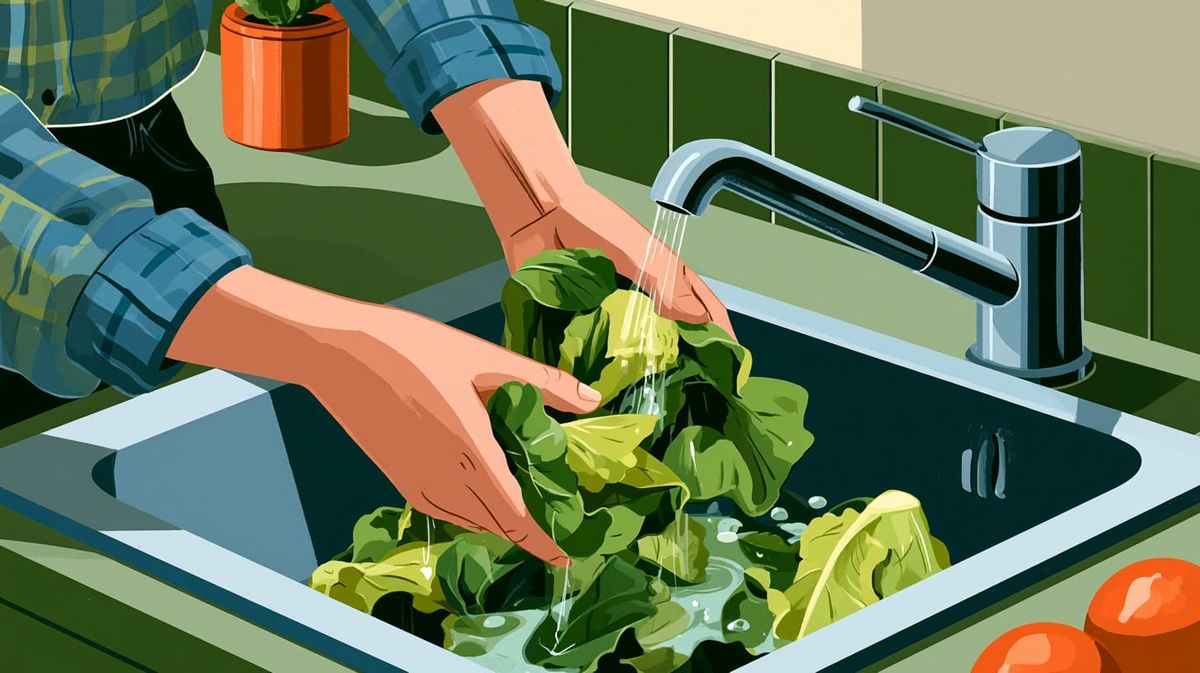
CDC recommends washing fresh produce thoroughly under running water before eating, cutting or cooking it. But when it comes to Cyclospora, CDC specifically warns that washing alone cannot guarantee removal of the parasite.
Why is lettuce difficult to make completely safe?
Leafy greens have folds, crevices and large surface areas where microorganisms can remain.
More importantly, contamination can occur long before lettuce reaches your refrigerator — during growing, harvesting, transportation, processing or packaging. FDA says fresh-cut produce may also be exposed when ingredients from multiple sources are mixed together during processing.
Unlike foods that are cooked, most salads and other fresh-cut produce have no final kill step capable of reliably destroying pathogens before they are eaten.
 James R. Hood
Doesn't commercial washing solve the problem?
Not necessarily.
Commercial fresh-cut produce is often washed with water containing antimicrobial treatments, which can reduce some microorganisms and help prevent contaminated wash water from spreading them to additional produce.
But FDA says such treatments may not adequately control Cyclospora. That means preventing contaminated produce from entering a processing plant in the first place can be more important than trying to disinfect it afterward.
That's one reason FDA's new fresh-cut produce guidance puts emphasis on supplier verification and supply-chain controls as well as sanitation inside processing plants.
Should you wash bagged salad that's marked "ready to eat"?
Generally, follow the package instructions.
The bigger point is that washing at home should not be considered a substitute for obeying an outbreak warning or recall. If FDA or CDC says a particular lettuce or salad product has been recalled, don't try to wash it and eat it anyway. Throw it away or return it. CDC gives that instruction for the Taylor Farms iceberg lettuce recall.
What can consumers actually do?
- Wash hands before and after handling fresh produce.
- Rinse produce thoroughly under running water before eating or cutting it.
- Keep produce separated from raw meat, poultry and seafood.
- Clean knives, cutting boards, counters and containers that may have contacted contaminated food.
- Refrigerate cut produce promptly.
- Pay attention to FDA and CDC outbreak notices and recalls.
- Never assume washing can make a recalled product safe.
Cooking provides considerably more protection when practical. CDC says heating produce to at least 158°F (70°C) can kill Cyclospora. Of course, that's not especially useful advice if what you're planning for dinner is a green salad.
The bottom line
Wash produce, but don't rely on washing to eliminate every food-safety risk.
For foods meant to be eaten raw, much of the real protection has to come farther up the supply chain — clean growing conditions, safe water, careful processing, effective sanitation and suppliers that prevent contaminated produce from reaching stores and restaurants in the first place. FDA's newly finalized guidance is aimed squarely at those controls.