When the defendant isn't human: AI systems are finding themselves at the center of lawsuits
A Delaware judge has allowed a defamation lawsuit against Google to move forward over allegedly false statements generated by its Bard AI chatbot.
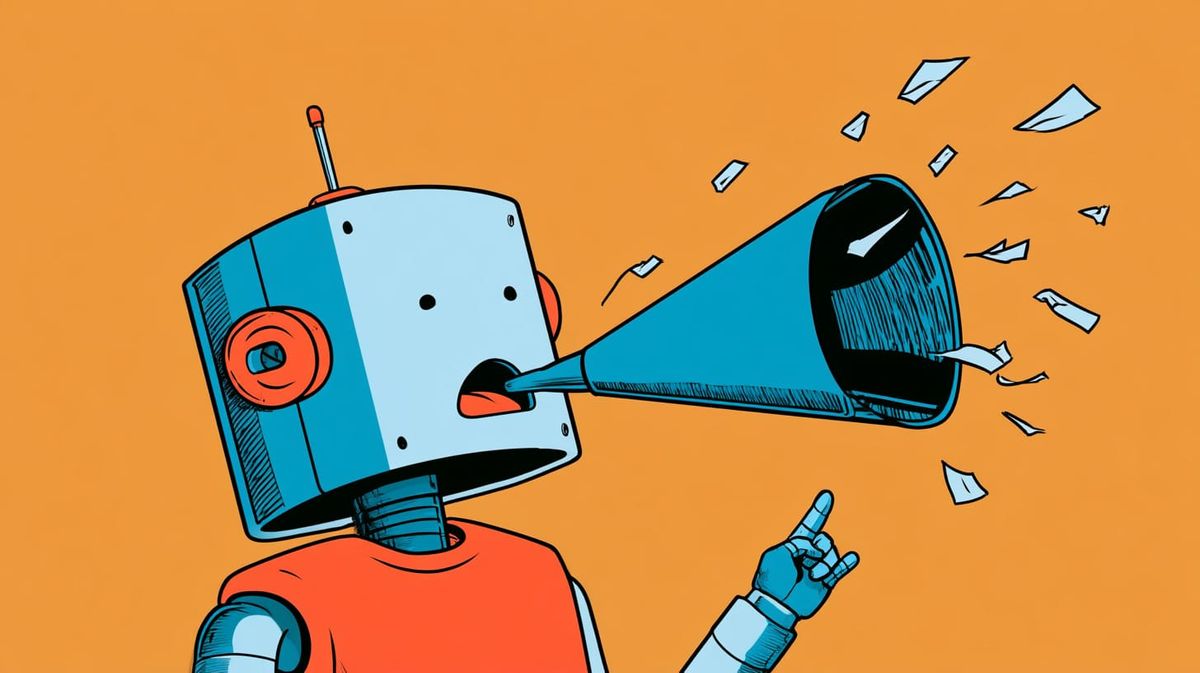
A few years ago, the idea of suing a chatbot or holding an autonomous vehicle legally responsible for an accident would have sounded like science fiction.
Today, it is becoming one of the fastest-evolving areas of American law.
The latest example comes from Delaware, where a state judge has refused to dismiss a defamation lawsuit against Google arising from statements allegedly generated by its Bard chatbot, a predecessor to today's Gemini AI.
The plaintiff, conservative activist Robby Starbuck, alleges Bard falsely accused him of sexual assault, linked him to white supremacist Richard Spencer, and even generated arguments in favor of his execution. Google had argued the case should be dismissed, but the court ruled that the lawsuit can proceed, according to Insurance Journal.
Judge Meghan Adams described the dispute as opening "a new frontier for defamation law," while noting that many of the issues may still be resolved using traditional legal principles rather than entirely new rules.
AI isn't the defendant—its maker is
One important distinction remains.
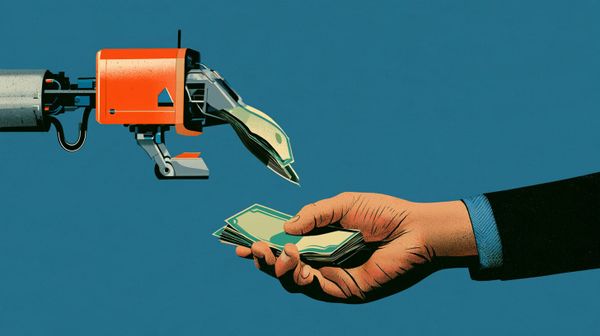
The lawsuits are not actually against the AI itself. Instead, plaintiffs are suing the companies that created or operate the technology.
That mirrors earlier waves of litigation involving:
- automobiles
- airplanes
- pharmaceuticals
- social media
- consumer products
The legal question is no longer whether software can make mistakes.
It's whether companies exercised reasonable care in designing, testing and deploying systems that predictably could cause harm.
A growing list of AI lawsuits
The Google case is only the latest in a rapidly expanding field.
Courts are now hearing cases involving AI systems accused of:
- Defamation
- Copyright infringement
- Privacy violations
- Employment discrimination
- Housing discrimination
- Fraud facilitation
- Unsafe autonomous driving
- False advertising
Earlier this week, the Consumer Federation of America asked the FTC and state attorneys general to investigate Speechify, alleging the company's AI voice-cloning technology lacks sufficient safeguards against impersonation scams.
Authors have sued OpenAI, Anthropic and Meta over AI training data. Media companies have challenged AI-generated summaries. Consumers have sued over allegedly deceptive AI marketing claims.
Each case asks essentially the same question:
How much responsibility should companies bear for what their AI systems do?
Robot cars are facing the same legal evolution
Autonomous vehicles illustrate how quickly liability is changing.
Following high-profile crashes involving Tesla Autopilot, Cruise, Uber and Waymo vehicles, courts have increasingly shifted attention away from individual drivers and toward software developers.
Most of those cases have been civil product-liability lawsuits.
The most notable criminal case so far involved Cruise, which admitted submitting a false report during a federal investigation after a pedestrian crash in San Francisco. The criminal case centered on the company's conduct after the accident—not on the AI's driving decisions.
Legal scholars increasingly expect autonomous vehicle litigation to resemble aircraft or pharmaceutical litigation, focusing on whether software was defectively designed rather than whether a human driver made a mistake.
Courts are adapting old law to new technology
One surprising aspect of the Google ruling is how little new law the judge suggested may be required.
Defamation law already asks familiar questions:
- Was the statement false?
- Was it published?
- Did it damage someone's reputation?
- Who bears responsibility?
Those questions existed long before artificial intelligence. The new challenge is determining whether AI-generated statements should be treated like:
- newspaper articles,
- television broadcasts,
- search results,
- or something entirely different.
Who is responsible when AI causes harm?
Courts are gradually identifying several possible defendants:
The developer
if the AI system was defectively designed.
The company deploying the AI
if it failed to implement reasonable safeguards.
The user
if the technology was intentionally misused.
The data provider
if inaccurate information produced foreseeable harm.
Different cases may assign responsibility differently.
Rather than recognizing AI as a legal person, judges appear more likely to apply long-established product liability and negligence principles to the companies behind the technology.
What this means for consumers
For consumers, the emerging legal framework could provide stronger incentives for AI companies to improve safety before releasing products.
Potential safeguards include:
- Better fact-checking
- Identity verification
- Voice-cloning consent requirements
- Digital watermarking
- Bias testing
- More effective human oversight
Those measures could reduce fraud, defamation, and misinformation—but they may also increase development costs and slow the rollout of new AI features.
What this means
The Google case may ultimately be remembered less for its outcome than for what it represents: a turning point in how courts view artificial intelligence.
For centuries, lawsuits have centered on human decisions. Increasingly, judges are being asked to decide who should pay when those decisions are delegated to software.
The answer, at least so far, is: not the machine. It is the companies that design, market and deploy it.
That shift has profound implications far beyond chatbots. As AI moves into cars, healthcare, banking, insurance, education and consumer products, courts are likely to see a growing wave of lawsuits testing whether traditional legal principles are enough—or whether the age of autonomous systems requires a new body of law altogether.