'We buy any house, even yours' - good idea, or not?
The "discount for cash" deal is standard in lots of business dealings, where both parties know what they're doing, but it's often a bad model for homeowners attracted by the notion of a fast, as-is sale.
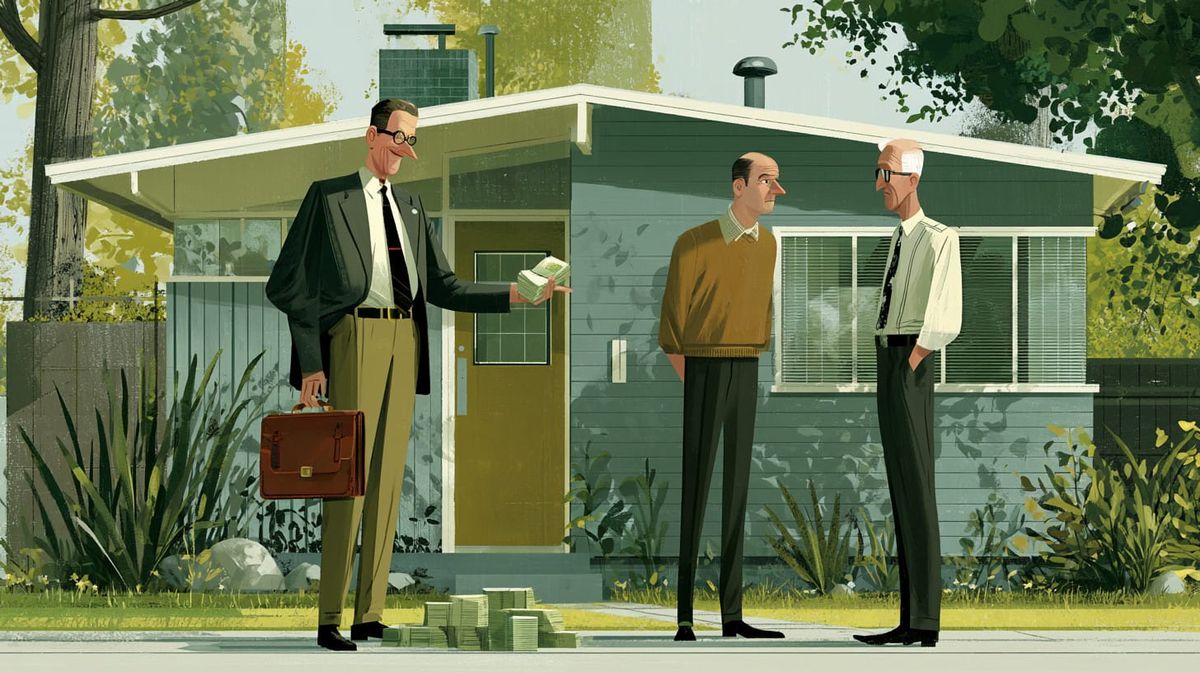
I was surprised a few days ago to get an unsolicited cash offer for our house in the Washington, D.C., area. The house wasn't listed for sale anywhere and no one except my trusty Meta smart glasses knew we were thinking of selling.
The price offered was about $150,000 under the going rate in the neighborhood but I'm a curious guy so I let the would-be buyer send a rep out to visit and tour the house, even though the letter promised "no inspections."
After some stilted conversation and an abbreviated tour, the rep left, urging a quick turnaround on the offer.
Like everyone, I've seen the "We buy any house" signs tacked on telephone poles but I didn't know much more about it. A little research found that consumer advocates and regulators are more than a little familiar with some of the larger players.
They generally draw a sharp distinction between legitimate cash buyers and predatory “we buy houses” operators. Their basic view is that the cash-sale model can be useful for someone who needs speed, certainty or an as-is sale, but it is also ripe for abuse because sellers often give up tens of thousands of dollars in equity without realizing it.
FTC: Sellers were misled
The FTC’s Opendoor case is the clearest federal enforcement marker. In 2022, the FTC alleged that Opendoor misled sellers into thinking they would make more money selling to Opendoor than on the open market.
But, the agency said, most sellers actually made thousands less, because Opendoor’s offers were below market on average and its costs were higher than typical traditional-sale costs. Opendoor agreed to pay $62 million and stop making deceptive claims about likely proceeds and costs.
The consumer-advocate critique is not simply “cash offers are bad.” It is that the pitch often targets people under pressure: older homeowners, heirs, people facing foreclosure, owners of homes needing repairs, people recently divorced or bereaved, and homeowners sitting on large equity but short on cash.
ProPublica’s reporting on HomeVestors' “We Buy Ugly Houses” found allegations that some franchisees used deception and targeted people in vulnerable circumstances; then-CFPB Director Rohit Chopra called the practices “very troubling” and said DOJ and state attorneys general should be alerted where federal jurisdiction is limited.
The economic reality is also important. Academic research on iBuyers found that sellers accept a discount in exchange for speed and certainty. One study found iBuyers bought homes at an average 3.6% discount relative to comparable traditional sales. On a $1.2 million house, that would be roughly $43,000 before considering any service fees, repair credits, or other adjustments.
State consumer agencies warn that some “we buy homes” pitches are outright scams. The North Carolina Attorney General’s office says scammers may use “we buy homes” ads to get struggling homeowners to sign over control or title while leaving them responsible for the mortgage.
Its advice is blunt: beware of anyone who asks you to sign over title based on promises, and talk directly to your lender if mortgage trouble is the issue.
Stronger rules needed
Advocates have pushed for stronger rules. The National Consumer Law Center’s Sarah Bolling Mancini has argued that homeowners who have never publicly listed their houses should have an easy way to cancel a signed contract, because listing exposes the property to competing offers and helps establish fair market value.
Other suggested protections include cooling-off periods, mandatory written cancellation forms, and penalties for persistent unsolicited calls, texts, postcards, or “bandit signs.”
For a homeowner, the practical takeaway is:
The cash offer is not the market value. It is a wholesale price that pays you for speed and certainty while giving the buyer room to profit.
Always get a market comparison. Before signing anything, ask a reputable local Realtor or appraiser what the house would likely bring if listed publicly, even as-is.
Watch for repair-credit games. A common risk is a high initial offer followed by a lower final offer after inspection.
Do not sign anything on the spot. Especially avoid contracts that include assignment rights, long lock-up periods, penalties for backing out, or vague “service” or “processing” fees.
In general, the usual consumer-advocate advice would be: get the cash offer in writing, then compare it against a public listing estimate and a conventional cash-buyer estimate from a local agent. The difference is the price of convenience.