TSA pay crisis drags on as funding fight stalls, raising risk of renewed airport delays
White House order restored pay temporarily—but long-term funding remains unresolved
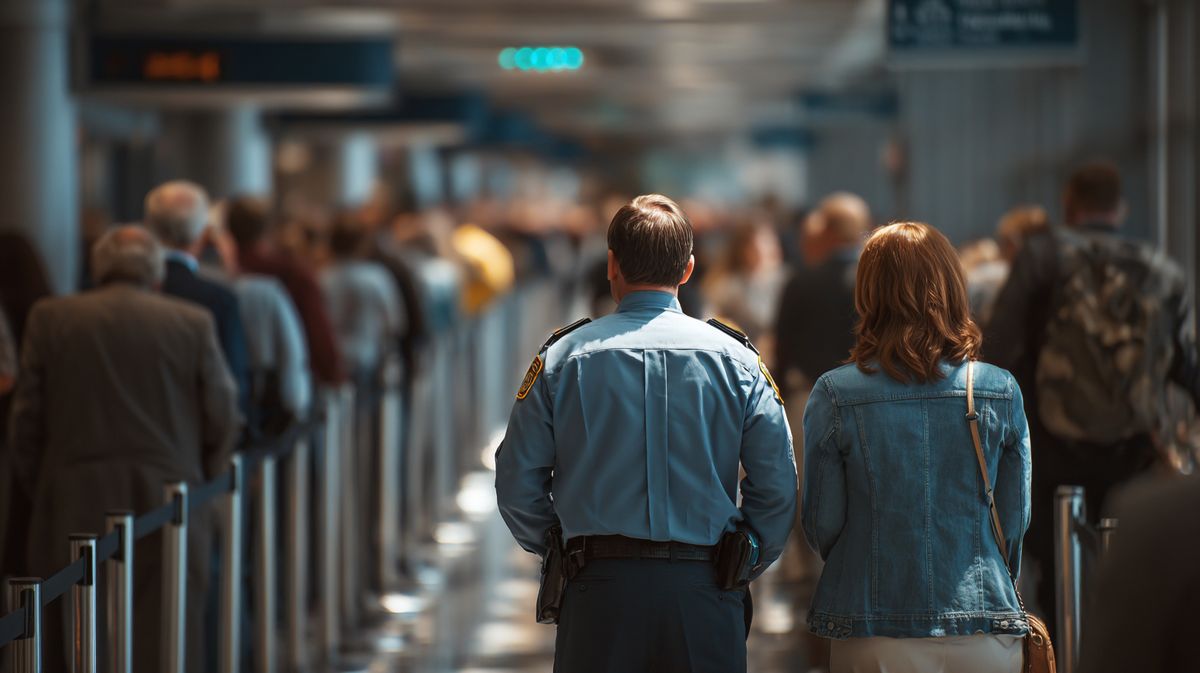
A fragile fix for a growing problem
A pay crisis that has already rattled the nation’s airport security system is far from over.
Workers at the Transportation Security Administration (TSA) have endured weeks of missed or disrupted pay during a prolonged funding lapse at the Department of Homeland Security, forcing many to dip into savings, take on debt, or consider leaving their jobs.
While a recent White House directive restored pay and authorized back pay, officials and analysts say the fix is temporary—and could unravel again if Congress fails to act.
Paychecks stopped—then restarted
The disruption began in mid-February, when DHS funding lapsed and tens of thousands of frontline workers—including TSA screeners—were required to keep working without guaranteed pay.
Reports described:
- Missed full paychecks
- Payroll processing errors
- Growing financial strain among lower-paid federal workers
The situation became severe enough that some officers reportedly:
- Called out sick or quit
- Sought second jobs
- Relied on credit cards or emergency savings
In early April, the White House moved to stabilize the situation, ordering DHS to issue pay and provide retroactive compensation.
But that move did not resolve the underlying funding gap, it just provided a temporary fix.
Why the crisis isn’t over
At its core, the TSA pay issue is a symptom of a broader political standoff:
- Congress has not passed a full-year DHS funding bill
- Lawmakers have been out of session into mid-April
- Current pay authority relies on executive action, not appropriated funds
That creates a precarious situation:
If funding isn’t resolved, TSA payroll could once again become uncertain—without a clearly defined cutoff date.
Despite online speculation, there is no confirmed deadline when TSA pay would stop again. But the absence of a deadline doesn’t mean stability—it reflects ongoing uncertainty.
Affordability Watch: when missed pay meets rising costs
For TSA workers, many of whom earn modest wages, even short disruptions can have outsized effects.
Missed or delayed paychecks come at a time when:
- Credit card balances and interest rates remain elevated
- Housing and transportation costs continue to strain budgets
- Emergency savings for many households remain thin
That combination can quickly spiral into:
- Late bill payments
- Increased borrowing
- Long-term financial stress
For a workforce already facing high turnover, the pay instability risks accelerating attrition.
What this means for travelers
The consequences extend well beyond TSA employees.
Airport operations are highly sensitive to staffing levels. Even modest shortages can lead to:
- Longer security lines
- Delays during peak travel periods
- Reduced screening capacity at smaller airports
Earlier in the funding lapse, some airports reported:
- Noticeable increases in wait times
- Fewer open screening lanes
- Rising absenteeism among officers
If pay uncertainty resurfaces, those problems could intensify—especially heading into busy travel seasons.
The bottom line
The TSA pay crisis has moved from disruption to temporary stabilization—but not resolution.
- Workers are being paid again—for now
- Back pay is being issued
- But long-term funding remains unsettled
Until Congress reaches a deal, the system is operating on a stopgap—and the risk of renewed disruption remains.
What to watch
- Congressional action on DHS funding
- TSA staffing levels and attrition rates
- Airport wait-time trends heading into peak travel periods
- Any further executive actions to maintain payroll
The simplest short-term step for travelers is to check your airport’s website for information on TSA wait-times. Nearly all airports post this information and while it may not be precise, it will at least give you an indication of what lies ahead.
Keep in mind that showing up too early not only eats up your time but also contributes to crowding. Many larger airports have been asking passengers not to show up four or five hours early, as many have been doing.
The bottom line? It’s a difficult time to travel by air. For shorter trips, it might be wise to look into driving, taking a train (if there is one) or, for business meetings, scheduling a video meet-up.