Trump’s CFPB nominee faces Senate hearing as consumer watchdog hangs in the balance
The next director could decide whether to proceed with a plan that would eliminate most of the bureau’s enforcement and supervision staff

The Senate Banking Committee will hold a confirmation hearing Thursday for Brian Johnson, President Donald Trump’s nominee to lead the Consumer Financial Protection Bureau — an agency whose future may depend heavily on how Johnson answers lawmakers’ questions.
Johnson has been nominated for a five-year term as CFPB director. The White House formally submitted his nomination to the Senate on June 10.
Although confirmation hearings for financial regulators rarely attract broad public attention, this one could have direct consequences for consumers dealing with credit cards, mortgages, debt collectors, credit bureaus, payment apps, auto lenders and other financial companies.
The CFPB is supposed to police those markets, investigate consumer complaints, supervise financial institutions and enforce federal consumer-protection laws. But much of that work has been curtailed under acting director Russell Vought, who has sought to sharply reduce the bureau’s workforce, regulations and enforcement activity.
 The Editors
Johnson could decide the fate of mass layoffs
One of Johnson’s first major decisions, if confirmed, could be whether to move ahead with a sweeping reduction-in-force plan that would cut the CFPB’s workforce to 556 employees — less than one-third of its size when Trump returned to office.
The proposal would eliminate roughly 80% of the bureau’s enforcement positions and 85% of its supervision staff, according to court filings. Those are the employees who investigate alleged wrongdoing and examine whether banks and other financial companies are complying with the law.
A federal judge recently paused litigation over the layoffs after both the administration and the CFPB employee union agreed that Johnson, if confirmed, should be given the opportunity to review the plan and decide whether to proceed.
That gives the confirmation hearing unusually high stakes. Senators are likely to press Johnson on whether he supports the proposed staffing cuts, whether the bureau should continue bringing enforcement cases and whether it can fulfill its legal responsibilities with only a fraction of its former workforce.
They may also question whether Johnson would operate independently or simply continue the policies established by Vought and the White House.
Vought is expected to lose his authority to serve as acting director around Aug. 1, adding urgency to the Senate process, according to the newsletter Consumer Finance Monitor.
 James R. Hood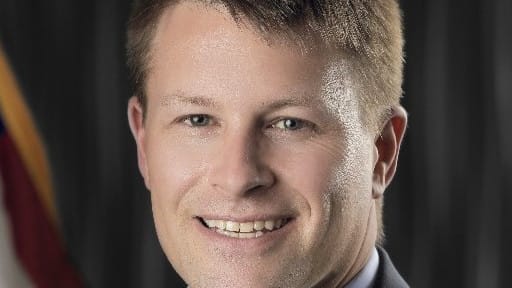
Who is Brian Johnson?
Johnson is not new to the bureau.
He joined the CFPB in December 2017 as a senior adviser, became principal policy director in 2018 and later served as acting deputy director and deputy director during the first Trump administration.
Before joining the bureau, Johnson spent more than five years on the House Financial Services Committee, where he worked on consumer credit, mortgage lending, credit reporting, banking and data-security policy.
He previously worked for the Ohio attorney general and the White House Domestic Policy Council and holds both an economics degree and a law degree from the University of Virginia.
After leaving government, Johnson worked at a law firm and at financial-services consulting firm Patomak Global Partners. He joined Capital One in November 2024 as vice president and U.S. card compliance officer.
That combination of regulatory and industry experience is likely to be portrayed by supporters as an asset and by critics as a potential conflict.
Banks line up behind the nominee
Major banking, mortgage and credit-union trade associations have endorsed Johnson, describing him as an experienced regulator who understands both consumer law and the financial industry.
American Bankers Association President and CEO Rob Nichols said Johnson would bring a “thoughtful approach” to setting the bureau’s priorities. The Consumer Bankers Association called for a more stable CFPB that operates within its congressional mandate, while the Mortgage Bankers Association praised Johnson’s knowledge of rulemaking, supervision and enforcement, the Consumer Finance Monitor said.
The industry groups have emphasized regulatory certainty, tailored rules and reductions in compliance burdens.
Those positions suggest Johnson would probably receive strong Republican support and could have enough votes to advance from the committee, although the timing of a full Senate vote remains uncertain.
Warren calls Johnson another “hatchet man”
Sen. Elizabeth Warren of Massachusetts, the committee’s ranking Democrat and the original architect of the CFPB, has already made clear that Johnson will face a hostile reception from at least some senators.
When the nomination was announced, Warren called Johnson the administration’s “next hatchet man” and accused Trump of trying to gut an agency that she said has returned more than $21 billion to consumers harmed by financial companies.
Other Democrats are likely to focus on Johnson’s willingness to restore enforcement activity, protect the consumer-complaint database and preserve rules involving overdraft fees, credit reporting, medical debt, mortgages and digital payments.
They may also ask whether he agrees with Vought’s recent testimony that Congress should consider abolishing the bureau or dramatically restricting its authority.
Vought has defended his tenure by arguing that the CFPB imposed unnecessary costs and discouraged lending. Consumer advocates dispute that analysis and say weakening the bureau leaves families more exposed to fraud, abusive lending and illegal fees.
What consumers should watch for
The hearing may reveal whether Johnson intends to operate the CFPB as a smaller but functioning regulator or oversee the final stages of its dismantling.
Among the most important questions:
Will he preserve the bureau’s enforcement and supervision divisions?
Without investigators and examiners, consumer-protection laws may exist largely on paper.
Will the CFPB continue accepting and publishing consumer complaints?
The complaint system helps consumers seek responses from companies and allows regulators and journalists to detect emerging patterns of abuse.
Will he pursue companies that violate existing law?
Johnson could choose to revive suspended investigations and lawsuits — or continue the administration’s retreat from enforcement.
Will he maintain independence from the financial industry?
His current position at Capital One is likely to intensify questions about recusals, conflicts and the bureau’s willingness to challenge major banks.
The nomination is not simply a personnel change. It may determine whether the CFPB remains capable of protecting consumers or becomes a much smaller agency with little practical ability to confront powerful financial companies.
Thursday’s hearing should offer the first clear indication of which version of the bureau Johnson intends to lead.