Trump shakes hands with Xi in Beijing, but a seized tanker, $4.53 gas and a Thermos recall rule the morning at home
President Trump sat down with Xi Jinping in the Great Hall of the People on Thursday, and Wall Street watched in case the meeting produced anything that might pull gasoline back below $4.50 a gallon. It did not.
By Perplexity
President Trump sat down with Xi Jinping in the Great Hall of the People on Thursday, and Wall Street watched in case the meeting produced anything that might pull gasoline back below $4.50 a gallon. It did not.
While the two leaders traded toasts and warnings, an unidentified commercial ship was seized 38 nautical miles off the United Arab Emirates and pointed toward Iran, a fresh reminder that the Strait of Hormuz is still effectively closed. Grocery shoppers, meanwhile, got the largest one-month food-at-home increase in nearly four years; some 1.2 million Americans have already dropped Affordable Care Act coverage as premiums roughly double; and 8.2 million Thermos jars and bottles are under recall after stoppers blew out and blinded three customers.
Five storylines, one wallet — here is the top of the news.
Trump and Xi shake hands while traders wait for substance
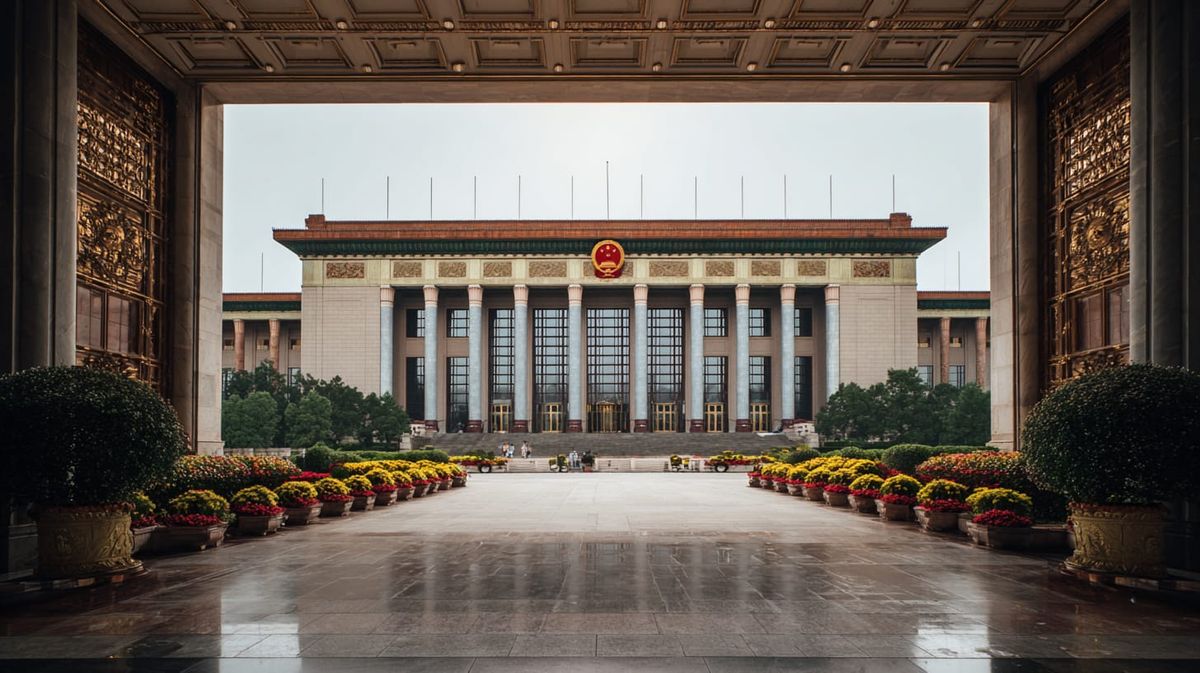
The choreography in Beijing was meticulous. Trump's motorcade rolled past skyscrapers lit with the phrase "Beijing Welcome" on Wednesday night, the Associated Press reported, and on Thursday morning the two leaders began bilateral talks with a working tea and a state banquet on the schedule.
The White House had signaled possible Chinese commitments to buy U.S. soybeans, beef and aircraft, and Trump arrived with a delegation that included Nvidia's Jensen Huang, Secretary of State Marco Rubio, Treasury Secretary Scott Bessent and Defense Secretary Pete Hegseth, according to AP's preview.
The early read from the room was friendlier than the substance. Trump told Xi he had brought "the most prominent entrepreneurs" globally and that trade with China "will be completely reciprocal from our side," NBC News reported from the live event. Xi responded with a public warning that relations could "take a perilous turn" if Washington disregards Beijing's requests on Taiwan, The New York Times said in its live coverage.
Analysts in both capitals tempered the optimism. "Neither side will make much headway on the two significant foreign policy issues," said Jim Lewis of the Center for European Policy Analysis, in remarks carried by AP. "Trump will urge the Chinese to assist him regarding Iran, but they will likely resist."
Markets handicapped a polite outcome. S&P 500 futures pointed to a modest rise and the index has been printing all-time highs on continued enthusiasm for artificial intelligence, The New York Times reported. South Korea's Kospi jumped nearly 2 percent on the back of chip stocks, while Japan's Nikkei 225 fell 1 percent. "Lying inflation are building, raising risk of tighter financial conditions," Bob Savage, head of markets macro strategy at BNY, told The Times.
A ship is seized off the UAE and the strait stays shut
While Trump shook hands in Beijing, the war he is trying to end produced a new headline at sea. The U.K. Maritime Trade Operations said a commercial vessel was taken 38 nautical miles off the UAE coast on Thursday by "unauthorized personnel" and is now bound for Iranian waters, Bloomberg reported.
The seizure, Bloomberg said, "dealt a setback" to U.S. efforts to end the Iran war and "increased uncertainty over control of the critical Strait of Hormuz."
Translated into pump prices, the war is now in its 11th week and showing no sign of relenting. AAA put the national average for regular gasoline at $4.53 a gallon on Thursday, up two cents on the day and 52 percent above where it stood before the conflict began, according to The New York Times. Diesel held steady at $5.67, still 51 percent above its pre-war level. Brent crude was up about 1 percent and sits roughly 45 percent above its pre-war price; West Texas Intermediate closed at $102.18 a barrel.
The Times described the strait as "a vital maritime route that has been largely inaccessible since the conflict commenced." Trump's stated goal in Beijing, the paper noted, includes pressing Xi to lean on Tehran to end hostilities and reopen the chokepoint — China is the largest buyer of Iranian oil, the AP noted in its summit preview.
Vegetables, beef and coffee push grocery bills to their worst month in nearly four years
The Bureau of Labor Statistics' April food-at-home index rose 0.7 percent — the largest one-month grocery jump in nearly four years — and is up 2.9 percent on the year, NBC News reported. The category had actually slipped 0.2 percent in March, making the April reversal sharper than the headline number suggests.
The damage was concentrated in three corners of the store. Fresh vegetables are up more than 44 percent on an annualized basis compared with three months ago, NBC said. Coffee prices on grocery shelves have been climbing at a pace equivalent to more than 22 percent annually over the last quarter, hit by severe weather in Brazil and Vietnam, "increased shipping expenses and robust global demand."
Beef and veal "have spiked due to historically low cattle populations," a function of ranchers leaving the industry after years of thin margins and of higher operating costs — "especially diesel, which is crucial for farmers in their daily operations."
The retail picture squares with what producers see. Will Harris, a fourth-generation cattle rancher in Bluffton, Ga., said prices for the beef his farm sells direct to consumers, to restaurants and online are running about 20 percent above two years ago. "It's unprecedented for us," Harris told NBC News. "I believe I can produce it as affordably as anyone else, but I'm uncertain where consumers set their limits."
Bank of America's card data shows households still spending — total card spending per household ran 4.8 percent above year-ago levels in April, up from 4.3 percent in March — but the bank's economists also noted that "the 'K' shape in spending and wage growth continues, with higher-income households performing better than their counterparts," a divergence NBC reported is now wider than during the 2022 energy shock.
Obamacare premiums double, and millions are walking away from coverage
The other inflation hitting kitchen tables this spring has nothing to do with food. Average premiums for the more than 20 million Americans receiving Affordable Care Act subsidies are on track to rise from roughly $888 a month in 2025 to about $1,904 in 2026 — a 114 percent increase — after Congress allowed the enhanced pandemic-era tax credits to expire on Dec. 31, CBS News reported, citing analysis by the health-policy nonprofit KFF.
Consumers are responding the way the actuaries warned they would. Initial sign-ups for 2026 ACA coverage are already down by about 1.2 million people, and "many insurers and analysts are predicting an overall reduction of nearly 20 percent," from 24 million enrollees last year to roughly 19 million this year, The New York Times reported.
Some industry data quoted by The Times suggests marketplace enrollment "could decline by as much as 26 percent this year." The Congressional Budget Office has estimated that without an extension of the credits, about four million Americans will eventually lose insurance, according to CBS News.
Employer plans are not immune. The Times said premiums "are also rising for those who obtain insurance through their employers," out-of-pocket costs are climbing and high-deductible plans are gaining ground. Health care, the paper said, is "expected to be a significant issue in this year's midterm elections."
Thermos recalls 8.2 million jars and bottles after stoppers blind three customers
Roughly 8.2 million Thermos containers are under recall after stoppers were "forcefully ejected" on opening, causing lacerations that required medical attention and leaving three customers with permanent vision loss, CBS News reported. The company has received 27 reports of injury so far.
The recall covers Thermos Stainless King Food Jars (model numbers SK3000 and SK3020) manufactured before July 2023, and all Thermos Sportsman Food & Beverage Bottles (model SK3010). The products were sold in a variety of colors at Target, Walmart, Amazon.com and other retailers between roughly March 2008 and July 2024, CBS said. Model numbers are stamped on the bottom of the containers.
The defect, the company said, was that the stoppers lacked a pressure-relief vent in the center, allowing built-up internal pressure to launch them on opening.
Consumers should stop using the affected products immediately and contact Thermos for a free replacement pressure-relief stopper or, depending on the model, a replacement bottle. The company has set up a recall site at support.thermos.com and a phone line at 662-563-6822, open 7 a.m. to 3:30 p.m. Central Time, Monday through Friday, according to CBS News.
The bigger picture
The day's five storylines look unrelated, but they sit on the same balance sheet. The president is in Beijing trying to talk Xi into helping reopen the Strait of Hormuz; until that strait opens, gasoline stays around $4.53 a gallon, diesel stays above $5.60, and the diesel surcharge keeps rolling forward into produce, beef and coffee at the grocery store. Household card spending is still rising, but the New York Fed says total delinquencies are at their highest level since 2017, even as the latest quarter showed them holding flat at 4.8 percent of balances — a small mercy, Bloomberg reported. On top of that, the families with the least cushion are absorbing a roughly 114 percent jump in ACA premiums, and the simple act of opening a thermos for a worksite lunch has, in 27 documented cases, sent people to the emergency room.
Trump told reporters Wednesday that, on Americans' financial situations and the war, he is "laser focused" only on keeping Iran from building a nuclear weapon, as reported by AP. At kitchen tables, the focus is shorter-term: the gas tank, the grocery cart, the premium notice and the lunchbox.