The clean-energy loan hiding in your utility bill
Who wouldn't want to save money on their energy bill with no money upfront? It's often not quite what it seems though.
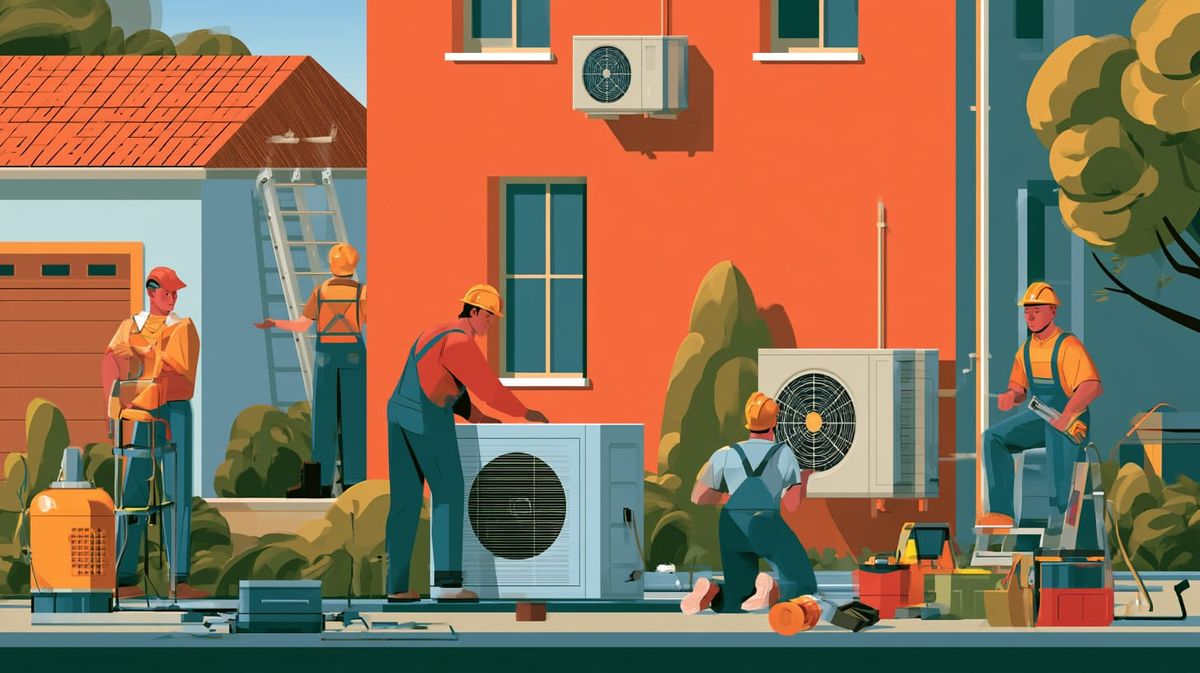
- Some home energy upgrades are financed through a surcharge added directly to the monthly utility bill.
- The payment obligation can remain with the property after the original customer moves, leaving a future renter or buyer responsible for the charge.
- The National Consumer Law Center says these programs need stronger safeguards, including guaranteed savings and a ban on utility shutoffs for failure to pay the financing charge.
A program that promises to cut your energy costs can sound especially attractive when it requires little or no money upfront.
But consumer advocates are warning that some clean-energy financing programs can replace one affordability problem with another: a long-term charge embedded in the monthly utility bill.
The National Consumer Law Center is renewing its warning about so-called tariffed on-bill financing, sometimes marketed as "inclusive utility investment" or under programs such as Pay As You Save, or PAYS.
The financing can pay for insulation, heating and cooling equipment, weatherization and other energy-saving improvements. Instead of receiving a conventional loan bill, the customer repays the cost through an additional charge on the utility bill.
That arrangement is promoted as a way to make energy improvements available to households that may not have enough cash or qualify for conventional credit.
But NCLC says consumers need to look closely at what happens if the promised savings don't materialize — and at what happens when the home changes occupants.
 James R. Hood
The obligation can stay with the house
One of the most unusual features of tariffed on-bill programs is that the payment may be attached to the utility meter or property rather than simply to the person who originally agreed to the improvement.
That means the charge can remain after the original customer moves.
A new tenant or homeowner who begins receiving utility service may also inherit the remaining payments.
NCLC says that creates a risk of "surprise, and potentially unmanageable, costs" for subsequent residents and argues that they should receive written notice and consent to the obligation, along with protections such as the ability to modify the payments or pay off the remaining balance without penalty.
The federal Environmental Protection Agency describes the feature somewhat differently.
EPA says properly designed tariffed on-bill programs are utility investments rather than consumer loans. The utility pays for an efficiency improvement and recovers its investment through a charge associated with the meter. Future occupants continue paying the charge, but they also continue receiving the benefit of the upgraded insulation, HVAC system or other improvement.
That distinction is at the center of the debate.
NCLC argues that whatever the transaction is called, consumers are effectively making installment payments for an improvement and should receive protections comparable to those provided with ordinary consumer credit.
What happens if the savings aren't there?
The basic economics of on-bill financing depend on a simple proposition: the improvement should save more money than the added monthly charge costs.
EPA says tariffed on-bill programs are generally designed so that the fixed charge is lower than the estimated reduction in the household's energy costs. Some existing programs expressly limit charges to a percentage of projected savings.
If everything performs as expected, a household could get a more efficient home without a large upfront expense and still wind up with a lower overall utility bill.
NCLC says the problem is that estimated savings aren't necessarily actual savings.
Equipment performance, energy prices, weather, household behavior and inaccurate projections can all affect the result. NCLC argues that households already struggling with high utility bills are particularly vulnerable if promised savings fail to appear.
The group is calling for programs to guarantee monthly utility-bill savings, rather than merely project them.
A missed payment can be more serious than it sounds
Another concern is the method of collection.
Ordinarily, failing to make a home-improvement loan payment doesn't immediately threaten a household's electricity or heat.
Combining financing payments with an essential utility bill can change that equation.
NCLC warns that customers in some programs may face utility disconnection when they fail to pay the combined bill and says disconnection should never be used as a remedy for failure to pay the financing portion.
EPA itself acknowledges the broader risk with poorly designed clean-energy financing. Its financing guidance says programs that put additional financial obligations on lower-income households can expose customers to consequences including utility shutoffs and says consumer protections should be incorporated into program design.
Why the programs exist
There is an important consumer benefit behind the idea.
Energy-efficiency improvements can have substantial upfront costs. A household may badly need a new heat pump, insulation or weatherization but lack thousands of dollars in savings or sufficient credit to finance the work conventionally.
Because some tariffed programs don't require traditional credit or income qualification, EPA says they can make upgrades available to renters, lower-income households and consumers who otherwise could not afford them.
As of 2023, about 30 utilities had implemented or were developing tariffed on-bill programs, according to EPA. Programs have operated in states including Arkansas, California, Georgia, Kansas, Kentucky, Missouri, New Hampshire, North Carolina, Tennessee and Virginia.
So NCLC isn't arguing that households shouldn't make energy-saving improvements.
It argues that governments should first steer lower-income households toward free or heavily subsidized weatherization and energy-assistance programs rather than putting them into another payment obligation.
This isn't the first clean-energy financing warning
ConsumerNews.ai reported earlier this year that complaints involving solar financing, PACE loans and contractor-arranged home-improvement loans have produced lawsuits, regulatory actions and demands for stronger safeguards.
Consumers complained about promised energy savings that didn't materialize, tax incentives that were oversold and financing obligations that complicated refinancing or selling a home.
Tariffed on-bill financing is different, but the underlying consumer issue is familiar: the product being installed may be perfectly legitimate while the financing attached to it creates the problem.
NCLC's latest warning suggests consumers should treat an offer to put an energy upgrade "on the utility bill" with the same care they would use before signing any other long-term financing agreement.
What NCLC wants changed
NCLC says tariffed on-bill programs should include several safeguards before being widely marketed to financially vulnerable households.
Among them:
- Screen lower-income consumers for free or subsidized programs before offering financing.
- Guarantee that the household's monthly utility costs will actually decline.
- Avoid large upfront payments.
- Cap project and financing amounts to keep payments affordable.
- Hold utilities accountable for contractors and other third parties selling the programs.
- Prohibit utility shutoffs for nonpayment of the financing portion of a bill.
- Use screened and certified contractors and provide quality-control protections.
- Establish a formal complaint and dispute-resolution process.
- Clearly disclose continuing payment obligations to future tenants and home buyers.
"Tariffed on-bill financing and similar energy financing programs must include necessary consumer protections and should only be considered as a last resort," NCLC senior attorney Berneta Haynes said.
Before you agree to put an upgrade on your utility bill
An offer may be described as an energy program rather than a loan, but consumers should still ask many of the same questions they would ask before borrowing money.
Ask for the total cost. Don't evaluate the deal only by the expected monthly charge.
Ask whether savings are guaranteed or merely estimated. Find out what happens if the improvement saves less energy than projected.
Ask how long the charge lasts. A modest monthly amount can add up substantially over many years.
Ask what happens if you move. Determine whether you must pay off the remaining balance or whether the obligation automatically transfers to a buyer or tenant.
Ask what happens if the bill isn't paid. Specifically determine whether nonpayment of the financing charge could lead to utility disconnection.
Check for free programs first. Weatherization, utility assistance, rebates and state or local programs may pay part or all of the cost without adding another monthly obligation.
Get everything in writing. Savings estimates, equipment warranties, contractor responsibilities, payment terms and transfer provisions shouldn't depend on what a salesperson says at the kitchen table.
The clean-energy improvement itself may ultimately save money. But consumers should make sure the financing doesn't turn those promised savings into another bill they — or somebody who lives in the house years from now — can't afford.