Payday lender’s bank deal could bring loans charging up to 195% APR to every state
OppFi is seeking federal approval to acquire BNC National Bank, giving the high-cost lender control of a national bank charter
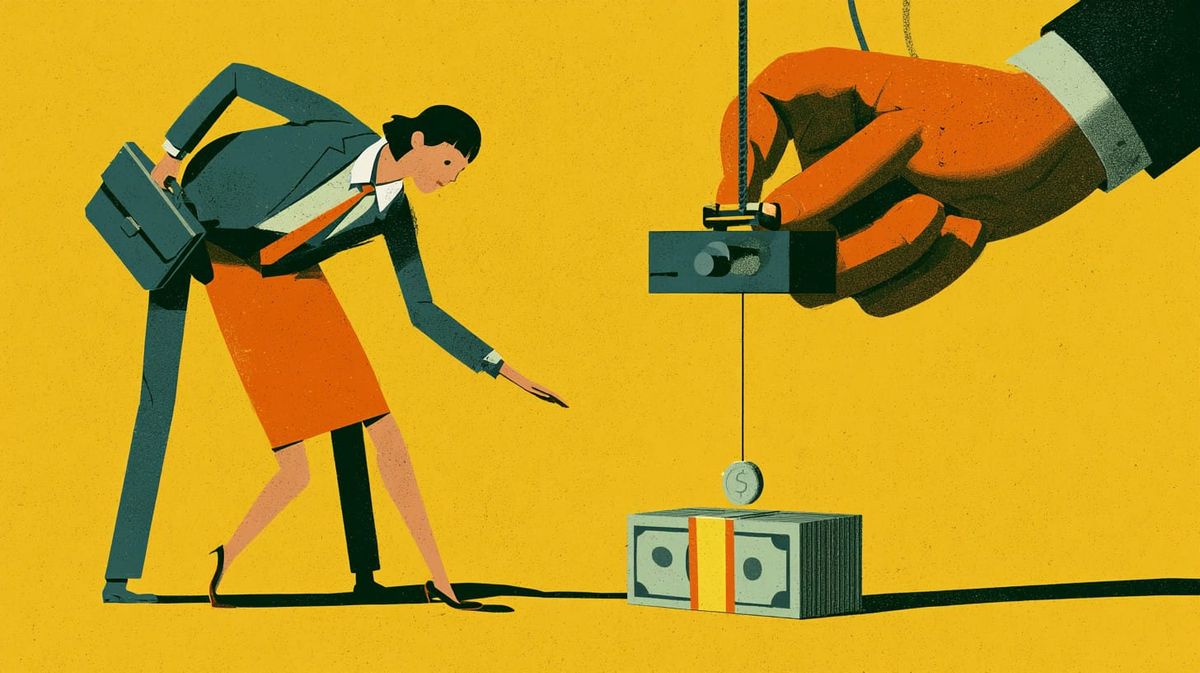
Payday lenders have spent years searching for ways around state interest-rate limits. One increasingly popular strategy is to acquire a bank.
More than 120 consumer, civil-rights, legal-aid and community groups are asking federal regulators to block high-cost lender OppFi’s proposed acquisition of BNC National Bank, warning that the deal could give the company a direct path into states that currently restrict or prohibit its loans.
OppFi offers installment loans carrying annual percentage rates that typically reach about 160% and can climb as high as 195%, according to the National Consumer Law Center and the Center for Responsible Lending.
 James R. Hood
The company currently relies on partner banks to originate many of its loans. Owning a nationally chartered bank could give it greater control over the process and strengthen its ability to claim federal authority to “export” interest rates permitted in the bank’s home state to borrowers across the country.
That would potentially allow OppFi to sidestep consumer protections adopted by state legislatures — including rate caps intended to keep payday-style loans out of their communities.
“OppFi’s lending program is risky, unsafe and unsound,” the coalition said in comments submitted to the Federal Deposit Insurance Corp., Office of the Comptroller of the Currency and Federal Reserve.
The groups want regulators to hold public hearings, require OppFi to release more information about the effects of its lending and ultimately reject the transaction.
A $130 million shortcut to national expansion
OppFi announced in April that it had agreed to acquire BNCCORP and its subsidiary, BNC National Bank, in a cash-and-stock transaction valued at about $130 million.
BNC is a nationally chartered commercial bank headquartered in Glendale, Arizona. At the end of 2025, it reported approximately $1.1 billion in assets and $1 billion in deposits.
OppFi described the acquisition as a way to combine its online lending platform with BNC’s national charter, providing “accelerated geographic expansion and product diversification.”
“The transformative combination of OppFi’s digital-first platform and BNC’s national bank charter unlocks significant opportunities for growth,” OppFi CEO and Executive Chairman Todd Schwartz said when the transaction was announced.
The company says it serves consumers who have difficulty obtaining conventional bank credit and argues that bringing its operations under the supervision of the OCC and Federal Reserve would simplify and strengthen compliance and risk management.
Consumer advocates see something more troubling: a high-cost lender purchasing the legal powers of a national bank.
Why the charter matters
Interest-rate limits vary widely from state to state. Many states cap rates on small installment loans at or near 36%, while others impose different limits depending on the size and length of the loan.
National banks, however, generally have the power under federal law to charge borrowers in other states the interest rates permitted where the bank is based. That ability is known as rate exportation.
The rule was designed to let banks operate across state lines without complying with a different interest-rate limit in every jurisdiction. But consumer advocates say online lenders have exploited it through “rent-a-bank” arrangements in which a lightly regulated bank formally originates a loan while a nonbank company markets it, services it and receives much of the economic benefit.
OppFi acknowledged the importance of that structure in a Securities and Exchange Commission filing. The company said it shifted entirely to a bank-partner model because its partners can lend nationally under federal law, facilitating a national product while streamlining regulatory requirements.
As of the end of 2024, OppFi said its platform was operating in 40 states through three partner banks.
Buying BNC would take the model a step further. Instead of renting access to a bank charter, OppFi would control the company that owns one.
Loans illegal in most states, groups say
The coalition opposing the transaction said OppFi’s rates would be illegal in as many as 45 states if the loans were made directly by a nonbank lender, although the exact number depends on the loan amount and each state’s laws.
OppFi loans generally range from several hundred to several thousand dollars and are repaid in installments rather than through a single payment on the borrower’s next payday.
But consumer groups say the longer repayment period does not make a triple-digit-rate loan affordable.
The Center for Responsible Lending reported earlier this year that OppFi offers loans of $500 to $5,000 at rates as high as 195%. Its review of company disclosures, consumer complaints and borrower transaction data concluded that refinancing is central to the business model.
The coalition said about half of OppFi borrowers refinance their loans, sometimes within two or three months, and that refinancing has accounted for as much as 75% of the company’s pretax income from OppLoans customers.
That pattern matters because refinancing can make an apparently short-term loan last much longer. A borrower may receive additional cash, but the old balance is rolled into a new loan, extending the period during which interest accumulates.
Consumer advocates say very few OppFi borrowers successfully repay their original loans on the original schedule once refinances and defaults are taken into account.
High losses raise questions about affordability
The groups also pointed to OppFi’s high loan-loss rates.
They said the company’s charge-offs — balances lenders determine are unlikely to be collected — exceed 55% under some measures. The Center for Responsible Lending previously cited an OppFi filing showing a net charge-off rate of 51.4% of average receivables.
The coalition argues that losses at that level show the loans are not being underwritten according to borrowers’ ability to repay.
OppFi takes a different view. It says its technology evaluates applicants using income, bank-account activity and other data rather than relying solely on conventional credit scores. The company describes its products as transparent credit designed for borrowers who may have been rejected by traditional banks.
OppFi has also reported strong financial results. For 2025, the company said net income rose 74% to a record $146.2 million.
Critics say those profits must be considered alongside the number of borrowers who default, refinance repeatedly or carry other high-cost debts at the same time.
OppFi has faced state enforcement before
This is not the first dispute over whether OppFi’s bank relationships allow it to avoid state interest-rate limits.
In 2021, the company agreed to provide more than $2 million in restitution, forgiven interest and other payments to settle a lawsuit brought by the District of Columbia.
The District alleged that OppFi had made loans to local residents carrying rates of about 160%, far above Washington’s 24% cap.
OppFi denied engaging in deceptive or unfair conduct and said it settled to avoid prolonged litigation. As part of the agreement, it stopped offering District residents loans carrying rates above the local limit, whether directly or through a bank partner.
The case reflected a broader legal dispute over the “true lender” in bank-fintech partnerships. State officials have argued that a nonbank company should not be able to escape state law merely because a partner bank’s name appears on the loan documents.
Owning BNC could reduce OppFi’s exposure to some true-lender challenges because the lender and bank would be under common ownership. But it would also make the federal regulators reviewing the acquisition directly responsible for deciding whether a national bank should be built around a triple-digit-rate lending business.
Another lender is pursuing the same route
OppFi is not alone.
Enova International, which owns CashNetUSA and NetCredit, is seeking approval to acquire Grasshopper Bank. Consumer groups say Enova’s products also include loans carrying annual rates above 100%.
The two applications suggest that buying banks may become the next stage in the high-cost lending industry’s effort to expand nationally.
The strategy is significant because state interest-rate caps remain one of the strongest protections against payday and other high-cost loans. A national charter can weaken those protections without Congress or a state legislature ever voting to repeal them.
Consumer advocates fear that approval of the OppFi and Enova transactions would encourage other lenders to follow.
“The charter would become a vehicle for predatory lending outlawed in nearly every state,” the coalition warned.
What happens next
The OppFi-BNC transaction cannot close without approval from federal banking regulators.
The FDIC, OCC and Federal Reserve will review the companies’ finances, management, compliance systems, community obligations and potential risks to the banking system and consumers.
The coalition wants those agencies to conduct a more searching review than a routine bank merger proceeding, including public hearings and detailed disclosures about defaults, refinancing, collections and the effect of OppFi’s loans on financially stressed households.
For consumers, the central question is whether acquiring a bank should allow a lender to charge rates that elected officials in their state have expressly rejected.
The answer could determine whether state rate caps continue to offer meaningful protection — or whether any sufficiently well-financed payday lender can buy its way around them.