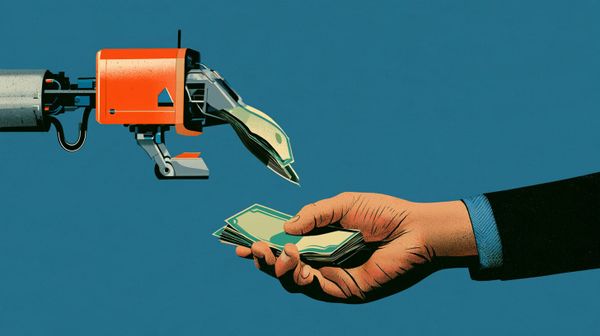
Outraged consumers: They're fed up with broken customer service — and companies may be running out of excuses
Americans say they are spending more time, money and emotional energy trying to solve routine problems with airlines, banks, retailers, telecoms, health insurers and delivery companies.

For years, Americans were told that technology would make customer service faster, cheaper and more convenient. Instead, many consumers say it has made ordinary disputes feel like endurance contests.
A Guardian examination of U.S. consumer frustration paints a bleak picture: record corporate profits, fewer meaningful choices and customer-service systems that often seem designed to wear people down rather than solve problems.
Readers described hours lost to chatbots, phone loops, rejected fraud claims, failed deliveries, surprise fees and companies that are almost impossible to reach when something goes wrong.
The result is a growing sense that consumers are not just being inconvenienced. They are being managed, delayed and sometimes defeated by systems that save companies money while shifting the burden onto the public.
The new consumer runaround
The modern customer-service complaint has a familiar pattern.
A consumer spots a billing error, a missing package, a broken appliance, a canceled flight, a denied claim or an unwanted subscription. They try the company’s app. The app routes them to a chatbot. The chatbot answers only the simplest questions. They ask for a person. The system loops them back to a menu, a frequently asked questions page or a scripted representative who cannot fix the problem.
Hours later, the consumer may have a case number, a promise of escalation or a vague assurance that someone will follow up. Often, nothing happens.
This is not just annoying. For consumers dealing with prescription delays, fraudulent charges, insurance denials, credit-reporting errors or bank problems, the consequences can be serious. A failed customer-service interaction can mean missed medication, a damaged credit score, late fees, lost wages, overdraft charges or weeks spent chasing money that should never have been taken.
The Guardian’s reporting highlights a central contradiction in the U.S. economy: companies are making historic profits while many consumers say the basic service experience is deteriorating.
AI did not fix the problem
Artificial intelligence is often marketed as the answer to overloaded service centers. But consumers increasingly see AI support as part of the problem.
A well-designed chatbot can handle simple tasks: checking a balance, tracking a package, changing an address or answering a basic policy question. But many disputes are not simple. They require judgment, empathy, authority and access to company records. When a bot cannot recognize the difference between a routine question and a serious problem, consumers can get trapped.
The Consumer Financial Protection Bureau warned in a 2023 report that financial institutions using chatbots may create legal and consumer risks when automated systems provide wrong answers, fail to recognize disputes or block access to human help. The same concern applies more broadly across the consumer economy. A chatbot that cannot solve the problem may still serve the company’s purpose by reducing call volume, discouraging refunds and making some consumers give up.
That is why consumers often describe AI customer service not as innovation but as a barrier.
Consolidation leaves consumers stuck
Bad service is easier for companies to get away with when consumers do not have real alternatives.
Airlines, telecom providers, grocery suppliers, pharmacy chains, payment processors, delivery platforms and health care companies have all seen waves of consolidation. In many markets, consumers technically have choices but practically face only a handful of providers — or none at all.
That matters because switching is one of the traditional ways consumers discipline companies. If a broadband provider overcharges, a bank makes disputes impossible, or an airline buries customers in fees, consumers are supposed to be able to take their business elsewhere. But that assumes there is a meaningful “elsewhere.”
In many communities, there is only one high-speed internet provider. In air travel, a few major carriers dominate many routes. In health care, insurance networks and pharmacy benefit systems can make switching unrealistic. In banking and credit reporting, consumers may not even get to choose the company they must deal with.
When the market does not punish bad service, regulators and lawmakers may be the only backstop.
Profits rise while patience falls
Corporate America has little trouble finding money when it wants to invest in pricing software, subscription systems, targeted advertising or data collection. It has been less eager to invest in enough trained workers with the authority to fix consumer problems.
That imbalance is one reason consumer anger is intensifying. Americans can see the difference between companies that are under-resourced and companies that are deliberately hard to deal with. They know when a business can instantly sign them up for a service but makes cancellation difficult. They know when prices can change in seconds but refunds take weeks. They know when a company uses technology to collect money faster but not to resolve complaints faster.
Customer satisfaction has weakened this year, according to the American Customer Satisfaction Index, and complaints about goods and services have surged. That is a warning sign for companies that have treated customer frustration as a cost of doing business.
Regulators are starting to respond
The backlash is already showing up in policy fights.
The Federal Trade Commission has tried to crack down on “click-to-cancel” traps, where companies make subscriptions easy to start but difficult to end. State attorneys general have been targeting junk fees, deceptive pricing and unfair billing practices. The Federal Communications Commission has proposed rules aimed at improving customer service in communications markets, including concerns about outsourced support and consumers’ ability to reach help.
Local governments are also stepping in where federal action is slow. Municipal broadband efforts, local fee rules and state-level consumer protection laws are increasingly part of the response to industries where consumers feel trapped.
Still, enforcement has not caught up with the scale of the problem. Many of the worst customer-service practices are not treated as standalone consumer abuses. They are framed as operational choices, even when the predictable result is that consumers lose money, time or rights.
What consumers can do now
Consumers cannot fix a broken market by themselves, but they can improve their odds in a dispute.
Start by creating a paper trail. Use email, chat transcripts, screenshots, confirmation numbers and billing records. When calling, write down the date, time, representative name and what was promised. If a chatbot fails, say clearly that you are disputing the charge, requesting a refund, canceling a service or reporting fraud. Those words can matter.
Escalate quickly. Ask for a supervisor, an executive resolution office or a written final decision. For financial products, file a complaint with the CFPB. For telecom billing problems, complain to the FCC. For deceptive billing, subscriptions or junk fees, report the company to the FTC and your state attorney general. For airlines, file with the Transportation Department.
Use payment protections when appropriate. Credit card chargebacks can be useful when goods or services were not provided, charges were unauthorized or a merchant refuses a valid refund. But keep documentation, act within the card issuer’s deadline and avoid using chargebacks as a substitute for normal cancellation when the dispute is really about future service.
The bigger issue
The customer-service crisis is not just about rude agents or clumsy technology. It is about power.
Companies have learned to make buying frictionless and complaining exhausting. They have invested heavily in systems that maximize revenue, automate resistance and keep consumers inside closed loops. In many markets, consumers have lost the ability to vote with their feet.
That is why the anger feels different now. Americans are not merely irritated by bad service. They are beginning to see it as part of a broader affordability and accountability problem.
When companies can raise prices, add fees, cut staff, deploy bots and still keep customers because there is nowhere else to go, the market is not working the way consumers were promised it would.
The message from consumers is simple: answer the phone, fix the problem, make prices honest and stop treating people like obstacles to profit.
That should not be too much to ask.