Oil surges as Iran claims control of Hormuz
American consumers face one of the most consequential single days of the summer for the family bank statement. Oil jumped sharply Monday and into Tuesday's Asian session after the United States launched fresh airstrikes on Iran and Tehran claimed to have closed the Strait of Hormuz.
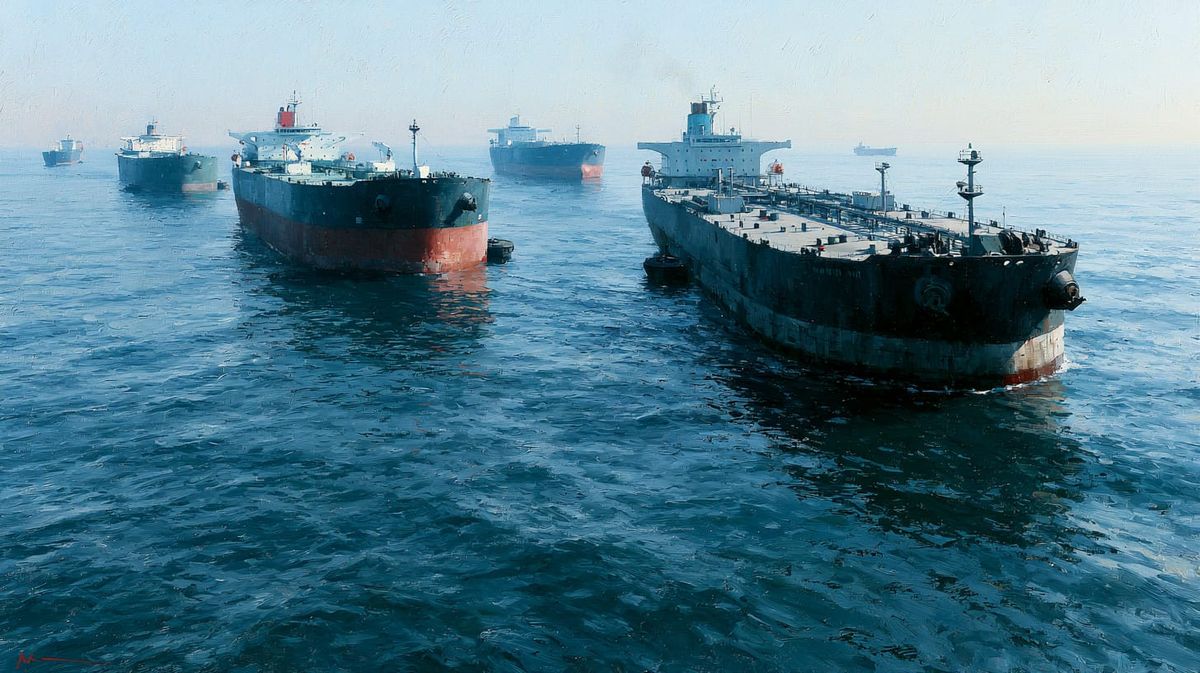
Global oil prices surged after the U.S. launched several waves of airstrikes on Iran over an Iranian attack that set a container ship ablaze in the Strait of Hormuz over the weekend and left a crew member missing. Brent crude, the international standard, gained 3.9 percent to $78.96 a barrel and U.S. benchmark crude oil added 4 percent to $74.26 a barrel, The Associated Press reported. Both grades had recently slipped back to pre-war levels before the fresh escalation.
Iran claimed to have closed the vital Strait of Hormuz after the strikes, CNBC reported in its energy hub coverage of the fighting, while the U.S. disputed that the waterway was closed to shipping. Oil-tanker traffic through the strait — which normally carries about a fifth of the world's traded oil and natural gas — was already at a near standstill last Thursday.
"Oil prices rose on Monday as the conflict between the U.S. and Iran intensified days after President Trump declared the countries' ceasefire agreement to be over," CBS News reported.
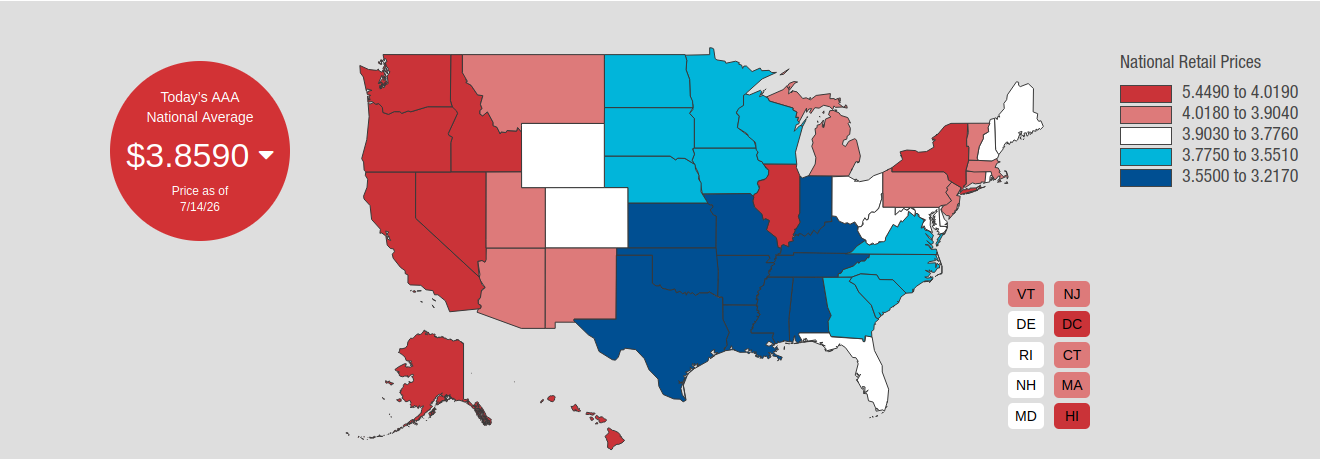
Prices reach the pump
Consumers are already feeling the impact at the pump. National average retail gasoline is climbing back toward $3.60 a gallon, CBS reported, and the Nymex 3-2-1 crack spread — a proxy for refinery profitability — hit a record $64.58 a barrel last Tuesday, Reuters reported.
U.S. gasoline stocks are at their lowest for early July since 2021. The renewed conflict is also rippling through chip supply chains: SK Hynix slumped 10.6 percent in Seoul and Samsung Electronics sank 6.7 percent Monday, AP said, pointing to further pressure on the electronics prices consumers are just beginning to see moderate.