J&J offers $5.5 billion to settle 76,000 talcum powder cancer claims
The proposed settlement would resolve nearly all remaining lawsuits alleging Johnson & Johnson’s talc-based powders caused ovarian cancer.
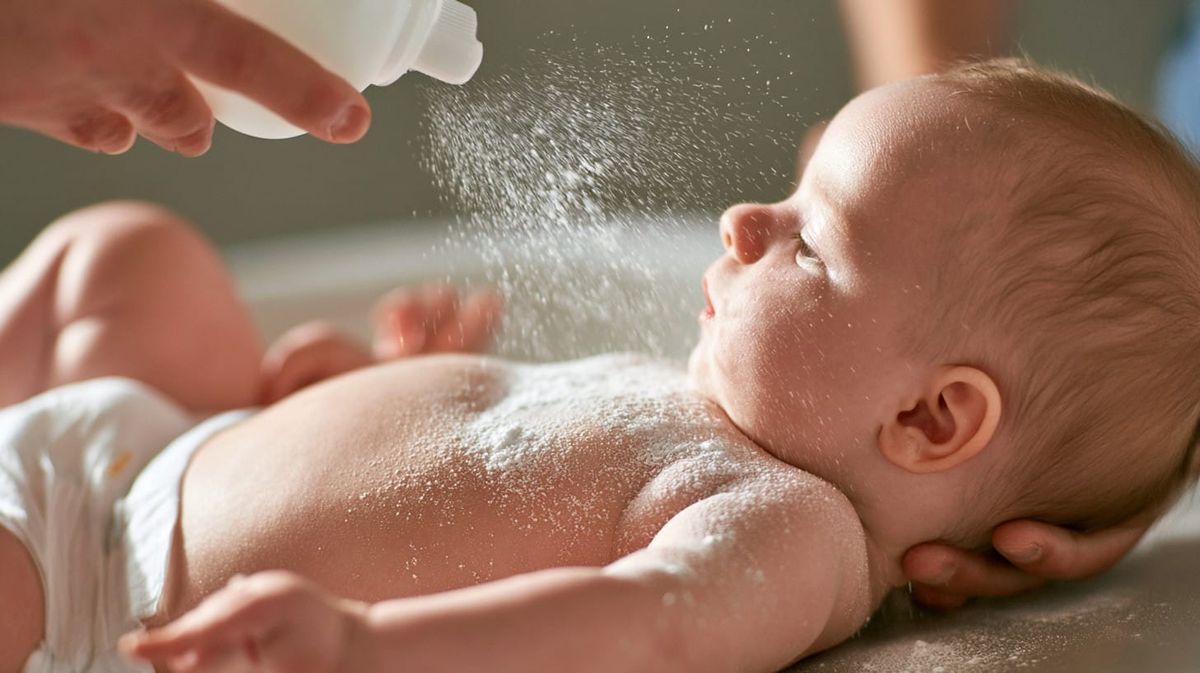
Johnson & Johnson has agreed to pay an estimated $5.5 billion to resolve roughly 76,000 lawsuits alleging that its talc-based baby powder and other powder products caused ovarian cancer.
The agreement could bring an end to one of the largest and longest-running consumer-product liability battles in U.S. history, although it must first be accepted by at least 95% of the eligible state and federal claimants, according to Insurance Journal.
The company expects to pay as much as $3 billion in 2027, with additional payments beginning in 2028. Plaintiffs’ attorney Chris Seeger said the total could eventually exceed $7 billion because the agreement assigns values to qualifying claims without imposing a firm ceiling on J&J’s overall liability.
J&J continues to deny that its products caused cancer or contained asbestos.
“While we are confident the company would have ultimately prevailed with further litigation, as it has in the vast majority of cases tried to date, this resolution allows the company to put this matter behind it,” Erik Haas, J&J’s vice president of litigation, said in announcing the deal.
 James R. Hood
What the settlement covers
The agreement applies to existing ovarian cancer claims pending in federal multidistrict litigation in New Jersey and in state courts.
It does not cover people who may develop cancer and file lawsuits in the future. That is a major difference from J&J’s earlier attempts to resolve the litigation through bankruptcy, which were designed to address both current and future claims.
J&J says it has separately resolved most lawsuits alleging that asbestos in its talc products caused mesothelioma, a rare and aggressive cancer associated with asbestos exposure. It has also settled some claims brought by states and talc suppliers.
The settlement figures do not mean every claimant will receive an equal share. Dividing $5.5 billion by 76,000 would produce a rough average of about $72,000 per claim, but actual awards will depend on eligibility rules, disease history, medical documentation, legal fees and other provisions of the settlement.
Why J&J settled now
The settlement came shortly after J&J won an important procedural victory in the federal litigation.
U.S. Magistrate Judge Rukhsanah Singh recently questioned whether expert testimony offered by plaintiffs could establish that talc exposure specifically caused an individual woman’s ovarian cancer. Plaintiffs were ordered to provide admissible, case-specific evidence or risk having claims dismissed. The ruling did not immediately throw out the lawsuits, but it significantly increased the risks facing plaintiffs, Reuters reported.
J&J had also won several individual trials and successfully challenged some plaintiffs’ lawyers and expert witnesses.
Even so, the company’s record has been mixed. Some juries have returned large verdicts against J&J, including a multibillion-dollar verdict involving 22 women, although certain awards were later reduced or overturned on appeal.
The new settlement gives plaintiffs a faster and potentially more certain path to compensation while allowing J&J to avoid years of additional trials, appeals and legal expenses.
Plaintiffs’ lawyers said qualifying claims could be paid within approximately 18 months, compared with more than a decade under one of the company’s failed bankruptcy proposals.
Three bankruptcy attempts failed
J&J previously tried three times to move its talc liabilities into a subsidiary and place that company into bankruptcy—a maneuver widely known as the “Texas two-step.”
The strategy would have allowed J&J to resolve thousands of lawsuits collectively while keeping the parent company outside bankruptcy. Courts rejected each attempt, finding that the subsidiaries were not in sufficient financial distress to qualify for bankruptcy protection.
The most recent proposal would have provided roughly $9 billion to talc claimants. After a bankruptcy judge rejected it, the litigation returned to the traditional court system.
Unlike those bankruptcy plans, the new agreement was negotiated directly with plaintiffs’ firms and applies only to people who have already filed claims.
The science remains disputed
Talc is a naturally occurring mineral used for decades in powders, cosmetics and other consumer products. Because talc deposits can occur near asbestos deposits, critics have long raised concerns that talc may become contaminated during mining.
Asbestos is a known human carcinogen. The more difficult and disputed question is whether asbestos-free talc—or the use of talcum powder in the genital area—can independently cause ovarian cancer.
J&J has consistently maintained that its cosmetic talc was safe, did not contain asbestos and did not cause cancer.
Some epidemiological studies have reported an association between genital talc use and ovarian cancer, while others have found little or no increased risk. Proving that a particular product caused an individual person’s cancer has been a central obstacle in the litigation.
The FDA has periodically tested talc-containing cosmetics for asbestos. In its 2023 sampling program, asbestos was not detected in any of the 50 products tested, although the limited sample did not establish that every talc product on the market was asbestos-free.
The FDA has also worked on standardized asbestos-testing requirements for talc-containing cosmetics. The agency says asbestos at any detectable level may make a cosmetic product harmful to consumers, but mandatory uniform testing standards have been delayed and remain under development.
J&J no longer sells talc-based baby powder
J&J stopped selling talc-based baby powder in the United States and Canada in 2020 and later ended worldwide sales, replacing it with a cornstarch-based formulation.
The company said the change reflected declining demand and misinformation about product safety—not a concession that the talc powder was dangerous.
Other manufacturers still use talc in some cosmetics, including face powders, eye shadows and body powders.
What consumers should do
Consumers who prefer to avoid talc can check ingredient labels for “talc” or “talcum powder” and choose products made with cornstarch, arrowroot powder or other alternatives.
Powders should not be shaken directly near a baby’s face because airborne particles—including talc or cornstarch—can irritate the lungs or cause breathing problems if inhaled.
Anyone who has been diagnosed with ovarian cancer or mesothelioma and believes there may have been substantial past exposure to talc products should preserve medical records, proof of product use and any existing containers or photographs.
People who already have attorneys handling talc claims should contact those attorneys before signing documents, changing representation or responding to unsolicited settlement offers. The proposed settlement is not yet final, and eligibility and payment details will depend on the formal agreement.
Consumers should also be cautious of callers or online advertisements promising guaranteed payments. Legitimate settlement administrators do not normally demand upfront fees, gift cards, cryptocurrency or bank passwords.
What this means
The proposed agreement would give tens of thousands of cancer patients and their families an opportunity to receive compensation without facing the uncertainty of individual trials.
But it would not produce a definitive scientific or legal ruling on whether J&J’s talc products caused ovarian cancer. Because the settlement contains no admission of wrongdoing and excludes future claims, the broader debate over talc safety is likely to continue even if the agreement is finalized.