Iran truce collapses, oil back to $85 and pumps head higher
Pain at the pump becoming chronic and likely to worsen
The one-month ceasefire between the United States and Iran cracked apart this week, and traders spent Friday morning pricing in a full return to war-economy conditions.
Brent crude futures rose to $85.35 per barrel and U.S. West Texas Intermediate climbed to $80.09, CNBC reported, after Tehran vowed to strike regional infrastructure if President Donald Trump followed through on threats against Iran's critical facilities.
Both contracts have climbed nearly 12 percent this week, Reuters said, with Iran having asked its Houthi allies to stand ready to shut the Red Sea export route if U.S. strikes hit Iranian power infrastructure.
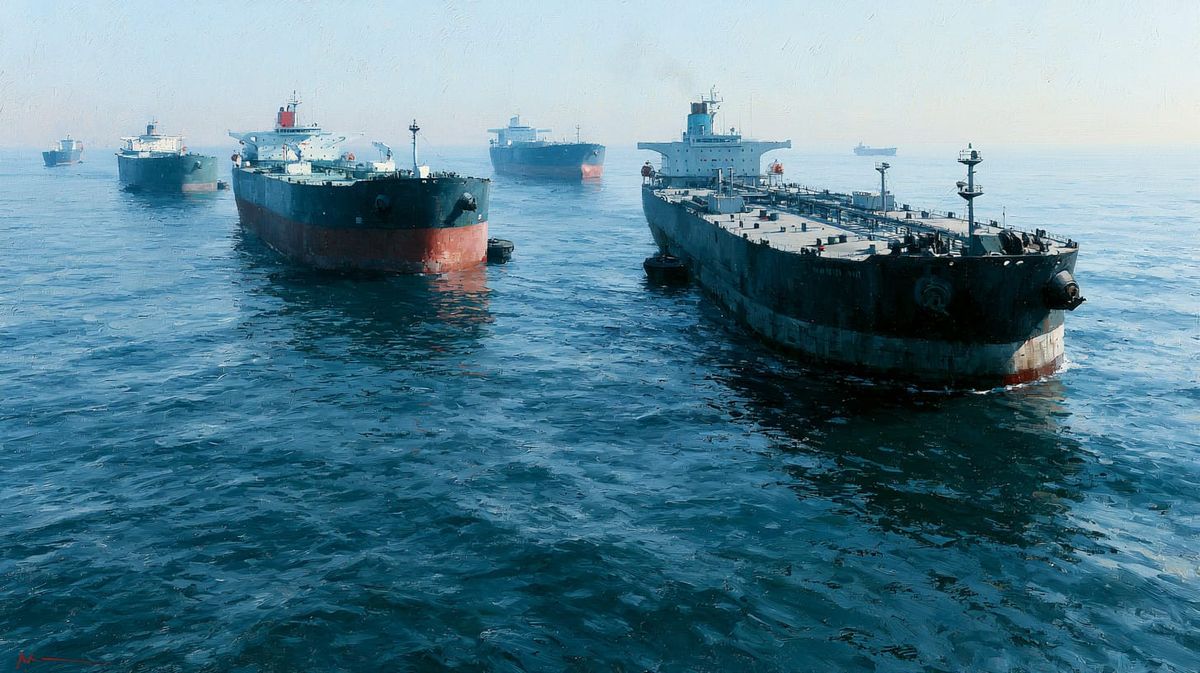
The physical picture around the Strait of Hormuz is now stark. Just three commodity vessels crossed the strait Thursday, the fewest daily transits since May, Reuters shipping data showed, with most ships halting or making U-turns. No Very Large Crude Carriers or liquefied natural gas tankers passed through the strait for a second consecutive day.
Iran's Revolutionary Guards said Thursday that no oil or gas would be exported through the strait as long as U.S. attacks continued. International Energy Agency Executive Director Fatih Birol warned Thursday that "if the U.S. and Iran do not increase oil flowing through the Strait of Hormuz soon, the world should worry about energy security," Reuters reported.
Pain at the pump
For consumers, the immediate pain is at the pump and in fuel-dependent categories. The U.S. national average retail gasoline price stood at $3.95 a gallon Thursday, up nearly 80 cents from the same time last year, Reuters reported using GasBuddy data.
The U.S. gasoline crack spread — the industry's benchmark for refiner profitability — settled at about $59 a barrel Thursday, a level last reached in June 2022. The diesel crack spread hit $91 a barrel, a record high.
Diesel futures alone have jumped 20 percent since the start of last week, The Wall Street Journal reported, with domestic inventories near their lowest levels since the early 2000s.
Even if crude retreats, gasoline prices will stay higher for longer, the Journal wrote: pump prices are up 32 percent since the Iran conflict began versus an 18 percent rise in the U.S. crude benchmark.
Retail sales cool at the pump, hold firm elsewhere
The retail-sales report for June, released Wednesday, put numbers on the split-screen consumer economy. Overall retail sales rose 0.2 percent from May, The Associated Press reported, after being up a revised 1 percent in May. Excluding gas stations, sales rose a much stronger 0.7 percent. The Commerce Department's control-group measure, which excludes food services, autos, building materials and gas stations and feeds directly into gross domestic product, rose 0.5 percent.
Receipts at service stations dropped 5.3 percent in June after rising 2.6 percent in May, Reuters reported, with average gasoline prices at $4.18 a gallon last month down from $4.61 in May. The modest relief at the pump "freed money for spending elsewhere," Reuters noted — but the truce has since collapsed, and pump prices have already resumed climbing.
Where the money went was itself notable. Motor vehicle and parts dealers posted a 1.9 percent gain, per AP, boosted by aggressive manufacturer incentives that will look far less generous once Iran-driven fuel costs work through the auto supply chain. Online sales rose 1.9 percent, fueled by Amazon's June 23-26 Prime Day event. Sporting goods, hobby and music retailers rose 1.3 percent, helped by World Cup-related spending. Restaurants added 0.1 percent — the lone gain in the services category tracked in the report.
"Falling fuel prices weighed on headline sales data, but a smaller bill at the pump was a source of relief for consumers and provided at least a little more cushion in household spending budgets," Jim Baird, chief investment officer with Plante Moran Financial Advisors, told AP. Baird added that consumers are "perhaps taking a more discerning approach to where they're spending and how they're prioritizing their choices." The New York Times headlined its own read of the data "Americans Are Spending, and Not Just on Necessities" — while cautioning that the relief could be short-lived if the U.S.-Iran conflict escalates further.