Insurers warn companies against excessive cost-cutting that shifts risk to consumers
Company cutbacks can leave consumers exposed to higher price, disruptions and uncovered losses
Cost cutting spreads — and insurance is on the chopping block
Businesses across the U.S. are tightening budgets, and insurance is increasingly part of the squeeze.
According to a recent industry viewpoint highlighted by Insurance Journal, middle-market companies are reducing expenses to manage economic uncertainty — but in some cases, they may be cutting too deep, taking risks that can backfire for both companies and the consumers who ultimately wind up paying the cost.
Insurance is often viewed as a controllable cost, making it an easy target for reductions such as:
- Lower coverage limits
- Higher deductibles
- Dropping certain policies altogether
That may improve short-term cash flow — but it can also quietly increase long-term risk exposure.
The hidden risk: underinsurance
Industry experts say the biggest danger isn’t that companies are buying less insurance — it’s that they may not fully understand what they’re giving up.
When coverage is scaled back, businesses can face:
- Gaps in protection for cyberattacks, supply chain disruptions, or natural disasters
- Higher out-of-pocket costs when claims occur
- Greater financial volatility during already uncertain economic conditions
The warning: companies may believe they are managing risk when they are actually shifting it onto themselves and their customers.
Why this matters to consumers
This isn’t just a business story — it has direct downstream effects on consumers.
When companies are underinsured, the fallout can include:
- Higher prices: Businesses may pass unexpected losses on to customers
- Service disruptions: Uninsured events (like cyberattacks or disasters) can halt operations
- Weaker protections: Companies under financial strain may cut corners on quality or support
In extreme cases, a major uninsured loss can push smaller firms into bankruptcy — leaving customers, employees, and suppliers exposed.
A familiar cycle in insurance
The trend reflects a classic pattern in the insurance market.
When economic pressure rises, companies often:
- Cut coverage to save money
- Experience losses that exceed expectations
- Return to the market seeking more protection — often at higher prices
This “cut now, pay later” cycle has played out repeatedly across industries.
What businesses are being told
Insurance advisors are urging companies to rethink cost-cutting strategies and focus on risk-informed decisions, not just price.
That includes:
- Evaluating which risks are truly critical
- Stress-testing coverage against worst-case scenarios
- Avoiding across-the-board cuts that ignore changing exposures
In other words, not all savings are equal — and some can be costly.
Good instinct — a real-world anchor will strengthen the piece. Here’s a tight, drop-in sidebar using widely reported events that clearly illustrate the underinsurance problem:
Real-world tie-in: When risk cuts meet reality
Colonial Pipeline ransomware attack (2021)
The Colonial Pipeline cyberattack remains one of the clearest examples of how operational risk — and insurance gaps — can ripple through the economy.
- A ransomware attack forced the shutdown of a major U.S. fuel pipeline
- Fuel supplies tightened across the Southeast
- Panic buying and temporary shortages followed
Consumer impact:
- Gas prices spiked in affected regions
- Long lines and station outages disrupted daily life
Insurance angle:
Cyber insurance helped cover some losses, but the event exposed how business interruption and infrastructure risks can exceed expectations — especially when coverage limits or scope are constrained.
Lesson: Even when insurance exists, gaps in coverage or scale can turn a corporate incident into a consumer crisis.
California wildfires and insurance shortfalls
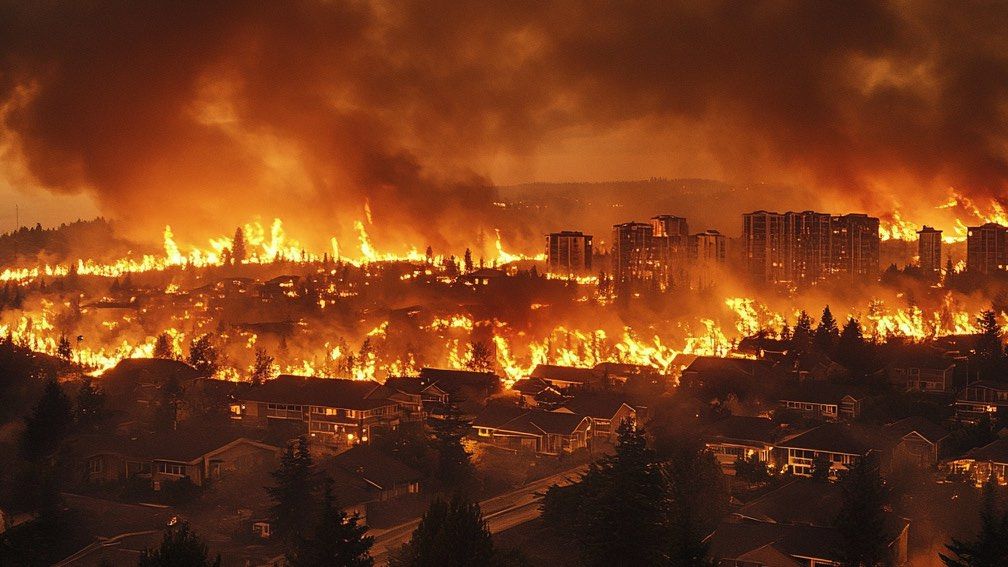
In recent years, homeowners and businesses affected by California wildfires have faced growing underinsurance issues, highlighted by events like the Camp Fire.
- Entire communities were destroyed
- Many properties were insured below full rebuilding cost
- Construction inflation widened the gap between coverage and reality
Consumer impact:
- Homeowners struggled to rebuild
- Insurance payouts fell short of actual costs
- Housing shortages pushed prices higher
Insurance angle:
Rising premiums and policy nonrenewals have pushed some property owners to reduce coverage — increasing the risk of being underinsured when disaster strikes.
Lesson: Cutting or limiting coverage in high-risk areas can amplify long-term affordability crises.
Small business liability gaps during COVID-era disruptions
During the pandemic, many small businesses discovered their insurance didn’t cover shutdown losses — a gap that triggered widespread litigation involving insurers like State Farm and The Hartford.
- Businesses expected “business interruption” coverage to apply
- Most policies excluded pandemics
- Courts largely sided with insurers
Consumer impact:
- Permanent closures of restaurants and local shops
- Reduced services and higher prices where businesses survived
Insurance angle:
The issue wasn’t just cost-cutting — it was misunderstanding what coverage actually included, leaving businesses effectively uninsured for a major risk.
Lesson: Knowing what’s not covered can be as important as what is.
Why these examples matter
Across very different events, the same pattern emerges:
- Risk underestimated or coverage reduced
- Real-world shock hits
- Costs spread to consumers through prices, shortages, or lost services
That’s the core warning behind today’s cost-cutting trend: insurance decisions made quietly in a budget cycle can surface loudly when something goes wrong.