iHeart cuts familiar local radio voices as it chases savings, scale and AI
The nation’s biggest radio company is cutting local talent across the country, many who have spent decades with their listeners.
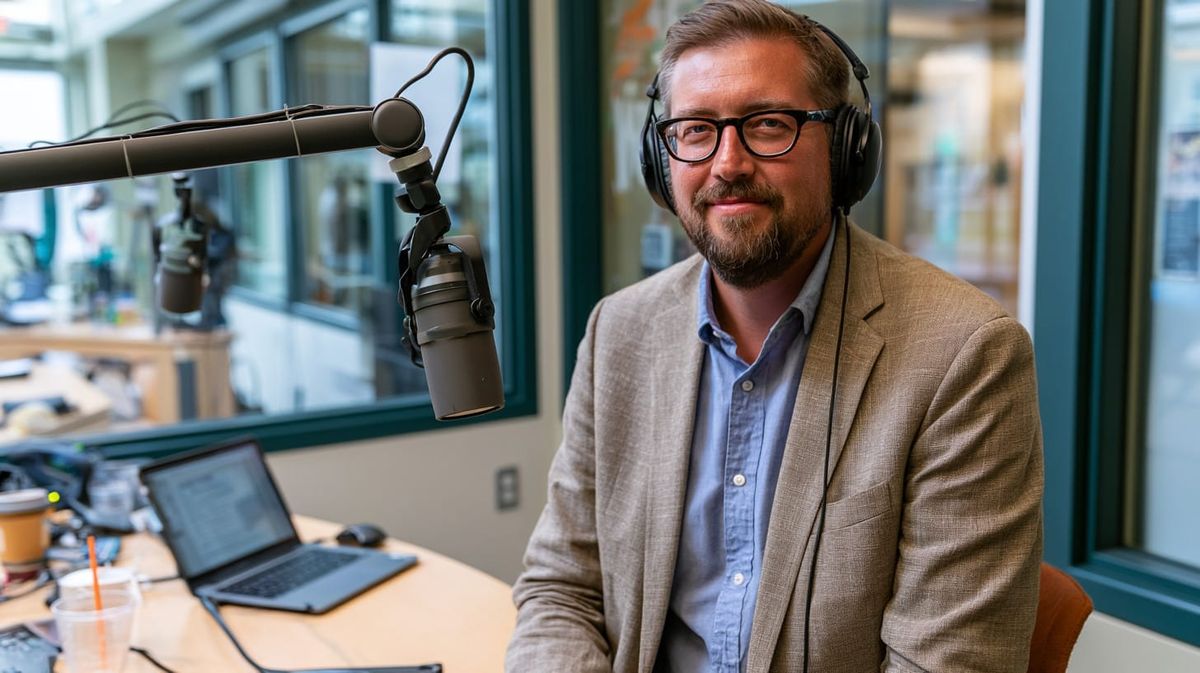
Some of the people losing their jobs are not anonymous back-office employees but long-running morning hosts, music directors and market fixtures who have spent decades with listeners.
For many listeners, local radio has always been less about the corporate logo on the station and more about the familiar voice on the way to work, the host at a charity event, the DJ who knew the market, or the morning show that became part of a household routine.
That local bond is being tested again.
iHeartMedia, the largest radio company in the United States, has begun a far-reaching round of layoffs affecting programming and on-air staff in markets around the country. The company has framed the changes as part of a broader effort to move faster, use technology more efficiently and restructure its programming operations.
But for listeners, the result may be simpler: fewer familiar local voices.
The cuts have hit well-known personalities in Denver, Houston, Baltimore, Pittsburgh, St. Louis, Cincinnati, Corpus Christi, Hartford, the Quad Cities and other markets. In many cases, the employees being let go had spent 20, 30 or even 40 years in local radio.
Longtime local voices are being pushed out
Among the best-known names affected is Bret Saunders, a longtime Denver-area radio personality who spent 28 years at KBCO, the Boulder-based adult album alternative station known for its local following and music identity.
Also in Colorado, longtime Denver broadcaster Denise Plante disappeared from iHeart’s local lineup. Plante is widely known in the market and has been recognized for her long career in Colorado broadcasting.
In St. Louis, BJ Holiday was among those reported out after more than four decades with iHeartMedia in programming, community affairs and on-air roles. That kind of tenure is increasingly rare in local media, where ownership consolidation and repeated restructuring have made long careers at one company harder to sustain.
In the Quad Cities, Pat Leuck and Dani Lynn Howe, longtime morning hosts at WLLR, were also reportedly affected. The pair had worked together for more than 30 years, making them part of the daily routine for generations of country-radio listeners.
Baltimore listeners lost another familiar voice with the departure of Bob Delmont from WPOC, where he had been a midday host for 27 years. Delmont also had a national presence through iHeart’s classic country programming.
In Miami, Doc Reno, a longtime classic-rock voice at BIG 105.9, was reported out after more than two decades in the market. In Pittsburgh, Val Porter, a veteran of the local iHeart cluster since the 1990s, was among the names reported affected. Porter had a long run in music programming and on-air roles, including years connected to WDVE, one of Pittsburgh’s best-known rock stations.
In Cincinnati, Chris Foley, better known as KiddChris, exited WEBN after nearly 14 years. WEBN is one of the city’s legacy rock stations, and morning shows on stations like that often become deeply identified with the market.
Texas stations also hit
The cuts have also reached Texas.
In Houston, SportsTalk 790 morning co-host Cole Thompson and Sunny 99.1 midday host Amanda Flores were among the employees affected. Thompson, a Houston native, joined SportsTalk 790 in 2024 and was promoted in 2025 to co-host “The Morning Drive.” Flores hosted middays on Sunny 99.1 and also voiced shows in other markets, including Dallas, Sacramento, San Antonio and Portland.
Flores told listeners she was proud of her ratings success, helping launch a station, winning a Marconi Award and raising money for St. Jude Children’s Research Hospital. Her farewell message underscored one of radio’s enduring strengths: the sense that a host is keeping people company during work, errands, traffic or ordinary daily routines.
In Corpus Christi, Steven “Rex” Gabriel, the longtime morning host at Rock C101, said goodbye after 36 years on the air.
“Some songs end before you’re ready. So does this one,” Gabriel wrote in a farewell message to listeners.
Why iHeart is cutting
The layoffs are part of a broader restructuring at iHeartMedia.
The company told investors in May that it had announced a new $50 million annualized cost-savings program beginning in the second half of 2026. That comes on top of $100 million in previously announced 2026 savings.
Radio industry reports say the programming cuts are tied to that larger $150 million cost-cutting effort.
The company has said it is using technology and new organizational structures to move faster, support markets and sellers more efficiently, and deliver stronger programming across markets. In an internal memo reported by industry publications, iHeart executives said “faster is better” and said the company had built new technology capabilities that allow it to scale its programming approach.
That language reflects a long-running trend in commercial radio. Large station groups can now use centralized playlists, shared shows, voice tracking, syndicated programming, remote production and data tools to serve multiple markets with fewer local employees.
The result may be more efficient for the company. It may also be less local for listeners.
What listeners lose
For consumers, the issue is not just whether one favorite DJ keeps a job.
Local radio has historically played several roles at once. It has delivered music, news, traffic, weather, emergency information, school closings, sports chatter, local interviews, fundraisers and public-service announcements. It has also provided companionship — especially for commuters, older listeners, night-shift workers and people who still rely on broadcast radio rather than streaming services.
When long-tenured hosts disappear, stations may lose some of the local memory and personality that made them distinct.
A host who has been in a market for 25 years knows the highways, the neighborhoods, the local sports grudges, the annual charity events, the political rhythms and the listeners who call every morning. Centralized programming can fill airtime, but it may not replace that community knowledge.
The cuts also come at a time when local journalism and local media are already under pressure. Newspapers have shrunk. Local TV has consolidated. Many communities have fewer reporters covering city halls, schools, courts and consumer issues. Radio, even when entertainment-driven, has often been one of the last mass-market local media habits left.
The bigger radio story
iHeartMedia is not a small company struggling to run a handful of local stations. It is the dominant player in U.S. audio, with hundreds of broadcast stations, a major podcast business, digital platforms and national advertising operations.
The company says it reaches nine out of 10 Americans every month.
That scale gives iHeart enormous reach. It also means that corporate decisions made for efficiency can ripple through dozens of communities at once.
The company is hardly alone in trying to reduce costs or use technology. Radio groups have been consolidating for decades, and many have relied on syndicated or remotely produced programming. But the latest iHeart cuts show how far the industry has moved from the old model of each station being heavily staffed by local programmers, DJs, news people and producers.
To iHeart, the restructuring may look like modernization.
To many listeners, it may sound like another familiar voice going silent.