Fed raises interest rates: What it means for your credit cards, mortgage and savings
The Fed's higher interest rate arrives when households are already contending with renewed inflation and extremely expensive revolving debt.
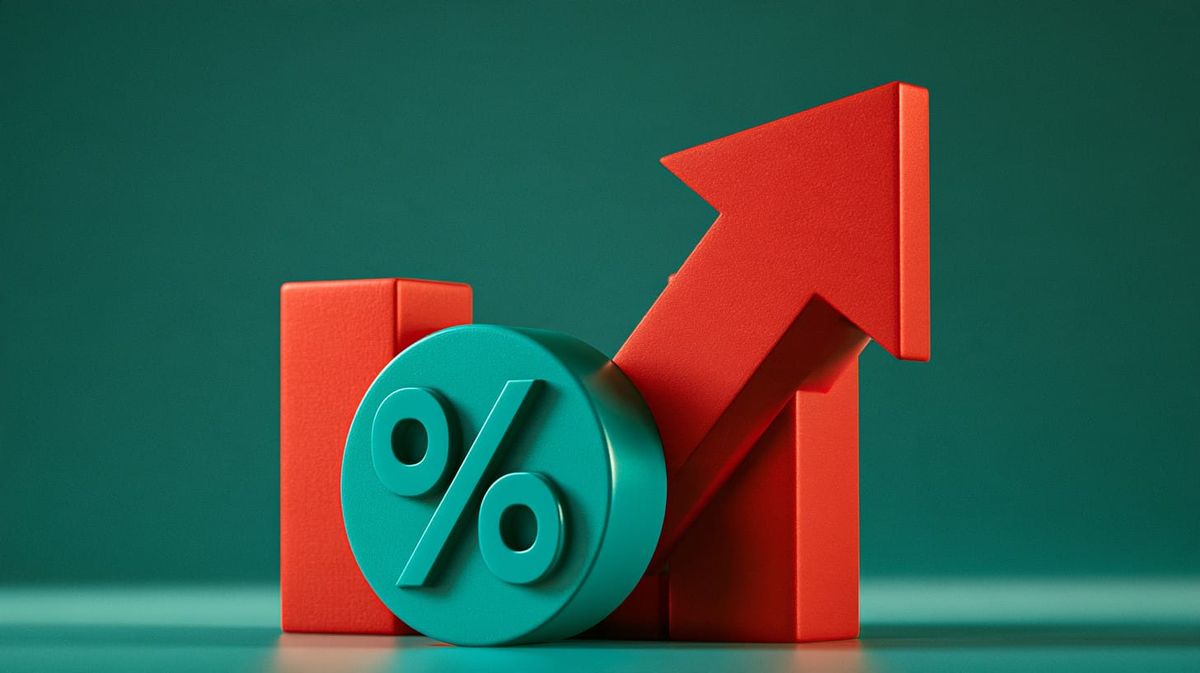
- The Federal Reserve raised interest rates by a quarter percentage point Wednesday — its first increase in more than three years — as policymakers try to bring renewed inflation under control.
- Credit-card borrowers and people with other variable-rate debt are likely to feel the increase relatively quickly, while homeowners with existing fixed-rate mortgages won't see their payments change.
- Savers are on the winning side: high-yield savings accounts, money-market funds, CDs and Treasury bills could pay more, although banks don't always pass rate increases along automatically.
After years of waiting for interest rates to come down, American consumers have just received an unwelcome change in direction.
The Federal Reserve raised its benchmark short-term interest rate Wednesday by one-quarter of a percentage point, bringing the federal funds target range to 3.75% to 4%.
It's the Fed's first rate increase in more than three years.
The reason is familiar: inflation.
The Federal Open Market Committee said inflation remains elevated and that higher rates are intended to help return inflation to the central bank's 2% target. The committee voted unanimously for the increase.
The consequences won't be the same for everyone.
- Borrowers with variable-rate debt are likely to pay more. Savers may earn more. Existing fixed-rate mortgages won't change at all.
- And for prospective homebuyers, the relationship between the Fed and mortgage rates is considerably more complicated than headlines sometimes suggest.
Credit cards: The bad news arrives quickly
Credit-card borrowers are among the consumers most directly exposed to a Fed rate increase. Most credit cards carry variable interest rates tied indirectly to the prime rate, which in turn tends to move with the federal funds rate.
Major U.S. banks responded to Wednesday's Fed decision by increasing their prime rate from 6.75% to 7%, effective Thursday.
That means many credit-card APRs will eventually rise by roughly the same quarter-point. The average credit-card interest rate was already 19.56% immediately before the Fed's action, according to Bankrate.
For an individual borrower, a quarter-point increase isn't catastrophic by itself.
Reuters calculates that someone carrying the average credit-card balance of $6,610 at a 22% APR could initially see a minimum payment increase of only about $1.38.
But that's not really the important number. The problem is that Americans already carrying expensive revolving balances will accumulate still more interest, particularly if the Fed raises rates again.
WalletHub estimates Wednesday's single increase could cost consumers approximately $2 billion in additional credit-card interest over the next year.
For consumers carrying balances, this is a good time to consider paying down the highest-rate debt first, seeking a lower-rate personal loan or — for borrowers who qualify and can repay the balance during the promotional period — considering a 0% balance-transfer offer.
There's also an often-overlooked option:
Call the card company and ask for a lower rate. LendingTree told Reuters that 84% of cardholders in a recent survey who asked their issuer for a lower rate succeeded.
Mortgages: The Fed doesn't set mortgage rates
This is where things become confusing. The Federal Reserve does not directly set 30-year mortgage rates.
Those rates tend to move with longer-term bond yields, particularly the 10-year Treasury, which reflect expectations about inflation, economic growth and future monetary policy.
And mortgage rates had already been moving sharply higher before Wednesday's announcement.
Bankrate's national survey put the average 30-year fixed mortgage at 6.97% on Sept. 16, up from 6.78% a week earlier and the highest level since February 2025.
Markets had already anticipated Wednesday's Fed increase, so much of its impact was incorporated into mortgage rates before the announcement.
Already have a fixed-rate mortgage?
Nothing changes.
If your 30-year mortgage carries a fixed rate, Wednesday's Fed decision doesn't increase your interest rate or monthly principal-and-interest payment.
That's one of the great advantages of a fixed-rate mortgage: the lender assumes the interest-rate risk.
Have an adjustable-rate mortgage?
That's different.
Adjustable-rate mortgages periodically reset according to an underlying interest-rate index. Borrowers with an ARM should check their loan documents to determine:
- when the next adjustment occurs;
- which index determines the new rate;
- how large an individual adjustment can be; and
- the maximum rate the loan can eventually reach.
A quarter-point Fed increase won't necessarily translate immediately into a quarter-point ARM increase, but borrowers should budget for the possibility of higher payments.
Homebuyers face an increasingly difficult calculation
Prospective buyers are in the toughest position.
A nearly 7% mortgage dramatically changes what a household can afford compared with the ultra-low mortgage rates available earlier this decade.
For example, on a $400,000 30-year mortgage, excluding taxes and insurance:
- At 5%, principal and interest are roughly $2,147 a month.
- At 6%, they're about $2,398.
- At 7%, they're about $2,661.
That's more than $500 a month separating a 5% mortgage from a 7% mortgage — for exactly the same house and loan amount.
Higher rates can eventually put downward pressure on home prices by reducing buyers' purchasing power, but that adjustment can take considerable time.
For buyers who need a house now, shopping among lenders becomes especially important.
Bankrate says its research indicates many Americans accept the first mortgage offer they receive, potentially leaving thousands of dollars a year on the table.
Auto loans and personal loans: Expect pressure upward
The Fed doesn't directly determine auto-loan or personal-loan rates either, but both are influenced by the broader cost of borrowing.
Consumers shopping for cars may therefore see financing become somewhat more expensive, particularly if additional Fed increases follow.
This makes preapproval from a bank or credit union even more useful before visiting a dealership.
It gives the buyer an interest-rate benchmark against which to compare dealer financing.
The same principle applies to personal loans: rates can vary enormously depending on credit score and lender, so shopping around can matter more than a quarter-point movement in the Fed's benchmark.
Savers finally get some good news
For people with cash in the bank, the rate increase reverses the equation.
Higher short-term interest rates can increase yields on:
- high-yield savings accounts;
- money-market deposit accounts;
- money-market mutual funds;
- certificates of deposit; and
- Treasury bills.
But consumers shouldn't assume their bank will automatically raise savings rates.
The national average savings-account yield was just 0.63% immediately before the Fed meeting, according to Bankrate data cited by Reuters.
Some competitive high-yield savings accounts, meanwhile, were paying around 4%.
That's an enormous difference.
On $20,000 in savings:
- 0.63% produces about $126 in interest over a year.
- 4% produces about $800.
That's roughly $674 more simply for moving the same cash to a more competitive account, before considering compounding and assuming rates remain unchanged.
For many consumers, shopping for a better savings rate will have a much bigger effect than Wednesday's quarter-point Fed move.
CDs: Higher rates are good — but don't lock everything up
Certificates of deposit may also become somewhat more attractive if banks raise rates.
But consumers should be careful about locking all their cash into a long-term CD immediately.
If the Fed continues raising rates, better yields could become available later.
One approach is a CD ladder — dividing savings among CDs with different maturity dates rather than putting everything into one long-term certificate.
That gives the saver periodic access to cash and the opportunity to reinvest at higher rates if yields continue rising.
Money that may be needed for emergencies generally belongs somewhere liquid rather than in a CD carrying an early-withdrawal penalty.
Why is the Fed raising rates now?
The central bank's dilemma is straightforward.
Economic activity remains relatively strong, employment has held up and investment is robust.
But inflation isn't back under control.
The Fed's latest projections put 2026 PCE inflation at 3.7% and core PCE inflation at 3.4%, still well above its 2% goal. Policymakers project inflation falling substantially in 2027, although forecasts can change quickly.
Higher interest rates are intended to cool demand by making borrowing more expensive.
Consumers finance fewer cars.
Businesses reconsider investments.
Housing activity slows.
Credit becomes more expensive.
Eventually, weaker demand should reduce pressure on prices.
The uncomfortable part is that the mechanism works partly by making life harder for borrowers.
More increases could be coming
Wednesday's quarter-point move may not be the end of the story.
The Fed's September projections show policymakers' median estimate for the appropriate federal funds rate at 4.1% at the end of 2026, higher than their June projection of 3.8%.
That doesn't guarantee another increase. Fed projections aren't promises, and economic conditions can change.
But consumers shouldn't make financial plans on the assumption that Wednesday's hike will quickly be reversed.
The direction of inflation over the next several months will matter enormously.
What this means for consumers
A quarter-point increase sounds small, and for many households the immediate effect will be small.
But the Fed's change in direction matters.
After several years in which consumers could reasonably expect borrowing costs eventually to decline, the central bank is signaling that persistent inflation may require rates to remain elevated — or rise further.
That makes a few moves particularly worthwhile now:
If you carry credit-card debt: Pay down expensive balances aggressively and ask your issuer for a lower APR.
If you're buying a house: Shop several lenders. Don't assume Wednesday's Fed increase automatically means mortgage rates rose exactly a quarter-point.
If you have an ARM: Find out when your rate resets and how much it can change.
If you're buying a car: Get financing preapproval before entering the dealership.
If you have savings: Check your APY. If you're earning less than 1% while competing accounts pay several times that amount, inertia is costing you money.
The Fed controls an enormously important interest rate.
But consumers still control where they borrow and where they save.
And in an environment where rates differ dramatically among lenders and banks, shopping around can have a much larger effect on a household budget than a quarter-point move by the Federal Reserve.