FDA advisers vote to bring unproven peptides out of the shadows — and into compounding pharmacies
An FDA advisory committee recommended allowing compounding pharmacies to make six popular peptides promoted for healing, weight control, endurance and anti-aging.

Peptides, the latest obsession of the wellness industry, may soon become much easier for consumers to obtain — despite major unanswered questions about what they do and whether they are safe.
The Food and Drug Administration’s Pharmacy Compounding Advisory Committee voted Friday to recommend that six widely promoted peptides be added to a federal list of substances that compounding pharmacies may use to prepare prescription drugs.
The committee backed BPC-157, KPV, TB-500, MOTS-c, epitalon and Semax. It rejected a seventh substance, emideltide, sometimes called delta sleep-inducing peptide. The recommendation is not binding, and the FDA must still decide whether to change its rules, according to MarketWatch.
The vote could nevertheless represent a turning point for a largely underground industry.
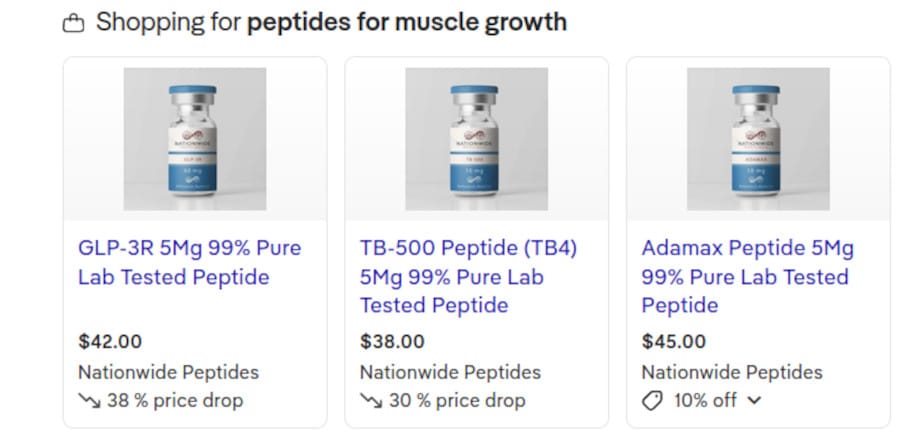
Until now, consumers seeking substances such as BPC-157 have generally obtained them from overseas suppliers or websites that label the products “for research use only” even though buyers may inject or swallow them. If the FDA follows the committee’s recommendation, licensed compounding pharmacies could begin producing the peptides for patients with prescriptions.
That would provide more oversight than the current gray market. It could also create a powerful — and potentially misleading — impression that the products have been proven safe and effective.
They have not.
 James R. Hood
From the gray market to telehealth
BPC-157 is perhaps the best-known of the peptides considered by the committee. Influencers, podcasters, wellness clinics and fitness enthusiasts promote it as a treatment for damaged muscles, tendons, joints and digestive problems.
TB-500 is often marketed for injury recovery and is sometimes combined with BPC-157 in a package promoters call the “Wolverine Stack,” a reference to the comic-book character’s ability to heal rapidly.
KPV is promoted for inflammation, MOTS-c for metabolism and endurance, epitalon for longevity and Semax for cognitive performance.
But the enthusiasm is running well ahead of the science.
FDA researchers told the committee that the available evidence for BPC-157 was weak and that basic questions remain about its composition, manufacturing and effects. The agency said it found no studies in which BPC-157 was administered to humans through the proposed oral, injectable, nasal or transdermal routes.
The agency had formally recommended that none of the seven peptides be placed on the compounding list.
The committee disagreed.
BPC-157, KPV and TB-500 reportedly won 8–6 votes, while MOTS-c passed 7–5. The remaining votes produced recommendations for epitalon and Semax, while emideltide was rejected.
Why supporters favor pharmacy access
Supporters of the change argued that consumers are already using the substances and that licensed pharmacies would provide a safer alternative to anonymous online vendors.
Many peptide sellers operate outside the United States, provide little information about where their products are manufactured and avoid making explicit claims that the products are intended for unsupervised use by consumers.
But what the ads don't say is that consumers may have no practical way to determine whether a vial contains the advertised peptide, the proper dose, bacterial contamination, unwanted byproducts or an entirely different substance.
Compounding pharmacies, by contrast, are licensed and generally require a prescription. Telehealth companies told the advisory committee that bringing the products into a supervised medical system would allow for physician involvement, monitoring and better sourcing standards, The Atlantic reported.
That argument has some merit. But it does not answer the most important question: Should a substance be prescribed simply because people are already buying it illegally or unsafely?
Compounded does not mean approved
The distinction between an FDA-approved drug and a compounded drug is likely to be increasingly important if peptides enter mainstream telehealth.
FDA-approved drugs ordinarily undergo laboratory testing, clinical trials, manufacturing reviews and continuing safety monitoring. The agency evaluates whether the drug works for a particular condition, what dose should be used, which side effects may occur and whether the benefits outweigh the risks.
Compounded drugs do not go through that process.
The FDA says it does not review compounded drugs for safety, effectiveness or quality before they are marketed.
A compounded peptide could therefore be legally dispensed without ever having demonstrated that it heals injuries, reduces inflammation, improves endurance or extends life.
Consumers may see a prescription bottle, a pharmacy label and a telehealth doctor on a video screen and reasonably assume that the treatment has received the same scrutiny as an ordinary prescription medication.
That assumption would be wrong.
FDA identified significant risks
The agency has placed many peptides in a category reserved for bulk substances that raise significant safety concerns while they are being evaluated for possible use in compounding.
For BPC-157, FDA officials have cited potential immune reactions, peptide impurities and difficulties determining the precise identity and quality of the active ingredient. The agency says it has only limited safety information and cannot determine whether the substance would cause harm through the proposed methods of administration.
For MOTS-c, the FDA said it had found no human-exposure data for drug products containing the peptide.
For TB-500, the agency similarly said it had identified no human-exposure data and warned of possible immune reactions, aggregation and peptide-related impurities.
These concerns are not minor technicalities. Peptides are chains of amino acids that can be difficult to manufacture consistently. Small changes in sequence, purity, storage or formulation may affect how the immune system responds.
FDA researchers have also questioned whether references to a peptide’s name always identify the same chemical substance. BPC-157, for example, may be supplied as a free base, acetate salt or other form, and the forms may not necessarily be interchangeable.
A new peptide gold rush
The committee vote may be especially significant for telehealth companies and wellness clinics.
The rapid expansion of compounded GLP-1 weight-loss drugs demonstrated how quickly telehealth companies can build nationwide businesses around products prepared by compounding pharmacies.
Peptides offer a similarly attractive market. Instead of selling one product for one condition, companies could market a menu of substances for recovery, inflammation, metabolism, sleep, mental performance and longevity.
Several telehealth companies have already indicated that they are interested in offering BPC-157 if FDA policy changes.
The likely sales pitch is easy to imagine: personalized prescriptions, convenient home delivery, medical supervision and pharmaceutical-quality ingredients.
But a doctor’s prescription cannot substitute for evidence.
A brief telehealth consultation also does not resolve uncertainty about long-term effects, drug interactions, appropriate dosing or whether the claimed benefits exist at all.
Politics helped drive the change
The peptide debate has also become entwined with the Trump administration’s broader effort to expand access to experimental and alternative treatments.
Health and Human Services Secretary Robert F. Kennedy Jr. has publicly expressed enthusiasm for peptides and said he wants them to be more accessible. The advisory committee was reconstituted shortly before the vote with several new members, including people associated with telehealth or wellness businesses, The Atlantic noted.
Committee supporters framed access as a matter of patient choice and harm reduction.
FDA career scientists took a more traditional position: Before drugs are widely marketed, manufacturers should show what the products contain, whether they work and what risks they pose.
The committee sided largely with the access argument.
What consumers should know
Consumers considering a peptide should ask several questions before handing over money or injecting anything:
Is the peptide FDA-approved for this use?
Being available from a compounding pharmacy does not mean the FDA has approved the product.
What human evidence supports the promised benefit?
Animal studies, laboratory findings and testimonials are not substitutes for controlled clinical trials.
Who made the active ingredient?
Ask whether it was manufactured in the United States, whether the pharmacy tests each batch and whether a certificate of analysis is available.
What risks are known — and unknown?
A provider should be able to discuss possible immune reactions, contamination, interactions and the lack of long-term safety information.
Will the prescriber monitor you?
A one-time questionnaire followed by automatic refills is not meaningful medical supervision.
How are side effects reported?
Consumers should know whom to contact and whether adverse events will be reported to the FDA.
The bottom line
Moving peptides into licensed pharmacies could reduce some of the hazards posed by anonymous online sellers and poorly labeled overseas products.
But safer manufacturing does not prove that a treatment works.
The committee’s vote risks creating a new class of quasi-approved wellness drugs — products that carry the appearance of medical legitimacy without the clinical evidence normally required of prescription medicines.
The FDA now faces a consequential decision. It can accept the committee’s recommendations and allow the peptide market to expand through compounding pharmacies, or it can follow the advice of its own scientists and demand stronger evidence first.
For consumers, the essential warning remains the same: A prescription is not proof, a pharmacy label is not FDA approval, and popularity is not evidence.