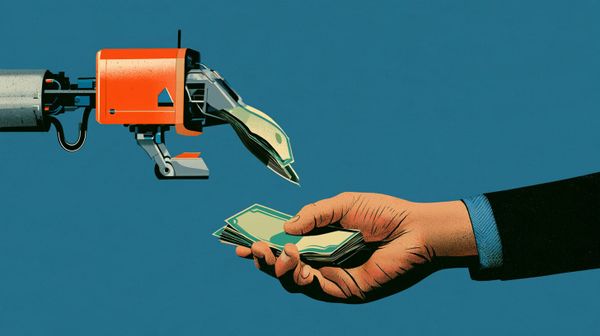
Congress moves toward national rules for paycheck-advance apps
Consumer advocates warn the bill could weaken state protections and let costly wage-advance products avoid lending laws

A fast-growing corner of the fintech market is moving one step closer to federal regulation — and possibly federal protection from tougher state lending laws.
The House Financial Services Committee has approved H.R. 9330, the Earned Wage Access Consumer Protection Act, a bill that would establish national rules for companies that let workers access part of their pay before payday. The committee advanced the bill on June 30 by a recorded vote of 29-22, sending it to the full House for possible consideration.
Earned wage access, often called EWA, is marketed as a cheaper and safer alternative to payday loans. Instead of borrowing against a future paycheck, workers are allowed to draw down wages they have already earned but have not yet received. The services are often offered through employers or payroll systems, though some companies market directly to consumers.
The basic pitch is simple: if the rent is due Wednesday and payday is Friday, a worker can tap some earned wages early rather than overdrawing a bank account, using a credit card or turning to a payday lender.
But the product has drawn growing scrutiny because the cost can be hard to understand. Some services charge expedited transfer fees, monthly subscription fees or “tips.” Consumer advocates say those costs can add up quickly for workers who use the apps repeatedly.
 James R. Hood
What the bill would do
The bill would create a federal framework for earned wage access providers and would largely settle one of the biggest legal fights around the industry: whether these products should be treated as loans.
Under the version reviewed by the committee, qualifying EWA services would not be treated as credit, loans or similar products under federal law. The bill also would amend the Truth in Lending Act so that earned wage access providers are not treated as creditors and fees or tips paid by consumers are not treated as finance charges, according to Democrats on Financial Services).
That distinction matters. If EWA products are not loans, providers may avoid many of the disclosures, interest-rate calculations and state lending laws that apply to other short-term credit products.
The bill also includes consumer-protection provisions. Providers would have to offer a no-cost option if they also offer a fee-based option. They would have to disclose limits on how much pay consumers can access, any fees, and any tips requested or accepted. The bill would also restrict debt collection if repayment fails. Providers generally could not sue consumers, initiate arbitration, use debt collectors or sell repayment rights to debt buyers.
The legislation would also bar late fees, deferral fees, interest or other penalties when a consumer does not pay a fee or tip. If a provider tries to withdraw money from a consumer’s bank account on the wrong date or in the wrong amount and triggers an overdraft or nonsufficient-funds fee, the provider would have to reimburse the consumer.
Supporters say those provisions are evidence that the bill would protect consumers while giving the industry the legal certainty it needs to operate nationally.
“Earned Wage Access puts workers back in control of their own paychecks,” said Penny Lee, president and CEO of the Financial Technology Association, an industry group that supported the bill. The group said EWA products typically have no mandatory fees, no credit checks, no interest, no recourse and no impact on credit scores.
The state preemption fight
The most controversial part of the bill is not whether EWA companies should disclose fees. It is whether federal law should override stronger state rules.
The Consumer Finance Monitor newsletter, published by Ballard Spahr, said the bill would limit the ability of states to apply inconsistent lending laws to qualifying EWA products. The newsletter described the committee vote as a “major step” toward a national regulatory structure for the industry.
That is exactly what industry supporters want. EWA providers now face a patchwork of state laws. Some states, including Missouri, Wisconsin, South Carolina, Arkansas, Utah, Kansas, Indiana and Nevada, have adopted frameworks that generally say qualifying EWA products are not loans if providers meet certain conditions. California has taken a more aggressive approach, treating EWA providers as engaging in lending activity for licensing and supervisory purposes. Connecticut has also concluded that many EWA products are small loans under state law.
Consumer advocates and state regulators say that patchwork is not necessarily a problem. They argue that states have long been the first line of defense against abusive small-dollar credit and should not be blocked from acting if wage-advance products become costly or deceptive.
The Conference of State Bank Supervisors warned earlier this year that the bill’s preemption language would broadly override state licensing, registration and disclosure laws in a market that is still developing. CSBS urged Congress to avoid what it called “sweeping and unnecessary preemption of state law.”
The National Consumer Law Center and other consumer and civil-rights groups have also urged lawmakers to strengthen the bill, warning that it could protect a business model that “forces workers to pay to be paid.” (NCLC)
A CFPB seesaw
The bill also lands in the middle of a sharp shift at the Consumer Financial Protection Bureau.
In July 2024, the CFPB proposed treating many paycheck-advance products as consumer credit under the Truth in Lending Act. The agency said the APR for a typical employer-partnered earned wage cash advance was 109.5%, largely because small fees can translate into high annualized costs when advances are repaid quickly.
But in December 2025, the CFPB reversed course. It issued an advisory opinion saying many earned wage access products are not credit under the Truth in Lending Act and withdrew the earlier Biden-era proposal. Reuters reported that the move fit with the Trump administration’s broader deregulatory approach and aligned with the industry’s argument that workers are accessing wages they have already earned, not borrowing new money.
That regulatory swing is one reason industry groups want Congress to act. A statute would be harder for a future administration to reverse than a CFPB advisory opinion.
The consumer stakes
For workers living paycheck to paycheck, earned wage access can be useful. A $25 or $50 early wage transfer may prevent an overdraft fee, a late-payment penalty or a trip to a payday lender.
But frequent use can create a different problem: the next paycheck is smaller because part of it has already been taken. If the worker then needs another advance to cover the next gap, the product can become part of a recurring short-paycheck cycle.
The Center for Responsible Lending has warned that paycheck-advance products can lead to repeat usage, high costs, overdraft fees, multiple simultaneous advances and data privacy concerns, especially when companies require access to bank-account information.
The central question is whether earned wage access is best understood as a payroll benefit or as a form of short-term credit. Industry groups prefer the payroll-benefit framing. Consumer advocates say the real-world impact can look much more like a loan, especially when consumers pay fees or tips to get money early and then repay automatically from their next paycheck.
What consumers should watch
Consumers using earned wage access apps should look closely at three things: the fee, the speed and the cycle.
A free transfer that arrives in one to three business days is different from an instant transfer that costs a fee every time. A voluntary tip may still increase the cost of accessing pay. A $3 or $5 charge may sound small, but if it is paid repeatedly to bridge short gaps between paychecks, it can become expensive.
Workers should also ask whether the service can trigger bank overdraft fees, whether the provider can debit a bank account automatically, whether the employer receives information about usage, and whether the provider shares data with third parties.
The House bill is still far from becoming law. It must pass the full House, clear the Senate and be signed by the president. But the committee vote shows that Congress is now seriously considering whether wage-advance apps should be governed by one national rulebook.
For fintech companies, that could mean clarity. For consumers, it could mean safer access to earned pay — or fewer state-level protections if the federal rules prove too weak.