Car costs, shopping habits and debt shape today's consumer picture
Consumers are being squeezed from all directions as prices and interest rates climb while household debt levels climb.
The consumer story today is a five-part squeeze: auto loans and monthly payments are reaching records; retailers are trying to hold cautious shoppers while adapting to artificial-intelligence shopping; vehicle and food recalls are adding safety checks to ordinary purchases; credit card and home-equity borrowing are expanding; and a July inflation report is expected to show slower price growth without erasing the pressure on household budgets. Together, the developments show a consumer who is still spending, but with less room for error.
Autos: record borrowing meets a higher price of ownership
Auto financing is becoming a larger monthly commitment even as buyers stretch out the repayment period. The average monthly car payment reached a record $777 in the second quarter, while the average amount financed on a new vehicle rose to an all-time high of $44,156, according to Bloomberg’s report on Edmunds data. The average down payment fell 10 percent from a year earlier to $5,815, and nearly one-quarter of buyers took out loans lasting seven years or more, Bloomberg reported.
The New York Fed’s latest household debt report adds a second measure of the pressure: Auto-loan originations reached a nominal record of $211 billion from April through June, while home-equity balances rose $19 billion, according to Reuters’ account of the report. The $211 billion figure was a nominal record, not a record after adjusting for inflation, Reuters reported.
A separate analysis cited by CNBC put total auto debt at $1.68 trillion at the end of 2025 and said about 86 million Americans had an outstanding auto loan or lease. The same report said the typical payment had climbed above $680 from $506 in the last quarter of 2018, while the average price of a new vehicle was nearly $49,000 compared with roughly $35,000 to $37,000 in 2018, CNBC reported.
The burden is uneven. Borrowers with credit scores below 580 can face interest rates above 18 percent, and the analysis cited by CNBC estimated that could add roughly $14,000 in interest over a six-year loan. Angela Hanks of The Century Foundation told CNBC that “individuals are witnessing an increasing portion of their earnings consumed by their vehicle payments.”
For households, the trade-off is visible in the loan contract: A longer term can lower the payment shown on a dealer worksheet while increasing the time a family remains exposed to interest, repairs and insurance. The record figures from Edmunds data cited by Bloomberg and the New York Fed’s borrowing data reported by Reuters point to an affordability problem that is being financed rather than solved.
Retail: cautious spending gives way to a platform contest
Retailers are seeing a consumer who has not stopped buying but is becoming harder to win. Smithfield Foods cut its fiscal 2026 sales outlook to roughly flat from a prior forecast for low-single-digit growth and lowered its adjusted operating-profit forecast to $1.23 billion to $1.38 billion from $1.33 billion to $1.48 billion, citing cautious consumer spending and higher input costs, according to Reuters. The company still beat second-quarter estimates, posting $3.7 billion in sales for the three months ended June 28 against analysts’ $3.68 billion estimate and adjusted earnings of 62 cents a share against expectations of 60 cents, Reuters reported.
The pressure is not simply a collapse in demand. June retail sales rose 0.2 percent, while core retail sales increased 0.5 percent, as motor-vehicle purchases accelerated and online spending surged, according to Reuters’ retail-sales report. Economists estimated that inflation-adjusted consumer spending rose 0.4 percent in June, but Lydia Boussour, senior economist at EY-Parthenon, said higher inflation and moderating wage growth were squeezing purchasing power and pushing more consumers toward savings and credit, Reuters reported.
The next retail battleground is the path a shopper takes to a product. AI-agent shopping is expected to direct $8 billion in spending to retail sites this year, while 41 percent of U.S. consumers used generative AI for online shopping in June, according to Reuters’ report on the retail industry. Adobe Analytics found that visitors referred by AI services generated 41 percent more revenue per visit than shoppers arriving through traditional channels, Reuters reported.
That traffic comes with a cost for retailers that want to preserve their direct relationship with customers. Walmart, Ulta Beauty and Wayfair were among the retailers updating their websites so products would rank in chatbot recommendations, while trying to keep purchases on their own sites to retain browsing, basket and purchase data, Reuters reported. Josh Friedman, Ulta Beauty’s head of digital and e-commerce, said, “There’s always a tax for engaging customers on other people’s platforms,” in comments carried by Reuters.
Recalls: the shopping list now includes a safety check
Two vehicle recalls announced Aug. 11 put 528,703 U.S. vehicles into a new round of safety reviews. Toyota is recalling 508,354 vehicles because an instrument cluster may fail to show critical information, potentially increasing the risk of a crash or injury, according to the National Highway Traffic Safety Administration as reported by Reuters. The Toyota recall includes certain 2025-26 Camry Hybrid vehicles, and dealers will update the display software for free, Reuters reported.
Tesla is recalling 20,349 vehicles because low-beam headlights may be excessively bright, reducing visibility for oncoming drivers and raising crash risk, according to NHTSA and Reuters. The notice covers certain Model 3 and Model Y vehicles, and a remedy had not yet been finalized when the recall was reported, Reuters said.
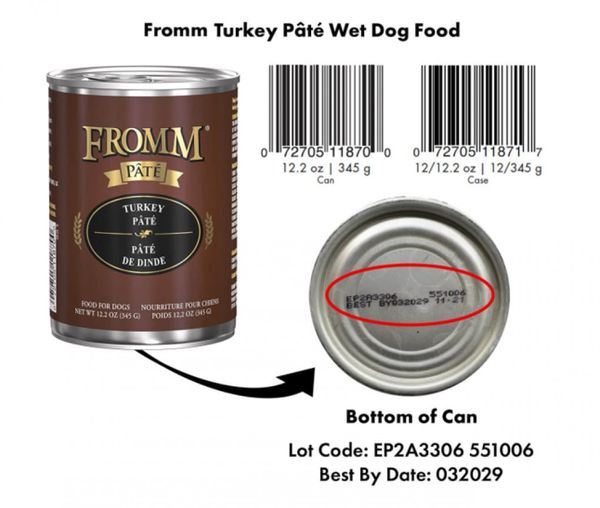
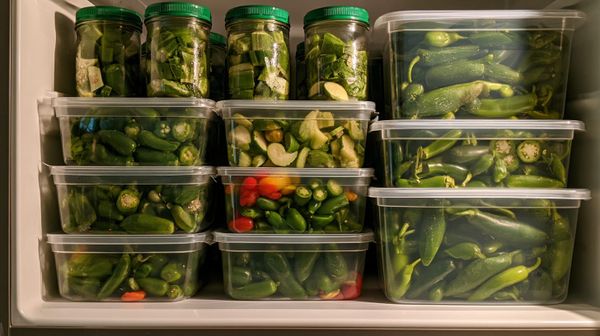
The food-safety side of the recall picture reaches the grocery cart. Taylor Farms recalled prepared foods made with jalapeños, including pico de gallo salsa and guacamole, after fresh jalapeños were recalled amid a Salmonella outbreak, according to CBS News. The products were distributed through national retailers including Walmart and Target in 26 states, and Taylor Farms said it knew of no illnesses linked to the recalled items, CBS News reported.
The recalled products had “best if used by” dates through Aug. 16, and the company said a grower in Sinaloa, Mexico, was identified as the potential source by the supplier involved, according to CBS News. The Mayo Clinic, cited by CBS News, said Salmonella symptoms can include diarrhea, fever and stomach cramps within eight to 72 hours of exposure, with most healthy people recovering within days to a week without treatment.
The consumer task is unusually concrete: Check the model, product and date before using an item, and follow the retailer or regulator’s instructions rather than relying on the brand name alone. The overlap of vehicle notices and food recalls makes safety part of everyday purchasing, not a separate category reserved for major disasters.
Credit and debt: a bigger balance does not mean a healthier budget
Credit card balances rose $21 billion in the second quarter to $1.26 trillion, up 1.7 percent from the prior quarter and close to the record $1.28 trillion reached last year, according to CNBC’s report on New York Fed research. About 175 million Americans hold credit cards, and roughly 60 percent carry revolving debt rather than paying the balance in full each month, CNBC reported.
The reason for the borrowing is increasingly basic. A separate report from Achieve, cited by CNBC, found that 55 percent of consumers carry credit card balances to cover essential expenses. Matt Schulz, chief credit analyst at LendingTree, said the rise in credit card, home-equity and other debt showed people were trying to extend their budgets in the face of stubborn inflation, CNBC reported.
The New York Fed’s numbers also show why the picture cannot be summarized as either “consumers are fine” or “consumers are breaking.” The overall delinquency rate on outstanding household debt fell to 4.7 percent from 4.8 percent in the prior quarter, while researchers said about 7 percent of credit card balances flowed into delinquency from one quarter to the next, according to Reuters’ report. The researchers said credit card delinquency was elevated but had been largely stable since 2024, Reuters reported.
For homeowners, home-equity borrowing is another pressure valve. The $19 billion increase in home-equity balances was part of a four-year trend, with older homeowners using the loans in part to avoid replacing existing mortgages at today’s higher rates, according to Reuters. That can move a household’s expensive unsecured debt into a cheaper loan, but it also puts the home behind the obligation.
Inflation: a cooler forecast still leaves a hot household budget
The July Consumer Price Index report was due at 8:30 a.m. ET Wednesday, and economists surveyed by Reuters expected a modest 0.1 percent monthly increase after a 0.4 percent decline in June, according to Reuters. The forecast called for a 3.4 percent increase over 12 months, compared with 3.5 percent in June, while core prices were expected to rise 0.2 percent for the month and 2.5 percent from a year earlier, Reuters reported.
Gasoline was expected to provide some relief. The average U.S. gasoline price fell to $4.064 a gallon in July from $4.184 in June and $4.609 in May, based on Energy Information Administration data cited by Reuters. Sung Won Sohn, a finance and economics professor at Loyola Marymount University, told Reuters, “I don’t expect any significant firework when the numbers come out.”
Markets were positioned for a relatively tame reading. Dow Jones’ consensus forecast called for headline inflation of 3.4 percent and core inflation of 2.5 percent, while prediction-market traders assigned less than a 55 percent chance to a headline reading above 3.3 percent and an 11 percent chance that core inflation would exceed 2.5 percent, according to CNBC. The CPI report was scheduled for Wednesday morning, CNBC reported.
A cooler report would not reverse the price levels families are already carrying. It would show the pace of increase in July, while auto payments, revolving balances, food purchases and safety decisions are being made against prices that remain higher than they were several years ago. The forecast itself captures the tension: Reuters’ economists’ survey pointed to moderation, but not a return to the Federal Reserve’s 2 percent target.
Bigger picture: resilience is becoming a financing strategy
The five themes describe a consumer economy that is still functioning but increasingly dependent on trade-offs. Auto buyers are accepting larger balances and longer terms; retailers are competing for cautious shoppers through both stores and AI platforms; recalls are turning routine purchases into verification tasks; households are using credit cards and home equity to keep essential spending moving; and the CPI forecast suggests that inflation may cool without making those obligations feel light. Reuters’ retail report captured the central tension when it said consumers were dipping into savings and turning to credit to maintain spending while purchasing power was being squeezed.
That is the bigger consumer question for Wednesday: not whether Americans can still buy, but how much of each purchase is being funded by a paycheck, a depleted cushion or a longer promise to pay. The answer will shape the next round of car loans, store sales, recall responses, card balances and price reports.