Beyond 'Ozempic feet': The surprising body changes doctors are seeing with rapid GLP-1 weight loss
"Ozempic feet" is the latest nickname for a growing list of cosmetic and physical changes linked to rapid weight loss.

People who have always been skinny will tell you it has its drawbacks but at least chronically thin people have adjusted to it. Those who suddenly shed excess weight are finding all manner of unexpected side effects.
The latest to catch the public eye is Ozempic feet.
Simply put, loss of the fat pads beneath the feet can make them appear bonier and older, but more importantly can cause pain, instability and the sensation of "walking on pebbles." Some patients even need smaller shoes after major weight loss, The Daily Beast recently reported.
But that's just the beginning. Here are some of the other surprises awaiting those newly thin pioneers who have been ingesting GLP-1 drugs. It's important to note that these are not toxic effects of the medication – they're just the results of rapid weight loss.
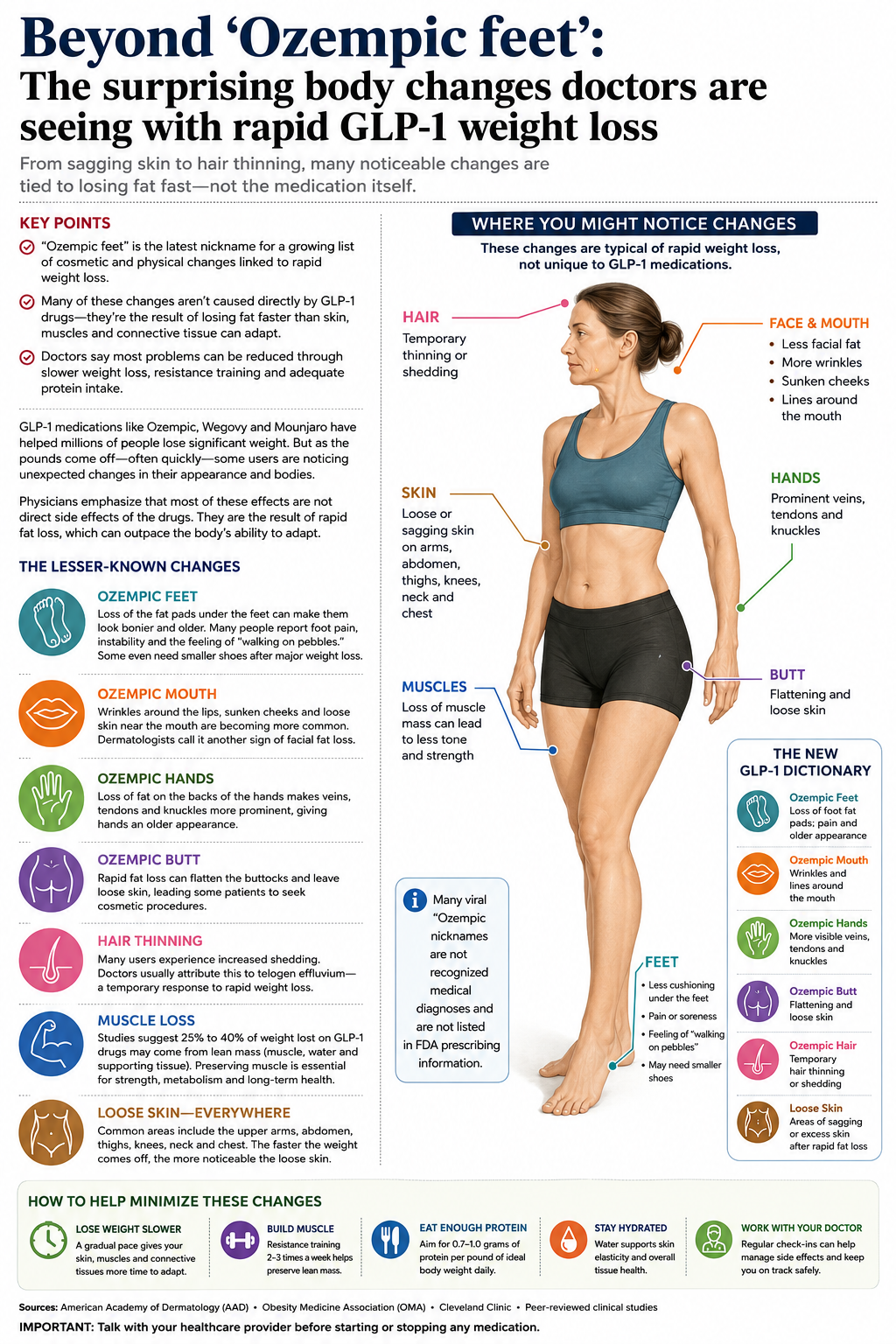
Ozempic mouth. Wrinkles around the lips, sunken cheeks and loose skin around the mouth are becoming common enough that dermatologists have coined another nickname.
Ozempic hands. Less publicized, but increasingly discussed, loss of fat on the backs of the hands makes veins, tendons and knuckles much more prominent, giving hands an older appearance.
Ozempic butt. Plastic surgeons have talked about this for more than a year. Rapid fat loss can flatten the buttocks and leave loose skin, causing some patients to seek cosmetic procedures.
Hair thinning. One of the more common—but less publicized—complaints. Doctors generally attribute this to telogen effluvium, a temporary hair-shedding response that often follows rapid weight loss or major physiological stress rather than the medication itself.
Muscle loss. Probably the most medically important issue.
Clinical studies have found that roughly 25% to 40% of weight lost on GLP-1 drugs may come from lean mass, although much of that includes water and supporting tissue. That's why obesity specialists increasingly stress:
- protein intake
- resistance exercise
- slower weight loss
- strength preservation
rather than simply watching the number on the scale.
Skin everywhere
Many dermatologists say they now see:
- loose upper arms
- wrinkled knees
- sagging neck
- excess abdominal skin
- more visible collarbones
These aren't unique to Ozempic—they're common after any major weight loss—but the speed of GLP-1-induced weight loss often makes them more noticeable.
The important distinction
Many viral "Ozempic" nicknames are not recognized medical diagnoses and aren't listed in FDA prescribing information.
Instead, physicians say they're largely the predictable consequences of losing large amounts of body fat quickly. Similar changes can occur after bariatric surgery or substantial diet-induced weight loss.