America's top consumer complaints - what local and federal agencies are hearing
The overlap between scams, auto issues, housing, healthcare and debt problems is striking and tells a broader affordability-and-fraud story.

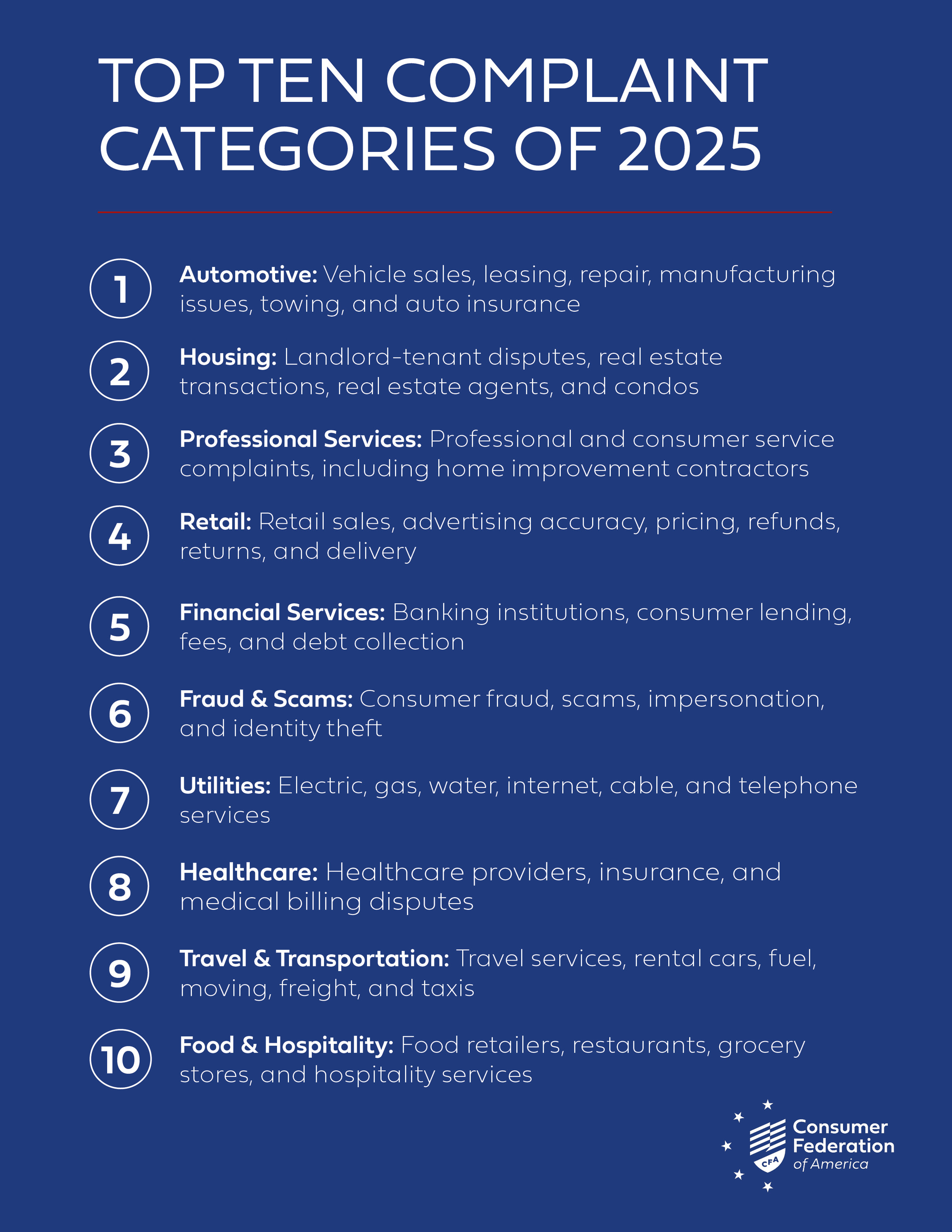
Cars were the subject of most complaints to the nation's state and local consumer protection agencies in 2025, followed closely by housing issues and the growing array of frauds and scams, according to the Consumer Federation of America's annual Consumer Agency Report.
It was the tenth year in a row that cars and car-related issues led the pack. It's not just the cars themselves that riled consumers once again. Deceptive advertising, lemon vehicles, bum repair work and breakdowns also figure into many of the complaints, along with sales, leases and service.
Housing complaints involving landlord-tenant disputes, real estate transactions, real estate agents, and condominium issues climbed to the number two spot, reflecting the growing strain of the affordable housing crisis.
Fraud and scams, including impersonation and identity theft, also remain among the most common complaints reported by the local and state agencies, underscoring the increasingly sophisticated threats consumers face from online scams.
Other agencies, other totals
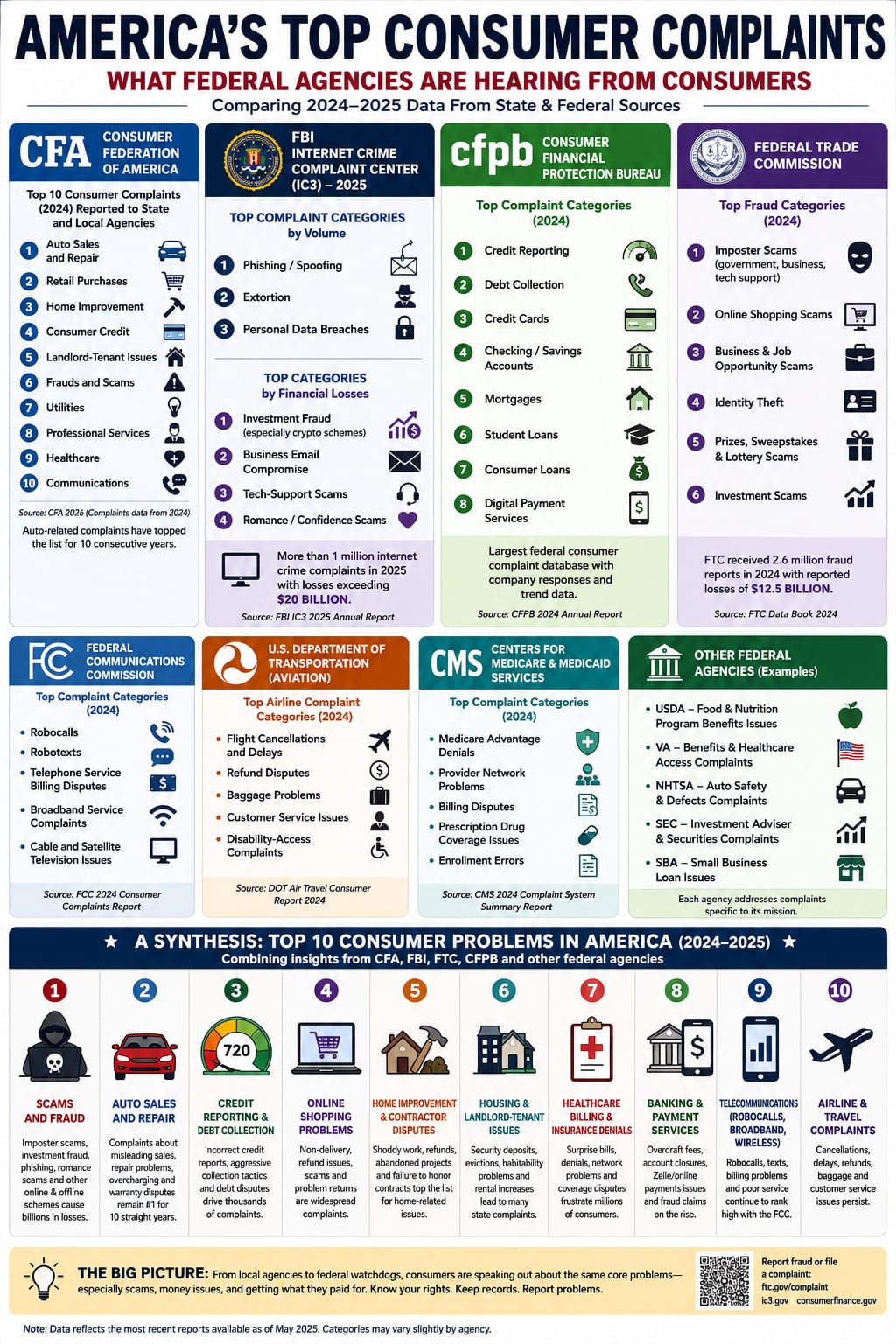
Interestingly, the state and local figures compiled by the CFA differ from those of leading federal consumer agencies. The categories don't line up perfectly, but together they paint a pretty clear picture of what is bothering consumers.
FBI (Internet Crime Complaint Center)
The FBI's IC3 report is probably the closest federal equivalent, although it focuses on online crime rather than all consumer complaints.
Top complaint categories by volume
- Phishing/spoofing
- Extortion
- Personal data breaches
Largest financial losses
- Investment fraud (especially cryptocurrency-related schemes)
- Business email compromise
- Tech-support scams
- Romance/confidence scams
The FBI reported more than 1 million internet-crime complaints in 2025 with losses exceeding $20 billion. Investment fraud remained the biggest source of losses. (FBI)
CFPB (Consumer Financial Protection Bureau)
The CFPB maintains one of the largest complaint databases in government. Its annual reports consistently show complaints concentrated in:
- Credit reporting
- Debt collection
- Credit cards
- Checking and savings accounts
- Mortgages
- Student loans
- Consumer loans
- Digital payment services
The CFPB database is particularly useful because it includes company responses and trend data. (Consumer Financial Protection Bureau)
FTC
The FTC's annual Data Book (typically released each spring) generally finds the highest-volume fraud reports in categories such as:
- Imposter scams (government, business, tech support)
- Online shopping scams
- Business and job opportunity scams
- Identity theft
- Prizes, sweepstakes, and lottery scams
- Investment scams
The FTC's fraud data often overlaps heavily with FBI IC3 findings but includes many offline complaints as well.
FCC
The FCC tracks communications-related complaints, with the largest categories typically including:
- Robocalls
- Robotexts
- Telephone service billing disputes
- Broadband service complaints
- Cable and satellite television issues
DOT / Aviation
The U.S. Department of Transportation publishes airline complaint statistics. The biggest categories are usually:
- Flight cancellations and delays
- Refund disputes
- Baggage problems
- Customer service issues
- Disability-access complaints
Medicare / CMS
CMS receives large numbers of complaints involving:
- Medicare Advantage denials
- Provider-network problems
- Billing disputes
- Prescription drug coverage issues
- Enrollment errors
The CFA report highlights individual cases illustrating various complaint categories and summarizes actions taken by the various agencies to crack down on the most notorious offenders. The complete report is available here.