Affordability under fire: Inflation cools, but price pressures still squeeze budgets
U.S. consumers got a bit of relief in June inflation data, but the day’s headlines underscored a familiar reality: Key household costs are still volatile, and any slowdown may not translate into meaningfully easier budgets soon.
The five themes driving today’s consumer news are these: cooling inflation that may not end rate worries, persistently high housing borrowing costs, shifting trade and tariff policy that can filter into retail prices, rising stress signals in auto lending, and another round of warnings about health insurance affordability.
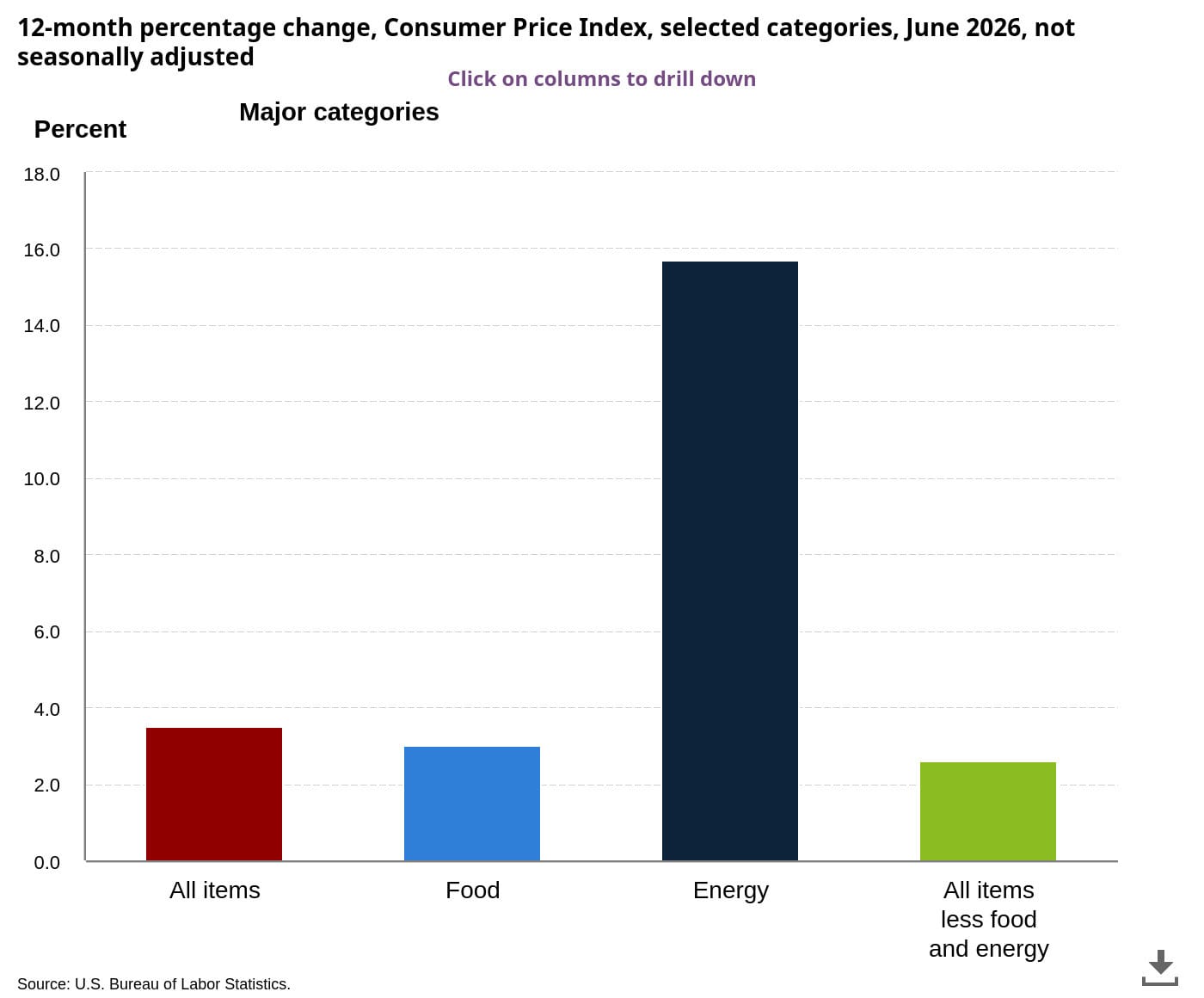
The Consumer Price Index rose 3.5 percent over the 12 months through June after a 4.2 percent jump in May, and the index fell 0.4 percent in June after a 0.5 percent increase the month before, according to the Bureau of Labor Statistics.
Even in a cooler CPI month, gas remains a wildcard: the national average price for gasoline rose to about $3.86 a gallon from $3.79 a week earlier, AAA data showed.
AP’s consumer price coverage also emphasized that many families are still recalibrating spending — buying cheaper brands, cutting back on nonessentials, and watching food and fuel costs amid geopolitical uncertainty.
Housing and mortgage rates keep first-time buyers on the sidelines
Mortgage rates remained elevated this week, and the housing market’s affordability squeeze continues to shape major consumer decisions, from whether to buy a first home to how aggressively to remodel, travel or take on other debt
AP’s housing report described would-be buyers delaying purchases, sellers reluctant to give up low-rate mortgages from earlier years, and builders trying to gauge how much demand is left at current financing costs.
The mortgage story also underscored a key consumer dynamic: When housing payments take a larger share of monthly income, it tends to crowd out discretionary categories like restaurants, apparel and entertainment, keeping pressure on retailers and service businesses.
For renters, the same dynamics can show up as fewer move-up opportunities and more competition for entry-level units, especially in metros that also face rising insurance costs and property taxes.
Tariffs and trade policy add another layer to consumer prices
Trade policy moved back into the consumer-price conversation as the U.S. extended certain tariff exclusions for solar panels, a step that can influence costs for clean-energy projects and, indirectly, electricity rates and installation prices paid by households, Reuters reported.
Companies that rely on imported components often warn that uncertainty around duties forces them to price in risk, build larger inventories or change sourcing, all of which can add costs that eventually reach consumers.
For shoppers, the effects can be uneven: Tariff changes may show up in big-ticket items such as appliances, home improvement materials and electronics faster than in services, while discount retailers may adjust assortments rather than raise sticker prices immediately.
Autos: delinquencies rise as borrowers hit payment fatigue
In autos — the second-largest household purchase after housing — signs of payment stress are emerging as delinquencies climb, adding to concerns that higher interest rates are colliding with still-pricey vehicles.
Reuters reported that U.S. auto loan delinquencies are rising, a development watched closely by lenders and dealers because it can tighten credit availability and raise financing costs for new borrowers.
For consumers, the feedback loop is familiar: As lenders absorb more losses or anticipate them, they often respond with higher rates, stricter underwriting, and reduced willingness to finance older used vehicles — pushing more shoppers into cheaper cars, longer loan terms, or the sidelines.
That financing stress can ripple into insurance decisions as well, since comprehensive and collision coverage is often required by lenders and can add significantly to the monthly cost of ownership.
Health insurance: higher premiums and drug costs remain a flashpoint
Health care spending — already one of the most unpredictable household costs — is back in the spotlight as analysis points to the likelihood of another year of sizable Affordable Care Act premium increases, according to AP News.
AP reported that after big premium increases this year, early indicators and insurer filings suggest many consumers could face higher marketplace premiums again in 2027, with subsidies and plan choices determining how much of that increase hits their monthly bills.
Separately, AP’s reporting on drug costs and insurance rate-setting highlighted how prescription spending, specialty drugs and broader medical inflation can push insurers to seek higher rates, even as policymakers debate how to slow the growth.
For households, the affordability question is not just premiums. It is also deductibles, surprise bills, and how quickly out-of-network costs can turn a manageable budget into a financial crisis.
Bigger picture
Taken together, today’s top consumer themes show why the “inflation is cooling” narrative does not automatically translate into household breathing room: Housing costs reset slowly, tariffs can reintroduce price pressures in goods, financing stress is building in auto loans, and health insurance remains a moving target that can overwhelm any gains from slightly lower inflation readings.