U.S. retaliates against Iran on CPI eve as Stellantis recall balloons to 1.3 million Jeeps, Social Security insolvency moves up to 2032, and home sales unexpectedly surge
By Perplexity
American consumers woke Wednesday to a sharper version of the same five-front squeeze that has defined this spring. Overnight, U.S. Central Command launched retaliatory strikes on Iran after Monday's downing of an Army Apache helicopter near the Strait of Hormuz, sending Brent crude back up after a one-day relief rally and setting an uneasy stage for an 8:30 a.m. Consumer Price Index release that economists believe will show inflation at a three-year high. Stellantis told 1.3 million Jeep owners worldwide to park outside after 72 confirmed fires, with the U.S. share alone topping 1 million vehicles. The Social Security Administration moved the program's insolvency date forward to the end of 2032, putting a 22 percent benefit cut in front of today's near-retirees rather than tomorrow's. Existing-home sales unexpectedly surged 3.2 percent in May to the fastest pace this year, even as 30-year mortgage rates ticked back up to 6.57 percent. Together, the five stories sketch a consumer who is paying more at the pump, more at the grocery store, more at the closing table — and increasingly worried that the safety net is shrinking.
A 15-hour ceasefire collapses into U.S. strikes near Hormuz, and the pump waits
Monday night's flare-up has now escalated into direct U.S. military action. U.S. Central Command said Tuesday evening it had begun "self-defense strikes" on Iran in response to the downing of an Army Apache helicopter near the Strait of Hormuz, an incident President Trump attributed to Iran, according to a CBS News live update. Iran vowed to retaliate, saying it "will leave no attack or threat unanswered," the Associated Press reported from Hong Kong as Asian markets opened Wednesday. The Apache's two pilots were uninjured, CBS News confirmed.
Markets had been calmer Tuesday before the overnight escalation. Brent crude settled at $91.45 a barrel, down 2.97 percent on the day, while U.S. crude futures fell 3.4 percent to close at $88.20, CNBC reported. Energy Secretary Chris Wright said maritime traffic through the strait was "increasing significantly" — the comment that drove Tuesday's relief rally. By Wednesday morning in Asia, Brent had bounced back above $92 a barrel and U.S. crude was around $89, AP reported, as traders priced in the new strikes.
The pump tells the rest of the story. Retail gasoline averaged $4.16 a gallon Tuesday, CBS News reported, down 40 cents from the May 21 peak but still about 40 percent above pre-war levels, according to NBC News. Since the U.S. and Israel launched their first strikes against Iran on Feb. 28, oil prices have surged roughly 30 percent, CNBC noted, with U.S. crude briefly topping $115 a barrel in early April, according to NBC News. Exxon Mobil executive Neil Chapman warned at a Bernstein investor conference last month that strategic reserves could hit critically low levels by the end of June, after which prices would "skyrocket," NBC News reported.
The conflict has already reshaped the global economy in ways that flow directly to American households. The International Air Transport Association said this week that airlines worldwide face $100 billion in added fuel costs this year, with global net profit projected to fall from $45.5 billion in 2025 to about $23 billion in 2026, CNBC reported from the IATA annual meeting. "If prices remain constant, undoubtedly, fewer individuals will be able to afford travel," Kamil Al-Awadhi, IATA's regional vice president for Africa and the Middle East, told the gathering, according to CNBC. China's wholesale prices, meanwhile, jumped 3.9 percent in May, the fastest pace in nearly four years, driven by the same Hormuz disruption, CNBC reported; Chinese factories' fuel and power costs alone rose 10 percent year-over-year, more than double April's 4.4 percent increase.
CPI Day: economists expect a 4.2 percent headline, the highest since 2023
At 8:30 a.m. Eastern, the Bureau of Labor Statistics will release the May Consumer Price Index, and the consensus among economists polled by FactSet is for a headline reading of 4.2 percent year-over-year, up from 3.8 percent in April, CBS News reported. That would be the hottest CPI print since April 2023, when inflation ran at 4.9 percent, CBS News noted, and it would mark the first time CPI has exceeded 4 percent in this cycle, according to CNBC. Economists expect prices rose 0.5 percent from April to May, CNBC reported. Core inflation, which excludes food and energy, is forecast to tick up to 2.9 percent annually from 2.8 percent, the Associated Press reported.
The trajectory tells the political story. Annual inflation was 2.4 percent the month before the Iran war began, CNBC noted, meaning the cumulative jolt from the conflict and the April 2025 Trump tariff package has nearly doubled the headline figure in a little over a year. Lloyd's Bank analysts told NBC News that "elevated energy prices will again exert upward pressure, although possibly less than in the past two months," NBC News reported. Bank of America analysts warned that "aside from airfare, there is little evidence that overall inflation is yet affecting core inflation" — a thin reed for households watching grocery bills climb, according to NBC News.
The everyday math is unforgiving. Pump gas rose from about $4.04 in mid-April to $4.49 in mid-May, the Associated Press reported, citing Energy Information Administration figures, before settling to today's $4.16 AAA average. Diesel surcharges have pushed UPS and FedEx to raise fuel fees, AP reported, which is starting to filter into grocery shelf prices — food at home rose 0.4 percent in April and is up 2.9 percent year-over-year. Clothing, where tariff effects are clearest, jumped 0.6 percent in April and is now 4.2 percent more expensive than a year ago, the Associated Press reported. JPMorgan chief U.S. economist Michael Feroli told NBC News that the latest round of proposed tariffs on imports from 60 countries — covering China, Taiwan, the European Union, Canada and Mexico, with minimums of 10 percent — could push inflation higher still, NBC News reported.
Bond traders are already repositioning. Bloomberg reported Tuesday that positioning in the rates market is now signaling Federal Reserve rate hikes "are coming fast," Bloomberg's bond markets team wrote. The Fed has held its benchmark rate steady three consecutive meetings this year after three cuts in late 2025, The Wall Street Journal reported, and the December meeting is now in play for a possible increase rather than a cut.
Stellantis recalls 1.3 million Jeeps over a fire risk that 72 owners have already lived
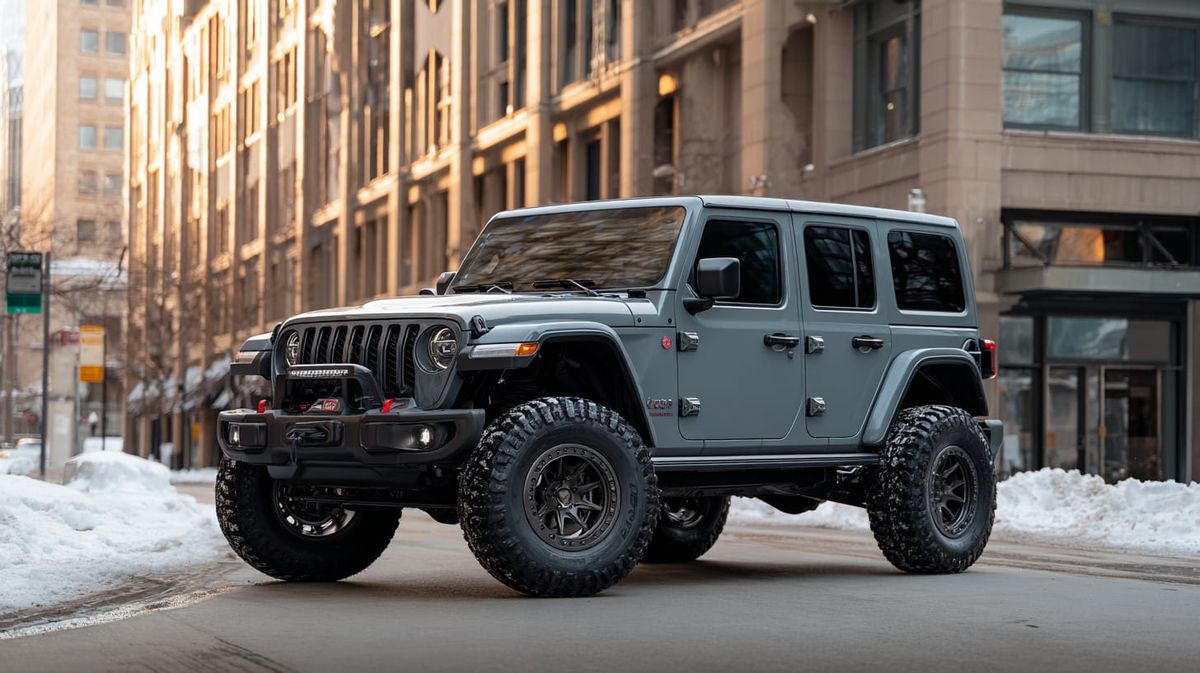
The biggest consumer-safety story of the day arrived Tuesday with a single instruction: park outside. Stellantis is recalling more than 1.3 million Jeep Wrangler SUVs and Jeep Gladiator trucks globally, including more than 1 million in the United States, over a defect in the electric-hydraulic power steering pump wiring that can overheat and ignite, CNBC reported. The recall covers model years 2021 through 2025, and the danger persists even when the vehicle is parked with the ignition off, Bloomberg reported.
Stellantis told the National Highway Traffic Safety Administration it has identified at least 72 fires potentially associated with the issue, along with one injury, according to CNBC. The company said a "faulty electrical connection may cause the connection to melt, ultimately increasing the risk of a fire," CNBC reported, citing the recall filing. Owners are told to park outdoors and away from buildings and other vehicles until repairs are made, Bloomberg reported.
The recall extends a regulatory file that NHTSA opened in September 2024 over engine fires in roughly 800,000 Wranglers and Gladiators from the 2021-2023 model years, CNBC reported. The current campaign also reaches into Canada, Mexico (about 23,000 vehicles) and other international markets (about 125,000), CNBC reported. The remedy — inspections and, where needed, replacement of the wiring harness or the entire electric-hydraulic power steering pump — is not expected to be available until July at the earliest, CNBC reported. For owners with no driveway or detached garage, that is six weeks of careful parking and crossed fingers.
The Stellantis campaign comes on top of last week's Ford recall of 1.74 million U.S. vehicles for a rearview-camera defect that can prevent images from displaying, Reuters reported, and a separate Volvo recall of more than 40,000 EX30 electric SUVs over battery-pack overheating risks, also according to Reuters. Together, the three campaigns put roughly 3 million additional vehicles into the U.S. recall pipeline in less than a week, the busiest stretch of safety actions so far this year.
Social Security insolvency moves up to 2032, putting a 22 percent cut in plain view
For the second straight year, the Social Security Board of Trustees moved up its forecast for when the program will run short. The Old-Age and Survivors Insurance trust fund is now projected to be depleted by the end of 2032, after which the Social Security Administration would only be able to pay 78 percent of scheduled benefits — a 22 percent across-the-board cut, CBS News reported. Last year's report put the depletion date in 2033, The New York Times reported.
The trustees attributed the accelerated timeline to the One Big Beautiful Bill Act and its effect on the taxation of benefits, CBS News reported. The agency formalized the new date in August, according to CBS News, but Tuesday's annual report makes 2032 the official baseline.
The dollar consequences land squarely on retirees. A Committee for a Responsible Federal Budget analysis published earlier this month estimated that the typical monthly benefit would fall by about $500 — roughly a 24 percent cut to the typical payment — if Congress takes no action before the trust fund runs dry, CBS News reported. For a 59-year-old considering when to claim, 2032 is no longer a problem for the next generation; it is six and a half years away.
Medicare's hospital insurance trust fund, which finances Medicare Part A's coverage of inpatient hospital stays and skilled nursing care for about 70.1 million enrollees, is now projected to be unable to pay full benefits in the second quarter of 2033, CBS News reported. At that point the program would cover only 89 percent of obligations. The Medicare projection was 2036 as recently as the previous report, and has now moved up three years in two annual cycles. The Wall Street Journal's editorial board on Tuesday argued in an opinion piece that "only AI can save Social Security and Medicare," The Wall Street Journal wrote — a measure of how desperate the policy conversation has become.
Home sales surge to the year's fastest pace as mortgage rates climb back above 6.5 percent
Against every macro headwind, the housing market staged a small rebellion in May. Sales of previously occupied U.S. homes rose 3.2 percent from April to a seasonally adjusted annual rate of 4.17 million units, the fastest pace since December and a 3.2 percent gain from May of last year, the Associated Press reported. The Wall Street Journal called it "the biggest rise this year," The Wall Street Journal reported. The median sales price ticked up 1.3 percent from a year earlier to $429,300, according to the Associated Press.
The rebound came in the teeth of rising rates. The national average 30-year fixed mortgage stood at 6.57 percent Tuesday, up 3 basis points from Monday and 3 basis points from a week earlier, with the 15-year fixed at 5.94 percent and the 5/1 ARM at 5.81 percent, The Wall Street Journal reported. The 30-year jumbo rate jumped 8 basis points in a single day to 6.74 percent, The Wall Street Journal reported. Refinance rates were higher still, with the 30-year refi at 6.72 percent. Freddie Mac data show the 30-year fixed briefly dipped below 6 percent in late February before climbing back to roughly 6.5 percent by early April, CBS News reported, and has hovered there since.
Fannie Mae, which had forecast earlier this year that rates would slip back below 6 percent by year-end, now expects them to remain above 6 percent for the remainder of 2026, The Wall Street Journal reported. With a CPI print likely to spook the rate market further and the Fed widely expected to hold its benchmark steady at its meeting later this month, the path back to a 5-handle on 30-year rates has gotten longer, not shorter, The Wall Street Journal noted. Bloomberg has scheduled a Thursday live event titled "What Could Jumpstart the US Housing Market?" — a question many buyers and sellers are asking, Bloomberg announced. The Tuesday data answered some of it: pent-up demand from a slump that began in 2022 is now strong enough to absorb six-and-a-half-percent mortgages.
The bigger picture
Every line of Wednesday's news connects to every other. The U.S. strikes on Iran put oil back above $90 just before a CPI release that will tell the Fed how much of the Hormuz shock has reached American wallets. The Fed's response, in turn, will set the mortgage rates that home buyers are paying as they push existing-home sales to the year's fastest pace despite affordability that has rarely been worse. Stellantis's 1.3 million-vehicle recall, on the heels of Ford's 1.74 million-vehicle camera campaign and Volvo's EX30 battery action, is a reminder that the auto market that consumers can still afford is also the one most exposed to manufacturer mistakes. And the Social Security trustees' decision to move insolvency up to 2032 means that the retirees who are watching grocery, gasoline and Medicare premiums climb today are also watching a 22 percent benefit cut move from "next decade" to "this one." Households today are paying war prices at the pump, tariff prices at the store, post-pandemic prices at the closing table and, if Washington does nothing, future haircuts on the checks they have spent their working lives funding. The five stories are not really separate; they are five chambers of the same squeeze.
—30 —