Trump pulls back from Iran strikes and oil drops below $90 a barrel, but wholesale prices jump 6.5 percent, jobless claims hit a four-month high and the appeals court keeps the 10 percent tariff alive
By Perplexity
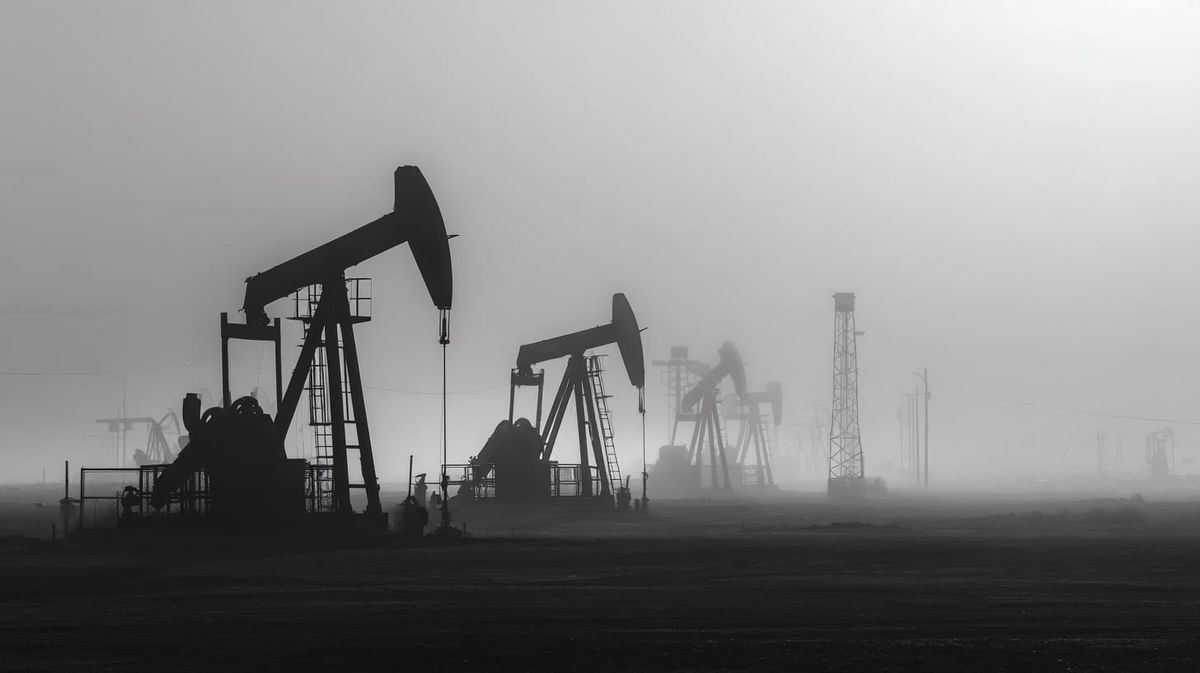
For the first time in two weeks, the dominant consumer-news story Friday morning was de-escalation rather than escalation. President Trump canceled planned strikes against Iran late Thursday — with U.S. Navy crews about three hours from launch — and announced a framework deal could be reached "in the next few days." Brent crude tumbled to about $88 a barrel and West Texas Intermediate to $85.91, both off more than 2 percent, after a week that briefly pushed WTI back above $92. Gold slid as well, on track for a 3.2 percent weekly loss. But the same morning, the Bureau of Labor Statistics reported that wholesale prices jumped 1.1 percent in May for a 6.5 percent annual reading — the hottest producer price index in nearly four years — virtually guaranteeing that this week's 4.2 percent consumer inflation print will not be the last hot reading. Initial jobless claims rose to 229,000, the highest since early February. A federal appeals court ruled Thursday evening that the Trump administration may keep collecting its 10 percent global tariff while the underlying legality is litigated, even as the Joint Economic Committee minority estimated tariffs plus the Iran war have cost the average household more than $3,000 since 2025. And the World Cup officially kicked off Thursday in Mexico City, with North American host cities collectively expecting more than 1.2 million international visitors. The five stories sketch a consumer whose summer just got slightly cheaper at the pump but more expensive almost everywhere else.
Trump pulls back from a third night of strikes, and oil drops below $90 a barrel
The headline shift overnight was a stand-down. Two U.S. officials told NBC News that the American military was about three hours away from launching strikes inside Iran when Trump announced via social media that an agreement had been established, NBC News reported. The Navy had already received orders for the strike, had altered air-operation routines for the day and had loaded munitions; Kharg Island, the Iranian oil terminal that handles about 90 percent of the country's exports, had been excluded from the target list, the officials said, despite earlier Trump posts threatening to "take Kharg Island," NBC News reported. The military, those officials told NBC, was more surprised by the cancellation than by the threats.
Markets moved immediately. Brent crude was down 2.2 percent in early European trading Friday at about $88 a barrel, and WTI was down 2 percent to $85.91, The Wall Street Journal reported. U.S. crude futures for July delivery slipped another 1.65 percent in early Asian trading to $86.26, CNBC reported. Gold was down 0.5 percent and on pace for a 3.2 percent weekly loss, CNBC reported, as a possible truce eased the safe-haven bid that had powered bullion to record territory through the spring.
Tehran is not yet on board. Iranian state-affiliated outlet Fars said Tehran had not approved any preliminary draft of a memorandum of understanding with Washington, CNBC reported. Iran's foreign ministry on Thursday said the U.S. attacks had effectively nullified an earlier ceasefire, the Associated Press reported. India said three of its mariners were killed Tuesday when U.S. forces struck the Palau-flagged tanker Settebello in the Gulf of Oman; CENTCOM has now disabled at least nine merchant vessels under its blockade of Iranian ports since April 13, CBS News reported. Asian shipping is adjusting around the Strait of Hormuz. Non-Iranian flows through the strait surged about 50 percent in the first ten days of June, with 1.8 million barrels a day transiting versus 1.2 million in May, Bloomberg reported, citing Vortexa data. Frontline chief executive Lars Barstad told CNBC that prewar Hormuz traffic of 130 to 140 vessels a day has fallen to just five to ten today, and that 10 percent of the world's largest tankers — very large crude carriers, each capable of holding 2 million barrels — are currently stuck in the Gulf, fully loaded, CNBC reported.
The math at the pump still tilts the wrong way. CNBC reported Thursday that the national average price of gasoline was $4.13 a gallon as of the most recent EIA reading, up from $3.12 a year earlier, CNBC reported, and Iran's crude production dropped 18 percent in May to 2.33 million barrels per day as the U.S. blockade bites, The Wall Street Journal reported. Even with Friday's relief rally, gasoline at $4.13 is a 32 percent year-over-year jump.
Wholesale inflation hit a 4-year high, and that's the next consumer print
If Wednesday's 4.2 percent consumer-price report was a shock, Thursday's producer-price reading was a louder one. The PPI for final demand rose 1.1 percent in May, far above the 0.7 percent that economists polled by Dow Jones had expected, CNBC reported. The annual reading hit 6.5 percent, the highest since 2022. Core PPI excluding food, energy and trade services rose 0.8 percent for the month — the largest one-month increase since March 2022 — and 5.1 percent annually, the highest since October 2022, CNBC reported.
Goods carried the load. Final demand goods rose 2.8 percent, the largest one-month increase since the data series began in December 2009. Energy prices within the goods category jumped 10.7 percent, and wholesale gasoline alone jumped 23.4 percent, CNBC reported. Energy was responsible for about 80 percent of the goods increase, and goods were responsible for about 80 percent of the headline PPI gain. In the services sector, portfolio management fees jumped 4.8 percent.
The implications for consumers are about lag, not direction. The PPI reading captures prices charged by U.S. producers; those costs flow into retail shelves over the next several months. With both CPI and PPI now running well above the Fed's 2 percent target, "the current inflation environment is expected to keep the [Federal] Reserve on the sidelines for the near term," CNBC noted, in its PPI summary. Trump on Thursday said the data showed his policies were working, The New York Times reported; the White House dismissed the inflation print as temporary for the third consecutive month, according to the Times.
Jobless claims hit a 4-month high, and traders rebuilt rate-hike bets even with strikes paused
The Labor Department said Thursday that initial claims for unemployment benefits rose to 229,000 in the week ended June 6, an increase of 4,000 from the prior week and the highest level since early February, the Associated Press reported. Analysts polled by FactSet had projected 216,000. The four-week moving average rose 4,250, also to 229,000. Continuing claims, which lag a week, rose 24,000 to 1.9 million for the week ended May 30. The claims figure is historically low but no longer reassuring at the margin, and that combination — a softening labor market with sticky inflation — is the textbook stagflation problem.
The bond market's response has been to bet on the Fed being unwilling to bail out either side. CME Group's FedWatch tool now shows traders pricing a 60 percent probability of at least one quarter-point rate hike by December, CNBC reported, and the FOMC's June 17 meeting — Kevin Warsh's first as chair — is widely expected to leave rates unchanged. The European Central Bank raised rates a quarter point Thursday to fight imported Iran-war inflation, the Associated Press reported. The Bank of Japan is set to raise rates to a 31-year high next week, Reuters reported, and the Bank of England is widely expected to follow Thursday.
Households see the consequence on Bankrate's mortgage screen. The national average 30-year fixed-rate mortgage was 6.55 percent Thursday, with the 15-year fixed at 5.92 percent, the 5/1 ARM at 5.69 percent and the 30-year jumbo at 6.69 percent, The Wall Street Journal reported. Fannie Mae, which began 2026 forecasting that rates would fall below 6 percent by year-end, now expects them to remain above 6 percent through December. The 30-year fixed has been ticking up, not down, in recent weeks despite the relief rally in oil — a sign that the bond market is more focused on the PPI and CPI prints than on whatever ceasefire Trump announces next.
Appeals court keeps Trump's 10 percent global tariff alive — and the average household is out more than $3,000
The U.S. Court of Appeals for the Federal Circuit ruled Thursday that the Trump administration may continue collecting its 10 percent global tariff, The Wall Street Journal reported in its livecoverage. In an unsigned opinion, a three-judge panel suggested that the U.S. Court of International Trade may have erred in declaring the tariffs illegal earlier this spring. The ruling did not finally resolve the underlying legal challenge, but it does mean that customs collections on imports from China, the European Union, Canada, Mexico and other major trading partners will continue at the 10 percent floor — and on top of that floor, in many cases, additional sector-specific rates.
The bill is showing up in consumer wallets. The Congressional Joint Economic Committee minority staff has now estimated that tariffs plus the war in Iran have collectively cost the average U.S. household more than $3,000 from 2025 through 2026, CNBC reported. Cracker Barrel and Casey's both beat earnings estimates in May, but management on those calls warned investors that tariff-induced cost increases would show up on menus and shelves over the summer. Bloomberg reported Thursday that Canada is rolling out a food-security plan aimed at reducing imports — and prices — partly in response to U.S. tariff exposure, Bloomberg reported. Bloomberg also flagged Thursday that an El Niño weather pattern returning this year could compound global food-price pressure already amplified by tariffs and the war, Bloomberg reported.
For now, U.S. shelves are absorbing it. Apparel rose 4.2 percent year-over-year in the last CPI, the most tariff-exposed category in the consumer basket, and shipping costs flowing through PPI's 23.4 percent wholesale gasoline jump will compound that pressure in coming months. The Wall Street Journal noted Thursday that "global trade imbalances threaten the global economy again," The Wall Street Journal wrote, an unusually direct assessment of where the tariff regime now sits.
World Cup kicks off in Mexico City, with 1.2 million international visitors and one big asterisk
The summer's biggest scheduled consumer-spending event began Thursday with Mexico's opening match in Mexico City, The New York Times reported on its World Cup live page. Tourism Economics now estimates that more than 1.2 million international tourists will visit the United States across the tournament window, including nearly 750,000 who would not have traveled otherwise — about a 1.1-percentage-point rise in international arrivals through July, The New York Times reported.
The local-economy numbers vary city by city. AirDNA data showed short-term rental bookings on group-stage match days up 564 percent year-over-year in Monterrey, 209 percent in Mexico City, 171 percent in Kansas City, 152 percent in Miami, 52 percent in Toronto and 28 percent in San Francisco, The New York Times reported. Boston hotel demand is up about 11 percent year-over-year, and Seattle's projected domestic visitor count has risen 30 percent since 2024. Tourism executives surveyed by the American Hotel & Lodging Association told CNBC earlier this week that 80 percent of their members say bookings are below initial expectations — partly because of macroeconomic anxiety and partly because of visa and border issues for fans from countries including Iran and Jordan, CNBC reported. Marriott told CNBC it expects a roughly 40-basis-point lift in revenue per available room from the tournament; Deutsche Bank's hotel-REIT model assumes 50 to 75 basis points, according to CNBC.
The asterisk is the war. Wizz Air withheld guidance Thursday because of Middle East risk, The Wall Street Journal reported, and Bloomberg reported Thai Airways sees demand softening as Gulf carriers cut fares, Bloomberg reported. For U.S. travelers, the friction is more mundane: the FAA is reminding consumers this week that lithium-ion power banks above 100 watt-hours require airline approval, that two such batteries are typically the maximum without prior consent and that they must travel in carry-on baggage, the Associated Press reported. Southwest Airlines is now limiting passengers to one charger each.
The bigger picture
Friday's news is a study in opposite directions. Oil and gold are down because Trump pulled back from a third night of Iran strikes — the rare good news for U.S. drivers in a month dominated by war prices. But producer prices just printed a four-year high, jobless claims hit a four-month high, the appeals court greenlit the 10 percent global tariff that is showing up on apparel and grocery shelves, and the average household is now out more than $3,000 from tariffs and war combined. Mortgage rates remain above 6.5 percent, with the bond market now pricing a December Fed hike instead of the cut once expected, even as the European Central Bank, the Bank of Japan and the Bank of England all move tighter to combat the same imported inflation. Against that, the World Cup arrived Thursday with 1.2 million international visitors and a tourism boost that is real but uneven and partly hostage to whether Trump's overnight stand-down with Iran holds. The relief at the pump is welcome and may grow. Everything else is moving the other way.