Trump orders DOJ to probe gasoline 'gouging', Congress sends Trump landmark housing bill
Trump orders DOJ to probe gasoline 'gouging' as oil falls below $73, Congress sends Trump landmark housing bill, Hormuz tankers stream out as inspectors return to Iran, Goldman sees July Fed hike risk and Prime Day rolls on amid sticky inflation
Wednesday opened with five fights over the American consumer's wallet.
-
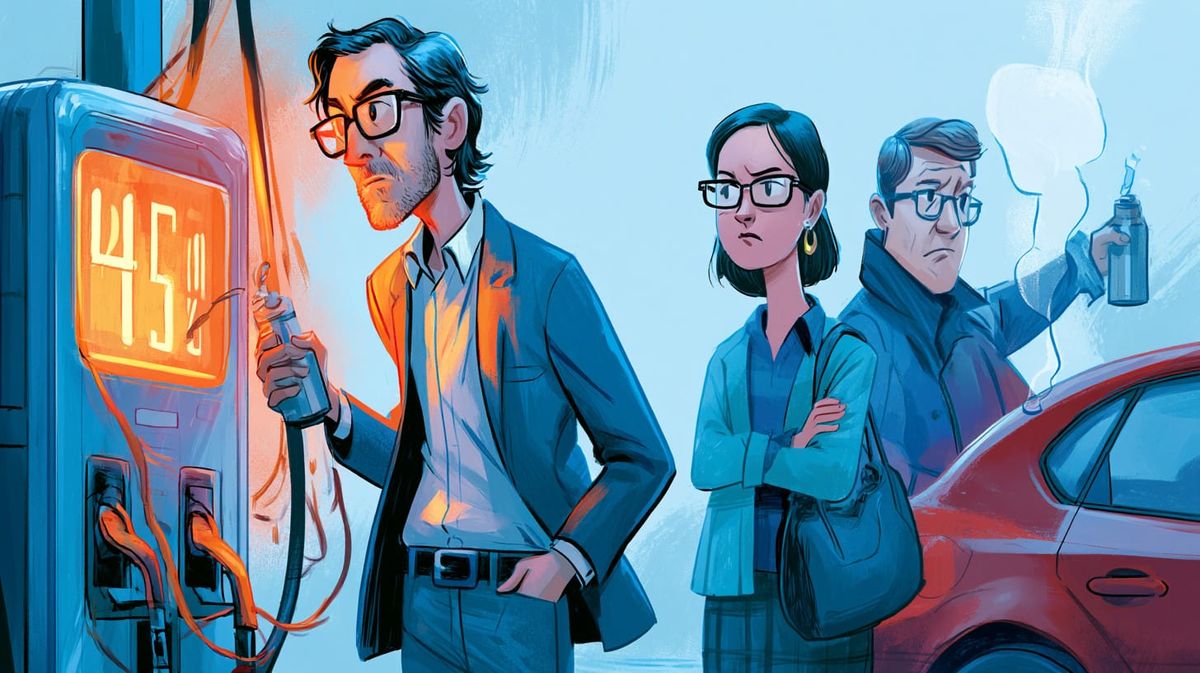
President Donald Trump ordered the Justice Department overnight to investigate big oil for failing to pass falling crude prices through to pump customers, calling it "gouging" — even as U.S. crude fell below 73 dollars a barrel.
-
Congress sent the president a sweeping bipartisan housing bill, the most significant in three decades, capping institutional ownership and easing federal review for new construction.
-
The Strait of Hormuz is reopening as tankers stream out and United Nations inspectors prepare to visit Iran's nuclear sites under a U.S. deal.
-
Goldman Sachs and Bloomberg are warning new Federal Reserve chair Kevin Warsh may pivot to a July rate hike, even as Treasury Secretary Scott Bessent expresses confidence Warsh will tame inflation.
-
And Amazon Prime Day is in full swing alongside Walmart Deals — but the buying season is colliding with mortgage rates back above 6.5 percent, falling back-to-school spending and a stalled housing market.
Trump orders DOJ to probe gasoline 'gouging' as oil falls below $73
President Trump took to Truth Social shortly after midnight Wednesday and ordered the Justice Department to investigate big oil for failing to lower pump prices in line with falling crude costs.
"The Oil Companies are not dropping price at the pump in commensurate with the lower prices they are paying for Oil. Those are dropping like a rock! In other words, customers are being 'gouged.' I have instructed the DOJ to immediately start looking. Gas prices better start going down a lot faster than what I'm seeing!" the president wrote, as quoted by CNBC.
The post landed alongside another leg down in crude markets. Brent August futures slipped 0.71 percent Wednesday to 76.18 dollars a barrel, while U.S. West Texas Intermediate August futures fell 0.94 percent to 72.52 dollars — the lowest in nearly four months, CNBC reported. Reuters' markets desk reported "oil prices extend decline on expectations of smoother crude flows via Hormuz," with the front-month near four-month lows, per its homepage summary.
The gap between crude and pump prices is what is fueling Trump's anger. AAA's national gasoline average held steady at 3.93 dollars a gallon Tuesday, The New York Times reported — still 32 percent above pre-war levels — while diesel slipped a penny to 5 dollars, up 33 percent since the war began. NBC News' gas-price tracker showed gasoline jumped more than 30 percent during the 10-week war and remains above 4 dollars in many states.
NBC's Trump-gouging story noted the AAA average dropped from 4.52 dollars a month earlier — a 13 percent reduction — but consumers are still paying nearly a dollar more per gallon than before the war.
Energy economists called the move political theater. "It's not how gasoline prices work in the U.S.," Karen Young, a senior research scholar at Columbia University's Center on Global Energy Policy, told CNBC's "Access Middle East," per a CNBC video segment.
"State and local taxes are added to the price of gas at the pump." Young said refiners adjust prices on a multi-week lag, meaning falling crude takes weeks to reach the pump. The Wall Street Journal reported that current oil prices have nearly returned to pre-conflict levels, "but Americans continue to spend nearly an extra dollar for each gallon of gasoline they purchase."
Greenlight Commodities' James Conlon told CNBC Iranian oil hitting the market should push prices into the 60-dollar range, in a video clip. Bloomberg's Daybreak markets desk cautioned that a return to 3-dollar gasoline "won't happen before the end of 2026" until refiners replenish stockpiles.
Congress sends Trump landmark housing bill in rare bipartisan win
The U.S. House of Representatives voted 358 to 32 Tuesday to pass the 21st Century ROAD to Housing Act, sending the most consequential housing legislation in three decades to President Trump for his signature, CNBC reported.
The bill cleared the Senate 85 to 5 Monday night after months of back-and-forth, "marking the most substantial legislation in years," Bloomberg reported. Trump is expected to sign the measure at the Capitol on Wednesday before meeting with Senate Republicans, according to Speaker Mike Johnson's office.
The roughly 380-page package caps the number of single-family homes that institutional investors can own at 350 properties, simplifies regulations around manufactured housing, eases federal environmental reviews to accelerate new construction, mandates model zoning plans local governments could adopt, and redirects billions of dollars in federal grants toward localities that build, per The New York Times.
A new 200-million-dollar-a-year Innovation Fund will reward jurisdictions with a track record of expanding supply, CBS News reported. Investment firms already above the 350-home cap would not be required to liquidate; the new restrictions cover existing single-family homes but exempt new construction, preserving the incentive for institutional capital to build, per the CBS report.
Builders fear the bill could fizzle. "A Landmark Housing Bill Passed Congress. Home Builders Fear It Will Fizzle," The Wall Street Journal reported, noting that "the legislation streamlines some federal approvals for housing, but it doesn't address local regulations, where most policy is made." The Times described the bill as "no quick fix," with Mortgage Bankers Association chief economist Michael Fratantoni warning that "this is the level of mortgage rates you should anticipate if you're looking to buy in the next couple of years."
Hormuz reopens as tankers stream out and inspectors return
The Strait of Hormuz, effectively shut by Iran for most of the 10-week war, is reopening fast. ANZ Research analysts told The Wall Street Journal that "oil tankers are increasingly visible in their passage through the Strait of Hormuz" and that "the International Maritime Organization has received assurances regarding safety, enabling hundreds of vessels to depart from the Persian Gulf."
Bloomberg's Wednesday oil dispatch confirmed tanker traffic was climbing as U.S.-Iran peace talks advanced.
The thaw extended to nuclear inspections. U.N. nuclear-watchdog inspectors will visit Iran's nuclear sites as soon as this week under the U.S. deal, The Associated Press reported, and NBC News confirmed that International Atomic Energy Agency director Rafael Grossi said inspectors will return. Secretary of State Marco Rubio swept through Persian Gulf capitals Wednesday to reassure allies on the deal, per The Times, as Brent slipped below 76 dollars a barrel and Gulf economies that had taken heavy collateral damage from the shutdown started absorbing the shock.
Critics on the right of Trump's coalition are already grumbling. New York Times opinion columnist Thomas L. Friedman argued Wednesday that the president ended the war primarily to lower gas prices ahead of midterm elections, "sacrificing alliances with Israel and Gulf states for votes in swing states like Michigan, Pennsylvania, and Georgia."
Friedman warned that "the same Iranian regime persists, albeit with a younger leadership aware of their leverage over the Strait of Hormuz." Canada's annual inflation rate, meanwhile, accelerated to a 29-month high of 3.2 percent in May as war-driven fuel costs continued to feed through, Reuters reported.
Goldman sees July Fed hike risk — Bessent backs Warsh, mortgages stall
The next domino is the Federal Reserve. Goldman Sachs' Lindsay Rosner said new Fed chair Kevin Warsh has "a decent chance" of deciding to hike rates in July, in a CNBC video. Bloomberg's opinion column Wednesday warned that "Warsh's pivot risks confusing the market and the Fed," and a separate Bloomberg piece said the "debasement trade is unraveling and Kevin Warsh is one big reason," with gold, silver and the dollar all responding to the hawkish turn.
Treasury Secretary Scott Bessent moved to dampen the dispute, expressing confidence in Warsh and saying inflation is "coming down," Bloomberg reported. But CNBC reported separately that Warsh is preparing to reshape the central bank with an Atlanta Fed regional president pick, naming Michael Faulkender — a fresh sign the new Fed is leaning hawkish.
The housing market is feeling it. The Wall Street Journal's economics desk reported Tuesday that "rates eased briefly on ceasefire talks, but a hawkish Federal Reserve means the spring housing freeze is likely to stretch through the year."
Thirty-year mortgage rates climbed back to roughly 6.5 percent, per The Times' housing-bill story, discouraging current homeowners from selling or refinancing and locking many buyers out — a stall that will dull whatever supply boost the new housing bill ultimately delivers.
Prime Day rolls on as Walmart buys ad tech and GLP-1 competition heats up
Amazon Prime Day is in full swing through Friday, June 26, alongside Walmart Deals (through Sunday, June 28) and Target Circle Deal Days (Tuesday through Friday). NBC News rounded up 51-plus early Prime Day deals worth shopping, and a bestseller tracker catalogued what Americans are actually buying.
The retail showdown is reshaping behind-the-scenes economics. Walmart sealed its biggest deal in two years, buying an advertising-technology firm to power its retail media business, The Wall Street Journal reported — a move that signals where the grocery giant sees its highest-margin growth.
GLP-1 weight-loss competition is intensifying too. China has approved Pfizer's GLP-1 treatment Xianweiying for long-term weight management in adults, Reuters reported, boosting competition in a market analysts expect to be worth billions. Bloomberg said Germany is sticking with planned drug-price cuts despite the U.S. Section 301 probe targeting Berlin's most-favored-nation pricing rules.
Bloomberg's climate-inflation newsletter reminded readers Wednesday that extreme weather is reshaping consumer prices around the world — a slow-burn force that will outlast the Iran-deal oil tailwind. WSJ's What's News podcast framed Wednesday's news cleanly: "First an Energy Crisis. Now El Niño?"
Bigger picture
The five stories trace one through-line: relief in headline commodity prices is colliding with structural pressure on every American household line item. Crude is back below 73 dollars and Hormuz is reopening, but pump prices are still nearly a dollar above pre-war levels and Trump has now turned the Justice Department on big oil to force the math along — even though refining lags and state taxes mean falling crude takes weeks to clear the pump, as energy economists keep pointing out.
Congress just passed its most significant housing law in three decades, but 30-year mortgage rates are climbing back toward 6.5 percent, builders fear the bill will fizzle without local zoning reform, and Goldman is warning Kevin Warsh may hike in July. Even the bright spots — Iran inspectors returning, GLP-1 competition, Prime Day discounts, Walmart's ad-tech deal — sit inside the same wallet pinch.
As Bloomberg's Wednesday climate newsletter put it, extreme weather is reshaping consumer prices "around the world" — a reminder that the war-driven sticker shock of 2026 has structural company that the next Fed move and the next housing bill cannot quickly fix.
--
Perplexity.ai provided research for this story.