Strait jitters return as new U.S.-Iran strikes collide with inflation report, Salesforce stumble, Costco verdict and a softening used-car market
By Perplexity
American consumers woke up Thursday to a fresh round of headlines that promise to keep wallets pinched and policymakers on edge.
Overnight, the United States carried out a second limited strike in southern Iran while Tehran claimed it had hit a U.S. air base near the Strait of Hormuz, sending oil futures higher and reviving fears of another summer gasoline shock.
At 8:30 a.m. ET the Commerce Department will publish April personal consumption expenditures data, the Federal Reserve's preferred inflation gauge, with Wall Street braced for a print that could tip the central bank toward an interest-rate hike rather than a cut.
Salesforce shares slid in premarket trading after a lukewarm sales outlook reignited worries that artificial intelligence is starting to eat into the software industry that helped build the modern consumer economy. Costco reports fiscal third-quarter earnings after the bell, a test of whether the membership warehouse model can keep absorbing higher costs without breaking its renewal streak.
And new data show used-car prices falling for the first time this year — a rare bright spot that doubles as a warning sign about how households are reshuffling spending as pump prices climb.
Hormuz back in the headlines after second U.S. strike, Iranian counterclaim
The U.S. military carried out a second "very limited" and "very precise" strike against a ground control station near Bandar Abbas on Wednesday, a U.S. official told NBC News, describing the action as defensive and aimed at radar and command equipment close to the Strait of Hormuz. It was the second such operation in three days. Three explosions were heard east of Bandar Abbas at about 1:25 a.m. local time, and Iranian air defenses were activated, according to the NBC News report.
Iranian state outlets escalated quickly. The semi-official Tasnim news agency and the Islamic Revolutionary Guard Corps claimed Iran struck an unspecified U.S. air base at 4:50 a.m. local time, a claim the Pentagon has not confirmed, NBC News reported. Iran's Foreign Ministry said Tuesday that the United States had "committed a violation of the ceasefire in the Hormuz region over the past 48 hours," and the IRGC on Thursday warned of a "more decisive" response if Washington acts again, NBC News reported.
The market reaction was immediate. Oil prices surged in Asian trading after dropping more than 5 percent Wednesday on hopes that a ceasefire would hold. The administration announced new sanctions Wednesday targeting an Iranian agency, and President Donald Trump addressed the Strait of Hormuz directly during a Cabinet meeting. Iranian state television, meanwhile, claimed Tehran would restore shipping flows through the strait to prewar levels "within a month."
For drivers, the practical question is whether gasoline, already at a national average of $4.56 a gallon, holds at that level or punches higher into Memorial Day's rearview mirror. Roughly 20 percent of the world's oil moves through the Strait of Hormuz, and even short interruptions ripple quickly through retail pumps in the Midwest and along the East Coast.
April PCE arrives with the Fed staring at a possible rate hike
At 8:30 a.m. ET, the Commerce Department will release April personal income, spending and PCE inflation data. The release lands at an unusually fraught moment. Headline PCE ran at 3.5 percent year-over-year in March and core PCE at 3.2 percent, according to CNBC. The April consumer price index came in at 3.8 percent, the highest reading in roughly three years, and producer prices jumped 1.4 percent in April alone, according to The Wall Street Journal.
Forecasters have been ratcheting up their expectations. The Philadelphia Fed's Survey of Professional Forecasters now pegs second-quarter headline PCE at 4.5 percent, up from a 2.7 percent forecast in the prior survey, with core PCE seen at 3.4 percent versus 2.7 percent previously, according to projections cited by CNBC. Some forecasters see headline inflation pushing toward 6 percent in the second quarter as tariffs, energy and shelter costs compound, CNBC reported.
The pressure on the Federal Reserve is the story behind the story. A hotter print could push the central bank closer to a rate hike rather than the cut consumers had been hoping for, according to a week-ahead preview from The Wall Street Journal. CME futures data tracked by traders this week showed roughly 60 percent odds of a rate hike before year-end, with Fed nominee Kevin Warsh's confirmation hearings hanging over the debate.
A rate increase would push 30-year mortgage rates higher, raise credit card minimums and lift the floor on auto loans, deepening affordability problems for households already squeezed by tariffs and gas. The April spending figure released alongside PCE will offer the cleanest read yet on whether consumers are starting to retrench.
Salesforce outlook revives the AI-disruption fear trade
Salesforce reported first-quarter fiscal 2027 profit of $2.11 billion, or $2.42 a share, on the quarter that ended April 30, according to The Wall Street Journal. Revenue grew, and the company touted progress on Agentforce, its AI-agent product. But the guidance is what drove the stock lower.
Salesforce told investors to expect second-quarter revenue of roughly $11.3 billion against an analyst consensus of $11.4 billion, Bloomberg reported. Remaining performance obligations — a closely watched proxy for future bookings — came in at $67.9 billion versus a $68.9 billion estimate, Bloomberg reported. The shortfall is "unnerving investors already concerned about the possibility that artificial intelligence will disrupt the software business," according to Bloomberg.
The consumer angle is less direct than gas or groceries but no less real. Salesforce manages customer relationships for retailers, banks, insurers and airlines, and the company's pricing and product cycle increasingly influence the cost of doing business for the firms that send Americans their bills, refunds and receipts. A reset of expectations for AI-era enterprise software signals more uncertainty for hiring, capital spending and the software-driven services consumers depend on every day.
Costco's renewal streak goes on trial
Costco Wholesale will release fiscal third-quarter earnings after Thursday's close, covering the 12-week period that ended May 3. The report follows an April-to-early-May four-week sales window in which net sales rose 13 percent to more than $23 billion and comparable sales climbed 11.6 percent, according to CNBC.
The line investors will study most closely is membership. In the prior fiscal quarter, Costco reported 82.1 million paid memberships, up 4.7 percent year over year but below the 82.7 million Wall Street had expected, CNBC reported. Revenue had reached $69.6 billion in the prior quarter, up 9.2 percent, with earnings per share of $4.58, up 13.9 percent, according to CNBC.
Households are using Costco as an inflation hedge, buying larger packs of gasoline, rotisserie chicken and pantry staples to stretch fixed paychecks. If renewal rates slip even modestly, it will be the first hard data point that the warehouse club's pandemic-era pricing power is finally being tested by tariffs, energy costs and rising credit card debt. If renewals hold, it will reinforce a familiar pattern of the 2026 economy — consumers trading down to membership-based bulk buying while pulling back at traditional grocery and department stores.
Used-car prices slip as gas prices climb
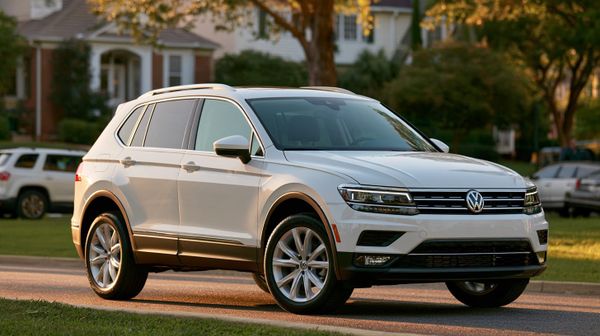
A rare break in vehicle-cost inflation is providing a reminder that household budgets are zero-sum. Used vehicle prices fell for the first time this year as gasoline prices climbed sharply, according to CNBC. At the end of April, gas was up $1.12 a gallon year over year to $4.30, and the national average has since pushed to $4.56 amid the Iran flare-up, CNBC reported.
Regional pain is worse. California gas hit $6.01 a gallon and diesel reached $7.50, a 47 percent jump since Feb. 28, according to CNBC. For households juggling higher pump prices, deferring a vehicle purchase or trading down to a cheaper used model is one of the few discretionary levers left. Auto dealers and lenders are watching nervously, because softer demand for used cars tends to ripple into trade-in values, lease residuals and the resale prices of off-lease vehicles already on the road.
The shift is also a clue about how this consumer cycle is sorting itself. Higher-income households continue to splurge on travel, premium memberships and dining out, while middle- and lower-income households are pulling back on big-ticket purchases to keep up with energy and grocery bills. That divide explains how the headline economy can keep printing growth even as confidence surveys sag.
The bigger picture
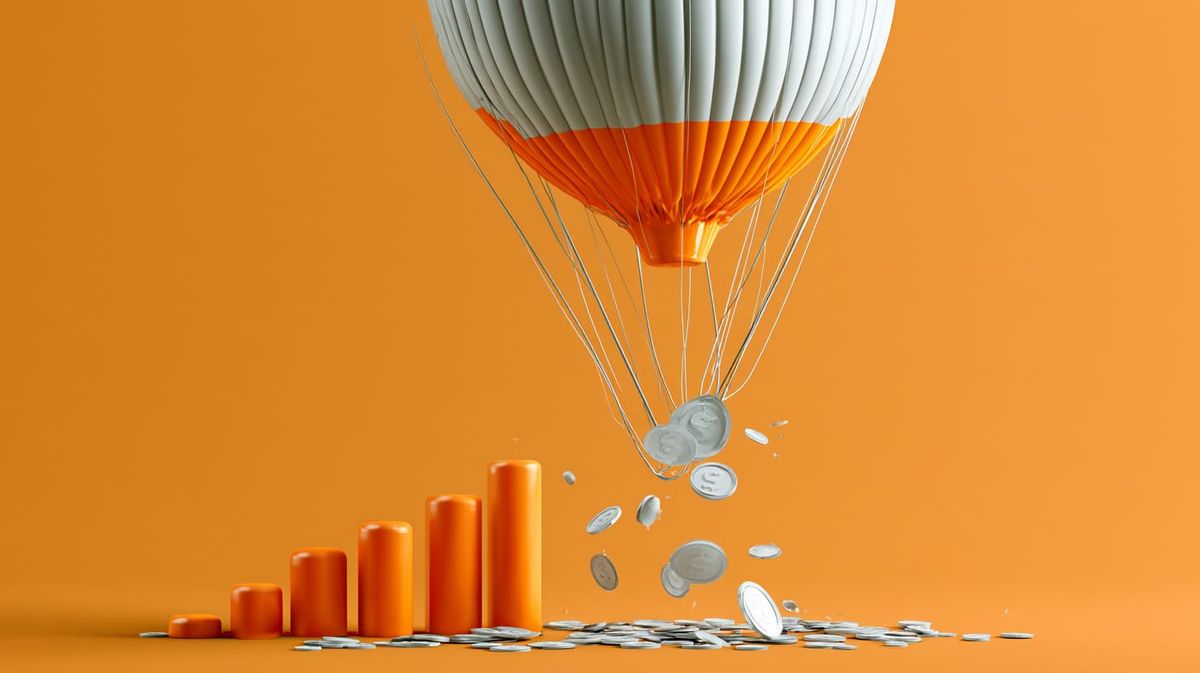
The five themes meeting Thursday's headlines tell one story: a consumer economy operating with no margin for error. A renewed Hormuz scare moves oil and gasoline directly into household budgets within days. A hot inflation print would push the Fed toward a rate hike that lifts mortgage, credit card and auto loan costs at exactly the moment families are absorbing higher fuel bills. Salesforce's guidance hints that the AI-driven business reset is reaching the enterprise software layer that quietly powers most American retail, financial services and travel. Costco's earnings will reveal how durable the membership-club inflation hedge really is. And the small dip in used-car prices is the canary in the coal mine — a reminder that when one cost rises, another piece of the household budget has to give.
For consumers, the practical takeaway is the same it has been all spring: lock in fixed-rate borrowing where possible, watch gasoline prices day by day, and treat every "deal" against the rising baseline of grocery, energy and insurance costs. For policymakers, the message is sharper. With a possible rate hike, a hot inflation reading, and a foreign-policy crisis all converging in a single Thursday, the second half of 2026 is starting to look less like a soft landing and more like a stress test.